
What Does an Alternator Do? Why Your Car Dies Without It
Your car starts, the lights glow, and the radio plays. Something is making all that power. Most drivers never think about it until a warning light shows up. I have towed cars off Interstate 10 and Interstate 95 for this exact part. This guide answers what does an alternator do, how it works, and how to spot trouble early. It also covers the questions drivers ask most.
What Does an Alternator Do in a Car?
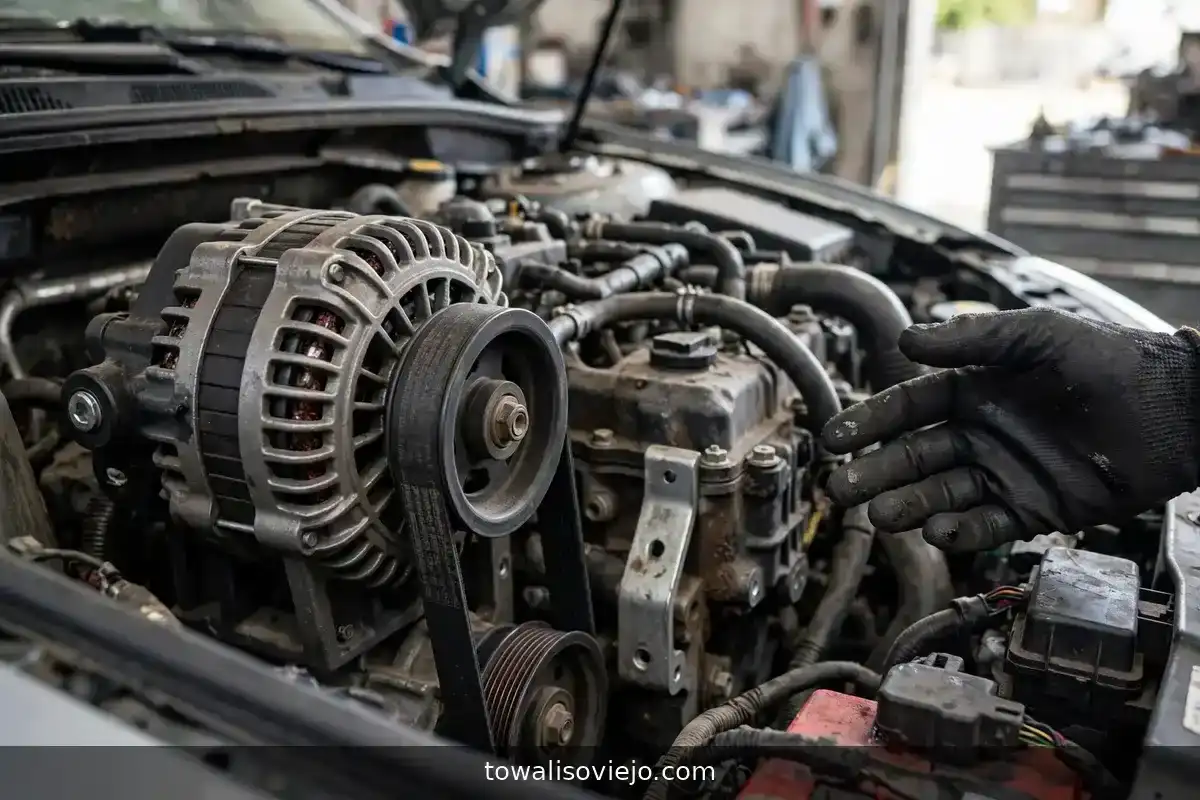
An alternator is a small generator driven by the engine belt. It turns spinning motion into electricity. It recharges the battery while you drive. It also powers the lights, radio, wipers, and computers. The battery only starts the engine. The alternator keeps everything running after that, near 14 volts.
Think of it as your car’s power plant. Every time the engine runs, the alternator makes electricity. Without it, your car would run on stored battery power only.
Here is what it powers while you drive.
- The ignition system and fuel pump.
- The engine computer and sensors.
- The headlights, taillights, and dash lights.
- The heater fan, air conditioning fan, and defroster.
- The radio, screens, and phone chargers.
- Power windows, seats, and door locks.
How Does an Alternator Work?
A belt from the engine spins a pulley on the alternator. The pulley turns a part called the rotor. The rotor is a spinning magnet. It passes close to a ring of copper wire windings called the stator. That motion creates alternating current.
Your car needs direct current. A set of diodes, called the rectifier, converts it. The voltage regulator then controls the output. It stops voltage spikes that could harm sensitive electronics.
Here are the main parts.
- Pulley and belt: Transfer engine motion to the alternator.
- Rotor: The spinning magnet.
- Stator: The wire windings that make current.
- Rectifier: Changes alternating current to direct current.
- Voltage regulator: Holds output steady.
- Bearings and brushes: Let the rotor spin and carry current.
A healthy system holds about 13.8 to 14.2 volts at idle. That number is higher than the battery alone, so the battery can charge.
What Is the Difference Between an Alternator and a Battery?
The battery stores power. The alternator makes power. They work as a team.
When you turn the key, the battery sends a big burst to the starter. That burst can pull hundreds of amps. Once the engine runs, the alternator takes over. It refills the battery and feeds the car.
A weak battery and a weak alternator look alike. Both can leave you stranded with a dead car. Here is a quick way to tell them apart.
- Dead battery, good alternator: A jump start works, and the car keeps running afterward.
- Bad alternator, good battery: A jump start works, but the car dies minutes later.
Short trips can also drain a good battery. A battery needs time to recharge after starting. After a jump start, drive for at least 20 minutes. Take a highway loop if you can.
What Are the Signs of a Bad Alternator?
Alternators usually warn you before they quit. Watch for these signs.
- Dim or flickering lights: Headlights may dim at idle and brighten when you rev the engine.
- Warning light: A battery, ALT, or GEN light stays on.
- Slow accessories: Power windows move slowly.
- Dead battery again and again: The battery will not hold a charge.
- Whining or grinding noise: Worn bearings often make a whir that rises with engine speed.
- Burning smell: A slipping belt or hot wiring can smell like burnt rubber.
- Stalling: The engine dies while you drive.
- Hard starting: The engine cranks slowly.
Do not ignore the dash light. It tells you the system is not charging. Many drivers blame the battery and replace it first. Then the new battery dies too. Test the alternator before you buy a battery.
Cold weather hides the problem. A freezing morning in Chicago or Minnesota loads the battery. A weak alternator then shows up fast. Heat does the same in Phoenix and Las Vegas. Air conditioning, fans, and high temperatures push the charging system hard.
Can a Car Run Without an Alternator?
Only for a short time. The battery can run the engine until it drains. That window is often short, from a few minutes to maybe half an hour. It depends on battery health and electrical load.
Lights, wipers, and the heater drain it faster. The engine can stall without warning. Power steering and brake assist may feel heavy as power drops.
If the charging light comes on while you drive, act at once.
- Turn off the radio, air conditioning, and seat heaters.
- Keep only the lights you need to stay safe.
- Head to the nearest safe stop or repair shop.
- Do not shut the engine off if you can avoid it. It may not restart.
- Call for a tow if the lights get dim.
- Do not try to finish a long trip. A stall on a busy interstate is dangerous. Pull over early.
Does an Alternator Charge the Battery at Idle?
Yes, but it makes less power at idle. Output rises with engine speed. A car at a red light spins the alternator slowly. The lights and fans may pull more power than it makes. The battery covers the gap.
This is why lights dim at idle with a weak alternator. They brighten when you rev the engine. A healthy unit holds steady either way.
City driving shows the problem fast. Stop and go traffic in Manhattan or Atlanta leaves little time at highway speed. The battery may never fully recharge. A long drive on Interstate 80 or Interstate 95 fills it back up. Turn off extra loads at idle to help.
Can a Bad Alternator Cause Stalling or a Check Engine Light?
Yes. Low voltage starves the ignition and fuel pump. The engine can sputter and quit. Modern cars also watch voltage closely. The computer may set a check engine light or a charging code. You may see odd warnings for the power steering, traction control, or antilock brakes.
Do not chase those lights one by one. Test charging voltage first. A low voltage often explains many strange symptoms at once. A scan tool can read the codes. Clear them only after the repair.
How Do I Test an Alternator at Home?
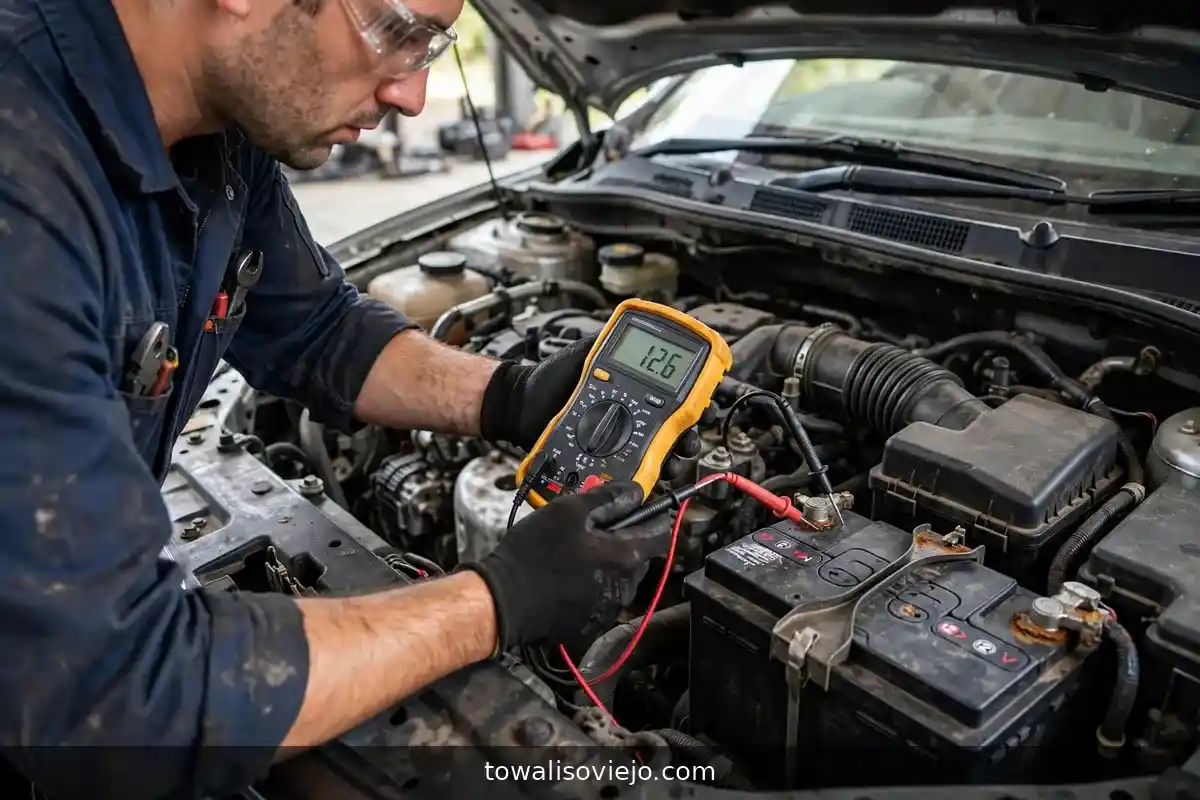
You only need a digital multimeter. Set it to 20 volts DC. Wear safety glasses and keep hands away from the belt.
- Engine off: Touch the probes to the battery posts. A healthy battery reads about 12.6 volts.
- Engine on: Start the car. Voltage should rise to about 14 volts.
- Under load: Turn on the headlights, fan, and air conditioning. Voltage should stay near 13 volts or higher.
- Rev the engine: Hold about 2,000 rpm. The reading should stay steady.
If voltage stays near 12 volts with the engine running, the alternator is not charging. If it climbs above 15 volts, the regulator may be failing. Overcharging cooks batteries and bulbs.
Check the simple things first.
- Look at the serpentine belt. Cracks or a glazed surface mean replacement.
- Press on the belt. It should not feel loose.
- Clean the battery terminals with a wire brush.
- Check the main charging wire for corrosion.
- Inspect the fuses and fusible links.
Many auto parts stores test alternators for free. Bring the car in. Do not remove a battery cable while the engine runs. That old trick can wreck modern electronics.
What Causes an Alternator to Fail?
Several things wear out an alternator.
- Worn bearings and brushes: Age and mileage take their toll.
- A failed regulator or diode: The output drops or spikes.
- A bad belt or tensioner: The alternator cannot spin fast enough.
- Heat: Engine bay heat bakes the windings.
- Oil or coolant leaks: Fluids drip onto the unit and damage it.
- Corroded cables: Winter road salt eats connections in cold states.
- Extra electrical load: Big stereos and lights stress the output.
A bad battery can also hurt an alternator. A weak battery forces it to work at full output. That extra heat shortens its life.
Jump starts add stress too. Use them to get to a shop, not as a plan. A dead battery makes the alternator work much harder than normal.
Can a Bad Alternator Drain or Kill My Battery?
Yes, in two ways. First, it may fail to charge the battery. The battery then runs down as you drive. Second, a failed diode can leak current when the car sits. That drains the battery overnight.
A parasitic drain test confirms this. Set the multimeter to amps. Put it in line with the negative cable. Most cars draw very little when parked. A reading well above that points to a leak.
Overcharging is another danger. A bad regulator can push too much voltage. The battery boils and swells. Bulbs burn out early. Replace the regulator or alternator fast.
How Long Does an Alternator Last, and What Does It Cost to Replace?
Many alternators last 7 to 10 years, or around 100,000 miles. Hard use shortens that. Heat, stop and go traffic in Atlanta or Manhattan, and heavy electrical loads all add wear.
Replacement costs depend on the car. Parts and labor often run a few hundred dollars. Some luxury and tight engine bay cars cost much more. You can choose a new or a remanufactured unit. New units cost more up front but often last longer. Ask for a warranty either way.
Replace the belt at the same time if it looks worn. The belt is cheap and the labor overlaps. Test the battery too. A bad battery will kill a new alternator.
You can prevent early failure. Keep the belt in good shape. Fix oil leaks. Clean battery terminals. Do not rely on the alternator to charge a dead battery. Use a proper charger instead.
Know Your Charging System Before It Fails
Now you know what does an alternator do and why it matters. It makes power, charges the battery, and runs every system you rely on. Watch for dim lights and warning lamps. Test the voltage twice a year.
Carry a basic multimeter and a jump pack. Check the belt each season. If you see the charging light, stop early and get a test. When in doubt, ask a certified technician for help.
What does an alternator do?
It is a small generator driven by the engine belt that turns spinning motion into electricity, recharges the battery while you drive, and powers the lights, radio, wipers, and computers at near 14 volts.
How can I tell a bad alternator from a bad battery?
With a dead battery and a good alternator, a jump start works and the car keeps running afterward. With a bad alternator and a good battery, a jump start works but the car dies minutes later.
What are the signs of a bad alternator?
Dim or flickering lights, a battery, ALT, or GEN warning light that stays on, slow accessories, a battery that keeps dying, whining or grinding noise, a burning smell, stalling, and hard starting.
Can a car run without an alternator?
Only for a short time, often a few minutes to maybe half an hour, until the battery drains. Turn off unneeded loads, head to a safe stop, do not shut the engine off if you can avoid it, and call for a tow if the lights get dim.
How do I test an alternator at home?
With a digital multimeter set to 20 volts DC, a healthy battery reads about 12.6 volts with the engine off, voltage should rise to about 14 volts with the engine on and stay near 13 volts or higher under load. Near 12 volts running means it is not charging, and above 15 volts points to a failing regulator.