How to Read Tire Size: Decode Every Number on Your Sidewall
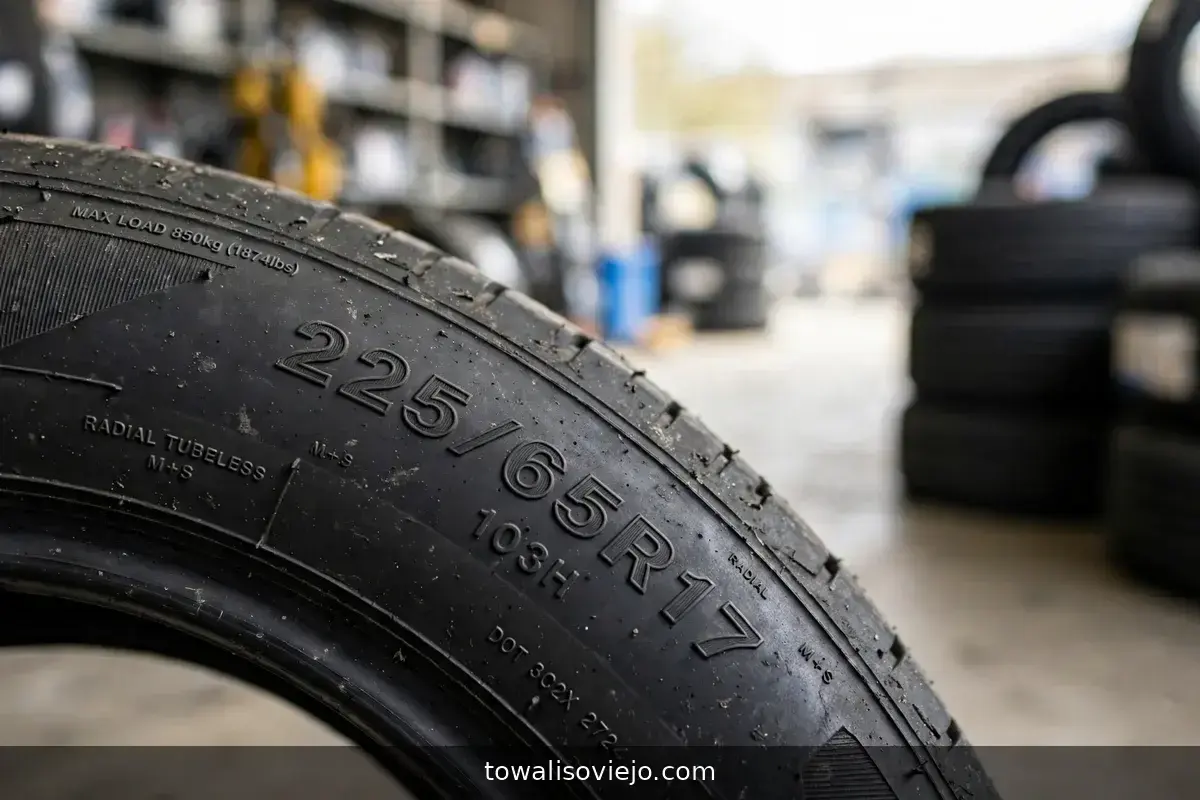
You stand in a tire shop in Denver. The clerk asks for your size. You squint at the sidewall. It says 225/65R17 102H, plus a pile of other marks. This guide shows how to read tire size so you can buy the right tire the first time. I have mounted thousands of tires. Every character on that wall has a job.
How to Read Tire Size: The Quick Answer
A tire size like 225/65R17 102H reads in order. The 225 is tire width in millimeters. The 65 is sidewall height as a percent of width. The R means radial construction. The 17 is wheel diameter in inches. The 102 is the load index, and H is the speed rating.
Most guides stop there. That leaves out the marks that decide safety. Age, load, and grip all hide in the small print. The sections below decode every mark. Grab a flashlight and look at your own tire as you read.
Break Down the Size Code Piece by Piece
Take the same example, 225/65R17. Here is each part and what it tells you.
Do the math once. Sidewall height equals width times the aspect ratio. Here that is 225 times 0.65, or about 146 millimeters. That is roughly 5.8 inches. Double it, add the 17 inch wheel, and the tire stands about 28.5 inches tall. Shops call that the overall diameter. It matters when you change sizes. To convert millimeters to inches, divide by 25.4.
A lower aspect ratio means a shorter sidewall. Low profile tires, like a 35 series, look sporty. They also ride stiffer. Bad potholes in Atlanta or Chicago can bend a wheel faster on thin sidewalls.
What is the difference between P and LT tires?
Look at the letters before the numbers. A P means passenger. It fits cars, minivans, and many crossovers. LT means light truck. It fits heavier trucks and vans built to haul or tow. A size with no letter is a Euro metric tire. It follows the same size system. It carries a slightly higher load rating at the same pressure.
LT tires have stiffer sidewalls and higher load ratings. They ride harder and cost more. A P tire on a heavy work truck can overload. Sidewalls may fail on a hot run along Interstate 35 in Texas with a full trailer. An LT tire on a small sedan wastes money and ride comfort. Follow the type your carmaker lists.
Some off road tires use a flotation size, like 33×12.50R15. That means 33 inches tall and 12.5 inches wide, on a 15 inch wheel. The first number is height, not width. Most daily drivers never see this format.
What do load index and speed rating mean on a tire?
Right after the size you will see a number and a letter, like 102H. The number is the load index. It maps to the most weight one tire can carry at full pressure. A load index of 102 equals 1,874 pounds. A 104 equals 1,984 pounds. Four tires carry the whole vehicle, so check the total. Four tires rated 102 carry 7,496 pounds combined. Your vehicle, with people and cargo, must stay well below that. Never go below the load index on your door placard.
The letter is the speed rating. It shows the top speed the tire handled in a lab test. S means 112 mph. T means 118 mph. H means 130 mph. V means 149 mph. W means 168 mph. You will not drive that fast. The rating still matters. Higher ratings also handle heat better and grip sharper. Match or beat your original rating. Mixing ratings can change handling.
How do I find the date a tire was made?
Look for the letters DOT on the sidewall. A string of letters and numbers follows. The last four digits give the build date. The first two are the week. The last two are the year. A code of 1822 means the 18th week of 2022. A code of 4921 means the 49th week of 2021.
Check this on every tire you buy, even new ones. A tire can sit in a warehouse for a year. It also ages on the car. Heat, sun, and ozone dry out the rubber. Drivers in Phoenix or Las Vegas see cracks sooner. NHTSA guidance points to about six years as the age to replace tires, regardless of tread depth. Look for fine cracks in the grooves and sidewall. Replace any tire that shows them.
The full DOT code often sits on only one side of the tire. If you do not see it, check the inner sidewall. You may need a flashlight and a mirror.
Spare tires age too. Check yours before a long drive on Interstate 40.
What do the UTQG numbers on a tire mean?
UTQG stands for Uniform Tire Quality Grading. NHTSA created it. You will see a treadwear number and two letters, like 500 A B. Tire makers report their own test results. Use the grades as a guide, not a promise.
Treadwear is the number. Testers run a tire for 7,200 miles and compare it to a control tire. A 100 means it matches the control. A 500 means it should last about five times as long. Higher numbers suggest longer life. Sporty tires score lower.
Traction is the first letter. It grades braking on wet pavement. The grades run AA, A, B, and C. Choose A or AA if you drive in rainy Seattle.
Temperature is the second letter. It grades heat resistance at speed. The grades run A, B, and C. Pick an A for hot highway miles in Phoenix.
Look for snow marks too. M+S means mud and snow. A mountain with a snowflake means the tire passed a stricter snow test. Winters in Minnesota, or on Interstate 90 in Montana, call for the snowflake.
Find the Right Size for Your Vehicle
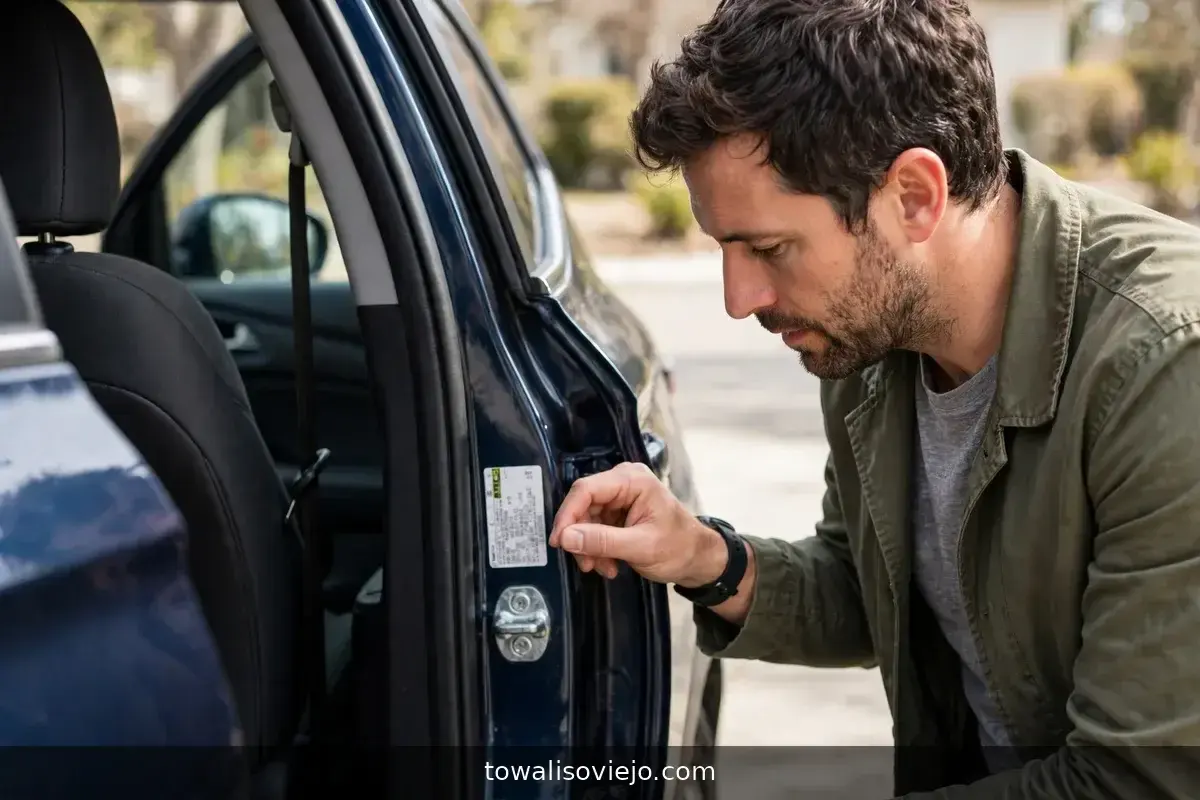
Do not guess your size from the old tire. A past owner may have fitted the wrong one. Use the placard instead. Open the driver door. Look at the sticker on the door jamb. It lists the original tire size, the load rating, and the cold tire pressure. Your owner’s manual lists the same data. Some cars also print it inside the fuel door.
Pressure matters as much as size. Many cars call for 32 to 35 psi. Follow the placard, not the number on the sidewall. The sidewall number is the maximum, not your target. Check pressure cold, before you drive. Use a good gauge. The TPMS warning light comes on when pressure drops about 25 percent.
Check tread depth too. Use a tread depth gauge. Most states treat 2/32 inch as the legal minimum. Rain handling drops fast below 4/32 inch. A penny test works in a pinch. Slide a penny into the groove with Lincoln’s head down. If you can see his whole head, the tread is too low.
Avoid three common buying mistakes. Do not buy by width alone. Do not mix sizes front to rear unless the carmaker allows it. Do not ignore the load index on a loaded SUV. Always give the shop the full size string, including the letters.
Can I change my tire size?
Yes, within limits. Changing size alters more than looks. It changes speedometer accuracy and stability control behavior. Start with the carmaker’s approved sizes. The placard, manual, or dealer can list them.
The safest change keeps the overall diameter the same. Shops call it plus sizing. You raise the wheel size and shrink the sidewall. A 225/65R17 can become a 225/60R18. The tire stands about the same height. Stay within about 3 percent of the original diameter. A bigger gap throws off the speedometer and the ABS.
Check clearance too. A wider tire can rub on the fender or suspension at full turn. The new tire must also carry as much load as the old one. Ask a tire shop to test fit before you buy a full set.
Many drivers in snowy states run a second set of winter tires on smaller wheels. Those need the same overall diameter and a matching load index. A narrower tire often cuts through snow better. Check your manual first.
Staggered sizes, with wider tires at the rear, come from the factory. Do not copy them on a car that did not ship that way.
Practice on a Truck Tire
Try a harder one. A pickup tire reads LT265/70R17 121/118S. The LT means light truck. The 265 is width in millimeters, about 10.4 inches. The 70 means the sidewall is 70 percent of the width. The R is radial, and the 17 is the wheel size.
The pair of load numbers, 121 and 118, covers two uses. The first is single fitment, with one tire at each wheel position. The second is dual fitment, with two tires side by side on a rear axle end. The S is a 112 mph speed rating.
Now do the math. The sidewall is 265 times 0.70, or about 185 millimeters. That is 7.3 inches. The tire stands about 31.6 inches tall. A 121 load index carries more than 3,000 pounds per tire. That is far above the 102 on our car tire. The truck tire is taller, wider, and built for much more weight.
Final Thoughts: Read the Wall, Then Buy
Now you know how to read tire size and every mark beside it. Start with the size code, then check load index, speed rating, and the build date. Compare the UTQG grades for your weather. Confirm the size against the door placard before you pay. Check pressure monthly and tread depth often. A few minutes with a flashlight can save you a wrong purchase and a risky tire.
What does 225/65R17 mean?
225 is the tire width in millimeters, 65 is the sidewall height as a percent of width, R means radial construction, and 17 is the wheel diameter in inches.
What do load index and speed rating mean on a tire?
The load index is the most weight one tire can carry at full pressure (102 equals 1,874 pounds), and the speed rating letter is the top speed the tire handled in a lab test (H means 130 mph). Never go below the load index on your door placard.
How do I find the date a tire was made?
Find the DOT code on the sidewall; its last four digits give the build date, the first two are the week and the last two are the year, for example 1822 means the 18th week of 2022. NHTSA guidance points to about six years as the age to replace tires regardless of tread depth.
What do the UTQG numbers on a tire mean?
UTQG is Uniform Tire Quality Grading: the treadwear number suggests how long the tread should last compared with a control tire, the first letter grades wet braking traction, and the second letter grades heat resistance.
Can I change my tire size?
Yes, within limits. Keep the overall diameter within about 3 percent of the original, check clearance and load rating, and start with the carmaker’s approved sizes.