What Does the ABS Light Mean? Causes, Safety, and Fixes
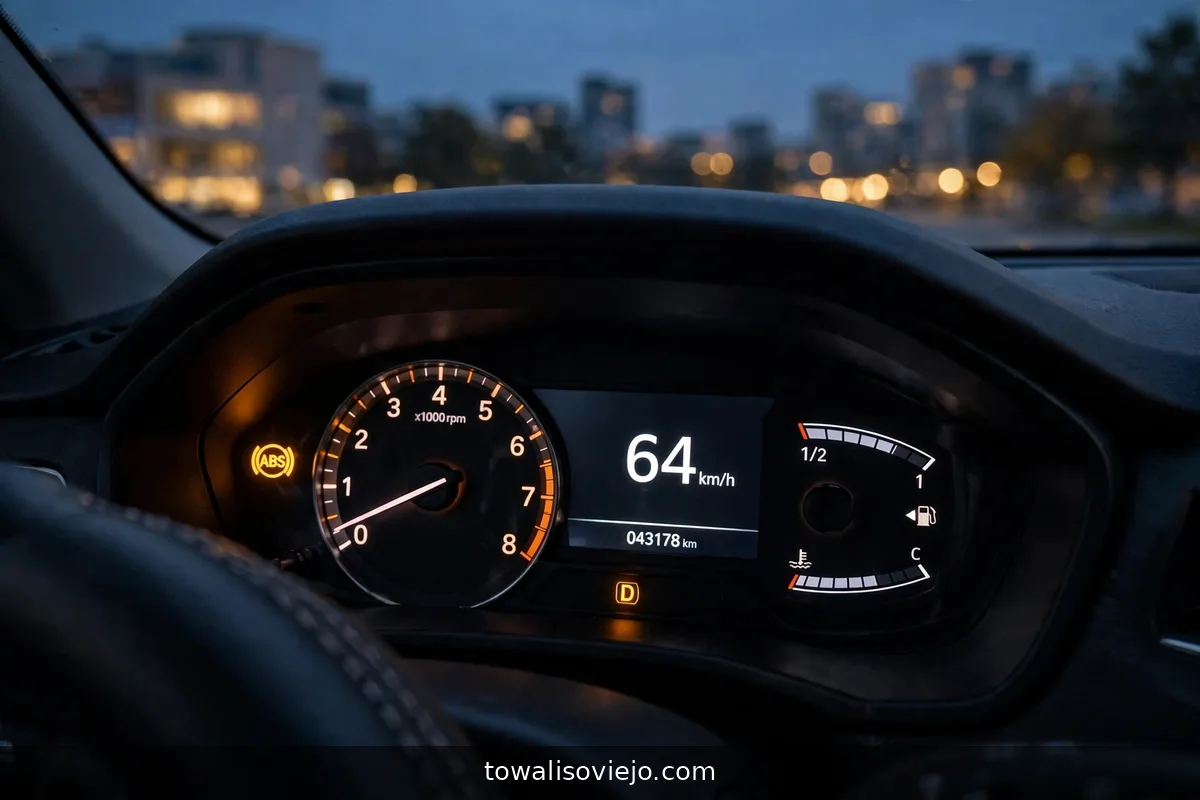
What does the ABS light mean when it glows on your dash? It means your anti lock brake system found a fault. The computer then shut the system off. Your normal brakes still work. But you lose that extra skid protection. I have scanned hundreds of these lights in my shop. Most have a simple cause. This guide shows the common causes, the safe way to drive, and the repair costs.
What Does the ABS Light Mean on Your Dash?
The ABS light means your anti lock brake system found a fault and shut itself off. Your regular brakes still work. You can stop the car, but the wheels may lock during hard stops. Get it checked soon. If the red brake light also glows, stop driving and call for help.
ABS stands for anti lock braking system. It watches each wheel with a speed sensor. If a wheel slows too fast under braking, the system pulses the brake pressure. That pulse keeps the wheel from locking. You keep steering control, even on wet or icy roads. NHTSA says ABS helps drivers steer during hard stops.
Your car runs a quick bulb check each time you start it. The light glows for a few seconds, then goes out. That is normal. A light that stays on is not normal.
Newer cars link ABS to other systems. Federal rules have required stability control on all new passenger vehicles since the 2012 model year. That system shares the ABS wheel sensors. So an ABS fault often turns off traction control too.
Is It Safe to Drive With the ABS Light On?
Usually yes, for a short time and with care. Your main brakes use fluid pressure from the pedal. They do not need the ABS computer to work. But a hard stop on wet or icy roads can lock a wheel. A locked wheel slides. You lose steering control.
Drive differently until you fix it. Leave more room. Brake earlier and softer. Slow down in rain and snow. Skip mountain passes on Interstate 80 in winter until a shop checks the car. Stop and go traffic on Interstate 95 also demands extra space.
On some cars, a flashing light during a slippery stop is normal. It means the system is working. A steady light that stays on is a fault. Do not ignore it for months. You never know when you will need that extra grip. Take extra care if you tow a trailer or haul a heavy load. More weight needs a longer stopping distance.
Why Is My ABS Light On and My Brake Light On Too?
Two lights mean more risk. The red brake light points to the main hydraulic system. The ABS light points to the anti lock system. When both glow, treat it as a brake problem first.
Check the easy items. Is the parking brake fully off? Is the brake fluid low? Low fluid often lights both lamps. Look at the reservoir under the hood. The level should sit between the MIN and MAX marks.
If the fluid is fine and both lights stay on, stop driving. Pull over in a safe spot. A major fault may exist in the braking system. If the pedal feels soft or sinks, call a tow truck. Do not risk a drive to the shop.
The Most Common Causes, Ranked by a Mechanic
Here is the order I see them in the bay:
- Bad wheel speed sensor. This is the top cause. Each wheel has one. Dirt, rust, or a crack can stop the signal.
- Damaged wiring or plugs. Road salt in Chicago and Minnesota corrodes connectors. Potholes in Manhattan can snap a wire.
- Dirty or cracked tone ring. This toothed ring spins with the wheel. The sensor reads its teeth. On many cars, the ring sits inside the wheel bearing. A worn bearing can set the light.
- Low brake fluid. A drop in the reservoir can trigger the light.
- Blown ABS fuse or bad relay. This one is cheap to fix.
- Weak battery or charging fault. Low voltage confuses the ABS computer.
- Bad ABS module or pump. This repair costs the most. It shows up less often.
Can Low Brake Fluid Cause the ABS Light to Come On?
Yes. The ABS pump needs a full supply of fluid. When the level drops, the system loses pressure. The light can then glow. Many cars also use a float switch in the reservoir cap. It trips when the level falls.
Brake fluid drops slowly as your pads wear. That is normal. A fast drop means a leak. Look for wet spots on the inside of each wheel. Check the lines and calipers. Fix any leak before you drive far.
Use only the fluid type printed on the cap. Most cars take DOT 3 or DOT 4. Never mix in other fluids. Brake fluid absorbs water over time. Most makers suggest a flush every 2 to 3 years.
Can Cold Weather or a Weak Battery Turn On the ABS Light?
Yes, both can. Many drivers see the light on freezing mornings. It then fades as the car warms up. That pattern often points to a part that is close to failing.
Cold thickens brake fluid and stiffens tight connections. Moisture freezes in plugs. Snow and ice can also pack around a wheel sensor. A sensor in Minnesota can ice up in one trip. A single cold snap in Georgia can expose a weak connector.
Battery trouble matters too. The ABS computer needs steady power. A healthy battery reads 12.4 to 12.6 volts at rest. With the engine running, the alternator should push about 13.5 to 14.5 volts. Low numbers can set the light. A new battery can also do it. Some cars need a steering angle sensor reset after a battery swap.
Heat plays a role as well. In Phoenix and Las Vegas, summer heat bakes wire insulation. Cracked wires then short out.
When the ABS and Traction Control Lights Glow Together
Both lights often come on together. They share the same wheel sensors and the same computer. A bad wheel speed sensor can trigger both. So can a fault in the steering angle sensor. Some cars add a stability control light too.
Write down every light you see. The pattern helps a mechanic. One light points to a small fault. Three lights can point to the module. A shop scan tool reads the exact code.
ABS codes begin with the letter C. SAE International sets that code format. The C stands for chassis. The code often names a wheel, such as left front. That saves diagnosis time.
A cheap code reader may skip ABS codes. Many read engine codes only. Ask for a scan tool that supports ABS.
Simple Checks Before You Call a Shop
You can run a few checks in your driveway. They take about 15 minutes.
- Check the brake fluid level in the reservoir.
- Find the ABS fuse in the fuse box. The cover diagram shows it.
- Measure tire pressure with a gauge. Match all four tires in size. A mismatched spare can set the light.
- Look behind each wheel for a loose or damaged sensor wire.
- Rinse mud and road salt off the wheel area.
- Test the battery. Look for 12.4 to 12.6 volts at rest.
Do not spray cleaner into a sensor. Do not pull hard on a wire. If these checks find nothing, book a scan. Never clear the code and ignore it. The light will return.
What a Shop Does During an ABS Scan
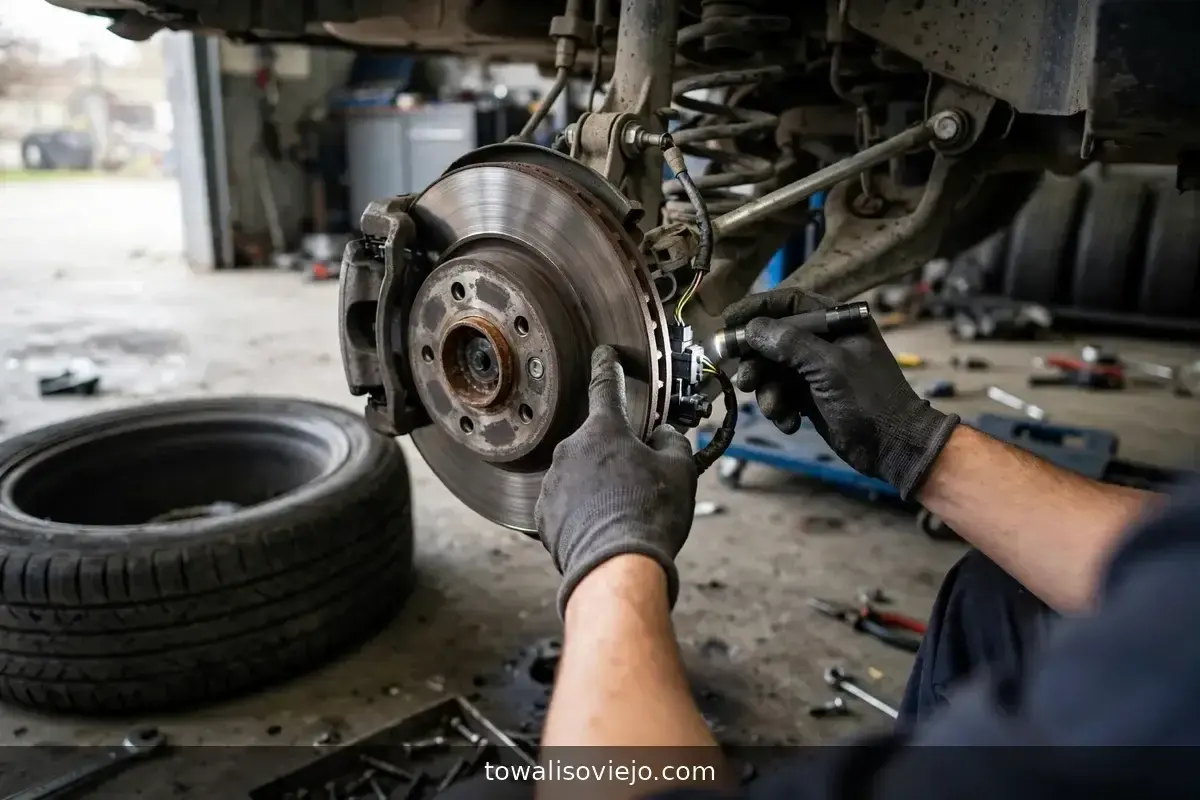
A good tech starts with the code. Then the tech reads live data from the ABS computer. Live data shows the speed of each wheel. At a steady 20 miles per hour, all four numbers should match closely. One wheel that reads zero points to that sensor or its wiring.
Next comes a hands on check. The tech lifts the car and spins each wheel. The tech inspects the sensor gap, the tone ring, and the wire. A crack or heavy rust shows up fast. The tech also tests the wiring for breaks and the battery for low voltage.
Only then should a part go on the car. A good shop shows you the fault before it sells you the fix. Ask to see the old sensor or the damaged wire.
How Much Does It Cost to Fix an ABS Light?
Costs vary by car and by cause. Here are typical shop prices:
- Scan and diagnosis: often around $100 to $150.
- Blown fuse: a few dollars in parts.
- Brake fluid top off: a few dollars, plus leak repair if needed.
- Wheel speed sensor: about $100 to $400 per wheel, parts and labor.
- ABS module repair or replacement: about $300 to $1,400.
- ABS pump or hydraulic unit: about $400 to $1,500.
Aftermarket sensors can cost under $80. Factory parts cost more. On some cars, the sensor is part of the wheel hub. That raises the price. Some shops rebuild a module for far less than a new one.
Ask for a written quote that lists parts and labor. Pay for a proper diagnosis first. A bad wire can mimic a bad sensor. Guessing costs more than testing. Inspection rules vary by state, so ask your shop about yours.
How to Keep Your ABS Healthy
A little care prevents most faults.
- Flush brake fluid every 2 to 3 years.
- Rinse wheel wells after salty winter drives in Chicago or Minnesota.
- Avoid deep potholes and hard curb hits.
- Replace worn wheel bearings early.
- Keep tires matched and inflated to the door jamb number.
- Test the battery each fall.
Your Next Step
Use this quick guide to decide your next move:
- ABS light only and normal pedal feel: drive with care and book a scan this week.
- ABS and red brake lights with a soft pedal: stop driving and call a tow truck.
- Light after a battery change: check voltage and ask about a steering angle reset.
- Light only on cold mornings: book a scan soon, since a part may be failing.
So, what does the ABS light mean for your next drive? It means a fault hides in the anti lock system, but your normal brakes still work. Drive with extra space. Check the fluid and the fuse. Book a scan within a week or two. If the red brake light glows too, stop. Call a tow truck and stay safe. Get the code, find the cause, and fix it. Never just clear the light.
Is it safe to drive with the ABS light on?
Usually yes, for a short time and with care. Your normal brakes still work, but a hard stop on wet or icy roads can lock a wheel and you lose steering control. Leave more room, brake earlier and softer, and book a scan soon.
What does it mean if the ABS light and brake light are on together?
Two lights mean more risk. Check that the parking brake is fully off and the brake fluid is between the MIN and MAX marks. If the fluid is fine and both lights stay on, or the pedal feels soft or sinks, stop driving and call a tow truck.
What is the most common cause of the ABS light?
A bad wheel speed sensor is the top cause: dirt, rust, or a crack can stop its signal. Damaged wiring, a dirty or cracked tone ring, and low brake fluid are also common.
Can low brake fluid cause the ABS light to come on?
Yes. The ABS pump needs a full supply of fluid, and a low level can trip the light. Fluid drops slowly as pads wear, but a fast drop means a leak that must be fixed before driving far.
How much does it cost to fix an ABS light?
A scan and diagnosis is often around $100 to $150. A wheel speed sensor runs about $100 to $400 per wheel, an ABS module about $300 to $1,400, and a pump or hydraulic unit about $400 to $1,500.