How to Pass a Driving Test: A Mechanic’s Car and Skill Checklist
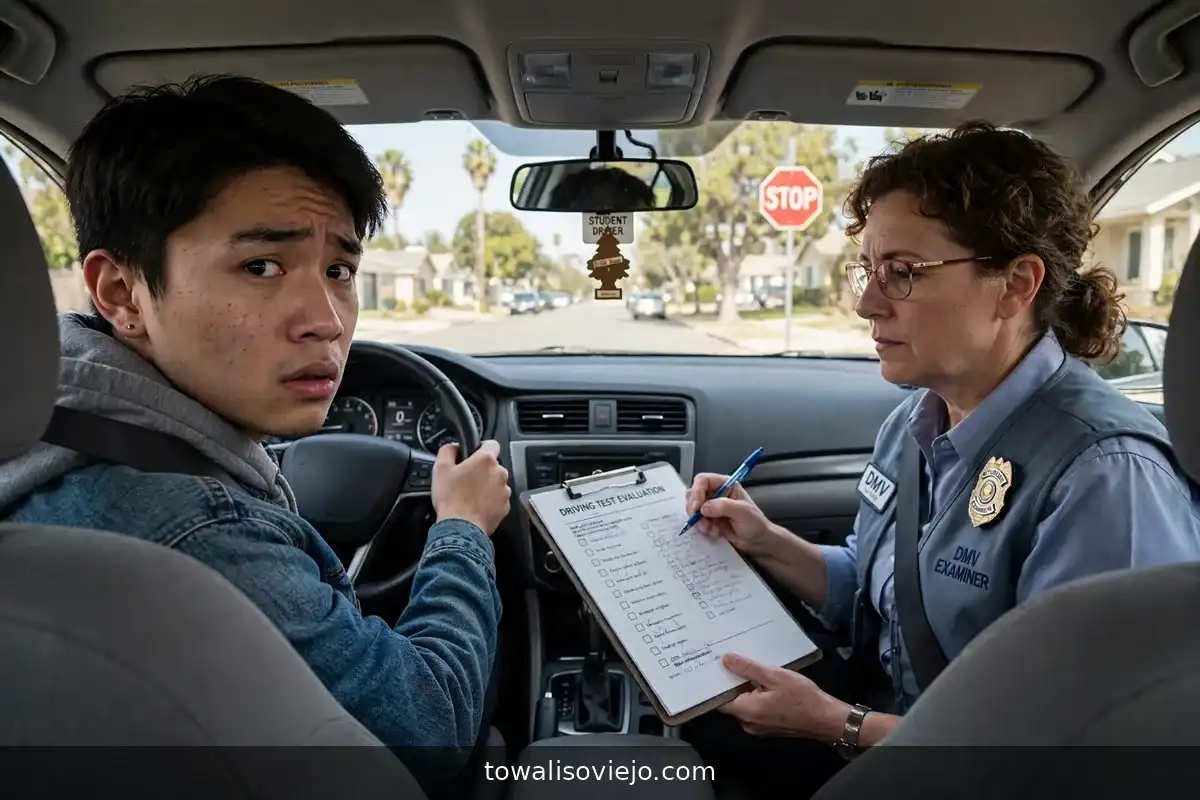
Your road test lasts about 15 minutes. It feels like an hour. I have watched many nervous drivers fail before they left the lot. A burned out brake light or a cracked windshield did it. This guide shows how to pass a driving test on the first try. You will learn what to fix on your car, what to practice, and what examiners score.
How to Pass a Driving Test on Your First Try?
Practice the skills the examiner scores, then prepare your car and yourself. Master full stops, lane changes, mirror checks, and parallel parking. Check your lights, tires, and seat belt the night before. Arrive early, obey the speed limit, and follow every instruction. Stay calm, because small mistakes rarely fail you.
Break your prep into three phases.
- One week out: Practice maneuvers and the test route.
- The night before: Inspect the car and pack your papers.
- Test day: Arrive early, adjust the car, and drive calmly.
Rules vary by state. Check your local licensing office for the exact scoring sheet. The basics stay the same from Interstate 95 to Interstate 10.
What Should I Check on My Car Before the Driving Test?
A car that fails inspection ends your test before it starts. Examiners must keep the test safe. A broken part sends you home. You then book another day.
Do this inspection the night before.
- Lights: Test headlights, brake lights, and taillights. Ask a friend to stand behind the car while you press the pedal.
- Turn signals: Check front, rear, and dash indicators. A fast click means a bulb is out.
- Horn: Press it once.
- Windshield: Look for cracks in your line of sight. Clean the glass inside and out.
- Wipers: Replace worn blades. Fill the washer fluid.
- Mirrors: Clean them and check that they hold position.
- Seat belts: Buckle each one. Make sure they latch and retract.
- Tires: Check pressure with a gauge. Many cars call for 32 to 36 psi. Read the door placard.
- Tread: Insert a coin to check depth. Bald tires slide in rain.
- Brakes: Make sure the pedal feels firm, with no grinding.
- Parking brake: Confirm it releases fully.
- Dash lights: No warning lights should stay on.
Check the battery too. A healthy battery reads about 12.6 volts at rest. A weak one can stall in the test lot. Many parts stores test it for free.
Weather matters. A hot test in Phoenix or Las Vegas can overheat a tired engine, so check coolant first. A frosty morning in Chicago or Minnesota calls for a working defroster. Run it before you leave.
Clean the interior. Remove loose items that could slide around. Bring your permit, registration, and proof of insurance. Some states want extra papers, so check the list.
What Do Driving Examiners Look For?
Examiners want safe, steady habits. They do not expect perfection. Most drivers fail by stacking up small errors.
Here is what they score.
- Shoulder checks: Look over your shoulder before every lane change, turn, merge, and pull away from the curb. This is a leading cause of failure.
- Mirror use: Check your mirrors every 5 to 8 seconds. Use your eyes more than your head.
- Speed control: Stay at or near the posted limit. Slow down in school zones.
- Signals: Signal every turn, lane change, and parking move.
- Following distance: Keep about 3 seconds behind the car ahead.
- Lane position: Stay centered. Turn from the correct lane.
- Smooth control: Brake and steer gently.
- Hazard awareness: Scan far ahead for kids, bikes, and brake lights.
Think of the test as a conversation. Show the examiner you see everything. Move your head. Let them see you check. A glance they do not notice earns no credit.
What Are the Automatic Fails on a Driving Test?
Some errors end the test at once. Others only cost points. Your state decides which is which. These are the usual automatic fails.
- Hitting a cone, curb, or another car.
- Rolling through a stop sign.
- Speeding well above the limit, or speeding in a school zone.
- Changing lanes inside an intersection.
- Failing to yield to a pedestrian or emergency vehicle.
- Driving without a seat belt.
- Using your phone.
- Needing the examiner to take the wheel or brake.
- Ignoring a signal or traffic sign.
Examiners also fail drivers for unsafe cars. Fix the car first. Then fix your habits.
How Do I Pass the Parallel Parking Part?
Parallel parking scares most new drivers. It also fails many of them. The good news is that you can learn it with practice. Test spaces are often about 7 to 9 feet wide and 20 to 25 feet long. Check your state, because sizes differ.
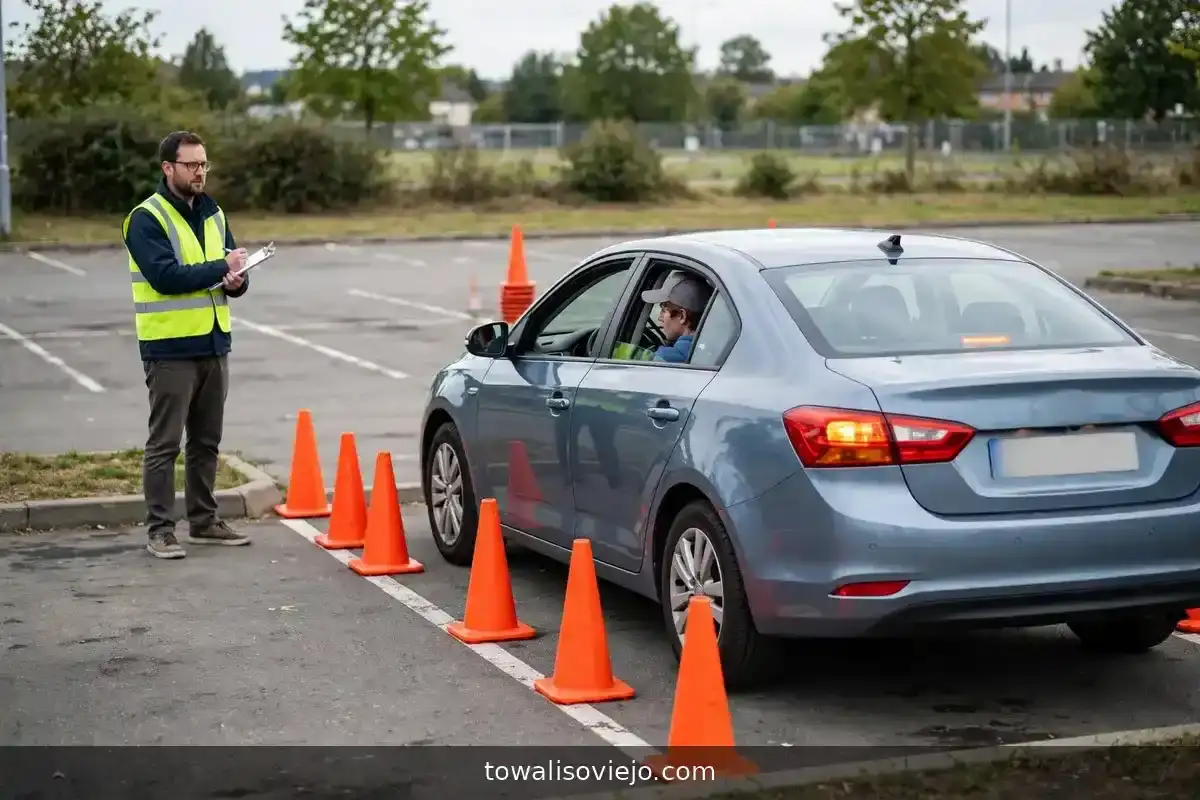
Practice this way. Use cones or trash cans in an empty lot. Space them to match your test layout. Do not rush.
- Signal your plan and pull alongside the front cone.
- Line up mirrors with that cone and keep about 2 to 3 feet of space.
- Stop fully before you shift into reverse.
- Turn the wheel all the way toward the curb and back up slowly.
- Straighten the wheel when you see the rear cone in your passenger mirror.
- Turn the wheel the other way and finish parallel to the curb.
- Stop, shift to drive, and straighten up if needed.
- Signal before you pull out and check your blind spot.
Pick one reference method and stick with it. Switching methods causes errors. Stop fully before every gear change. Touching the curb lightly may be fine in some states. Hitting a cone often fails.
City drivers should practice on real streets. Tight curbs in Manhattan or a crowded garage in Atlanta teach you control. Use short sessions and take your time.
How Do I Handle Stop Signs and Intersections?
Stop signs trip up more drivers than any other sign. Stop before the white line. Count “one Mississippi” to be sure you stopped. The car must come to a complete halt. Rolling at one mile per hour fails.
At each intersection, follow this routine.
- Stop behind the line or crosswalk.
- Look left, right, then left again.
- Check for walkers and bikes.
- Go when it is safe.
At a four way stop, yield to the car that arrived first. If you tie, yield to the car on your right. At green lights, still look both ways. At yellow lights, stop if you can do so safely.
Never change lanes inside an intersection. Wait until you pass through it. Turn into the matching lane. A left turn goes into the left lane. A right turn goes into the right lane.
How Do I Change Lanes and Merge Without Losing Points?
Use the same steps every time. Signal first. Check your mirrors. Look over your shoulder. Move over smoothly. Cancel the signal.
Keep your speed steady. Slowing down in a lane change confuses other drivers. Leave a gap behind the car you pass.
Merging needs more speed. On a freeway ramp, match the speed of traffic. Look for a gap early. Do not stop at the end of the ramp. Highway merges on Interstate 80 or Interstate 95 go fast. Practice with a licensed adult before the test.
Take care in bad weather. Slow down in rain, fog, or snow. Leave extra space. Winter roads in Chicago or Minnesota can turn slick without warning.
Can I Use a Backup Camera on the Driving Test?
It depends on your state, so ask before test day. Some offices allow it as a helper. Others expect you to turn and look. Even where cameras are allowed, they do not replace old habits.
When you reverse, look through the rear window. Check both mirrors. Glance at the screen if the car has one. Then do a shoulder check. Cameras can hide a low post or a fast moving bike.
Park assist and automatic braking can also confuse the score sheet. Ask whether you must turn them off. Learn where the switches sit before the test.
How Do I Stay Calm on Test Day?
Nerves cause more failures than lack of skill. Prepare so your body knows the moves.
Try these habits.
- Sleep about 8 hours the night before.
- Eat a real breakfast. Skip the extra coffee.
- Wear comfortable shoes with a flat sole.
- Arrive 15 to 30 minutes early.
- Turn your phone off and put it away.
- Breathe slowly before you start the car.
- Adjust your seat, mirrors, and steering wheel. Buckle up.
- Ask the examiner to repeat any instruction you miss.
Make a mistake? Do not panic. Keep driving. One slip rarely fails you. Focus on the next block. Apologizing over and over wastes focus.
Drive the car you practiced in. A new car feels different. Know where the wipers, lights, and hazard switch sit.
How Long Should I Practice Before the Test?
There is no single answer. Many states require a set number of supervised hours. Check your state rule. More practice helps even if you meet the minimum.
Practice in different conditions. Drive at night, in rain, and in heavy traffic. Drive near the test site at the same time of day. You will see the same lights and stop signs.
Ask an instructor for a mock test. A pro can spot habits you cannot. Fix one weakness per week. Record your progress in a small notebook.
Think about the car too. Practice with the same seat and mirror setup you will use. Learn how the brakes feel. Learn how far the car sits from a curb.
What Happens If I Fail the Driving Test?
You can retake it. The wait time varies by state. Some offices allow a retest the next day. Others require several days or weeks.
Ask the examiner for feedback. Write it down. Focus on the weak areas. Most drivers pass on the next try. A failed test is feedback, not a verdict.
Do not blame the examiner. They are doing a safety job. Thank them and move on.
Drive Safe and Pass With Confidence
Now you know how to pass a driving test. Prepare the car first. Practice stops, lane changes, and parallel parking. Check mirrors and shoulders often. Obey every sign, signal, and speed limit.
On test day, stay calm and follow instructions. Treat the test as a safe drive with a passenger. Do that, and you will earn your license. Good habits then keep you safe for years on every road.
What should I check on my car before the driving test?
Check your lights, tires, brakes, wipers, horn, seat belts, mirrors, windows and doors, fuel, registration and insurance, parking brake, and dash lights. Fix anything that is not working before test day, because a broken light or bald tire can end the test before it starts.
What do driving examiners look for?
Examiners score safety, not style. They look for shoulder checks, mirror use, speed control, early signaling, full smooth stops, safe spacing, correct right-of-way, and hazard awareness, with smooth and predictable driving.
What are the automatic fails on a driving test?
Automatic fails include hitting a cone, curb, or another vehicle, running a red light or stop sign, speeding well over the limit, failing to yield to a pedestrian, driving on the wrong side of the road, refusing to follow instructions, causing a dangerous situation, not wearing a seat belt, and ignoring a signal from the examiner to stop.
How do I pass the parallel parking part?
Signal your plan, pull up beside the car in front of the space, line up your rear bumpers, check mirrors and blind spots, turn fully right and back in, straighten out at about 45 degrees, center the car 6 to 18 inches from the curb, check your position, then signal left and pull out smoothly when it is safe. Take your time and make small, smooth corrections.
What happens if I fail the driving test?
Failing is disappointing, but it is not the end of the road. Most states let you retake the test after a short waiting period, often one to two weeks. Ask what went wrong, practice those skills, and book again. Many confident drivers pass on their second try.