
How to Check Power Steering Fluid Before Your Pump Screams
Your steering wheel should turn with one finger. When it fights you, fluid is often the reason. I have seen drivers whine louder than their pumps. A two minute check can save a pump that costs hundreds of dollars. This guide shows how to check power steering fluid the right way. You will learn the steps, the colors, and the signs that mean trouble.
How to Check Power Steering Fluid in 5 Steps
Park on level ground with the engine off. Find the reservoir with the steering wheel symbol. Wipe the cap, then read the dipstick or the side marks. Match the hot or cold mark to the fluid temperature. The fluid should sit between the minimum and maximum lines and look clear, not dark.
Here is the full routine.
- Park level. A slope tilts the fluid and gives a false reading.
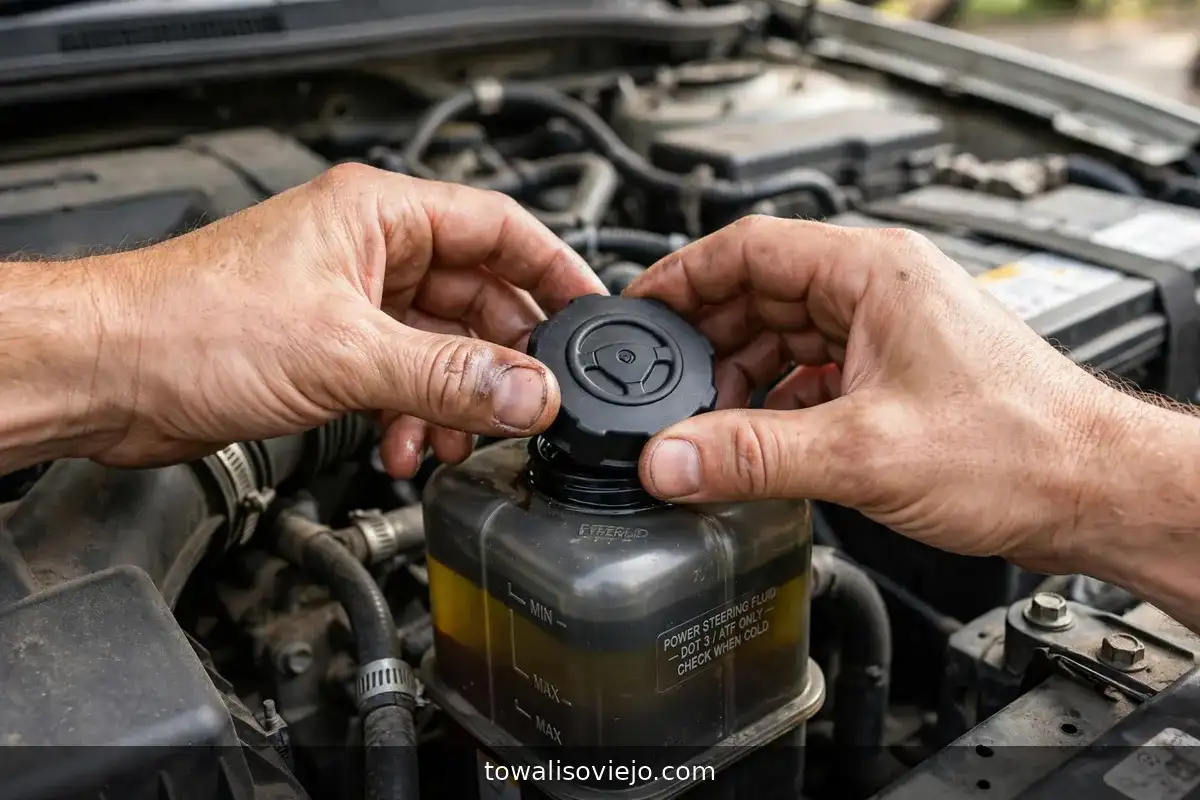
- Open the hood and find the reservoir. Look for a cap with a steering wheel icon. It sits near the belt driven pump.
- Wipe the cap clean. Dirt in the system wears seals and pumps.
- Read the level. Pull the dipstick, wipe it, reinsert it, and pull it again. Or look at the side of a clear tank.
- Match the mark to the temperature. Use the cold mark on a cool engine. Use the hot mark after the car warms up.
Always check the owner’s manual. Some cars use special fluid. Others have no reservoir at all.
Where Is the Power Steering Fluid Reservoir?
Most cars hide it on the front of the engine. It sits on or near the power steering pump. The pump runs off a belt. Follow the thick hose from the steering rack and you will find it.
You will see one of two designs.
- Dipstick type: The cap has a stick attached. The stick shows hot and cold marks.
- Clear tank type: A plastic tank sits on the pump or off to the side. You read the level through the wall.
Some cars put the reservoir in a tight spot. A flashlight helps. A small mirror helps more. Tight engine bays in newer cars hide it under covers. Remove the plastic cover first.
Look at the cap. Most say “power steering” or show a steering wheel icon. Do not guess. Read the label.
Should I Check Power Steering Fluid Hot or Cold?
Use the mark that matches the fluid temperature. Many reservoirs show both. A cold check is simple and safe. A hot check is more accurate on cars with hot marks.
Here is the rule.
- Cold mark: Read it with the engine off and cool.
- Hot mark: Read it after the engine runs for a few minutes.
- Minimum and maximum marks: Keep the level between them at the right temperature.
For a hot check, run the engine for a few minutes. Turn the steering wheel from lock to lock twice. This moves fluid through the system. Shut off the engine. Then read the level.
Be careful in hot weather. A summer afternoon in Phoenix or Las Vegas can heat the pump and cap. Wear gloves. Do not open a cap that feels too hot to touch. Let the engine cool. Fluid expands with heat, so a hot reading looks higher than a cold one.
Cold mornings change the picture. In Chicago or Minnesota, cold fluid is thick. The level looks lower. Use the cold mark, not the hot one.
What Color Should Power Steering Fluid Be?
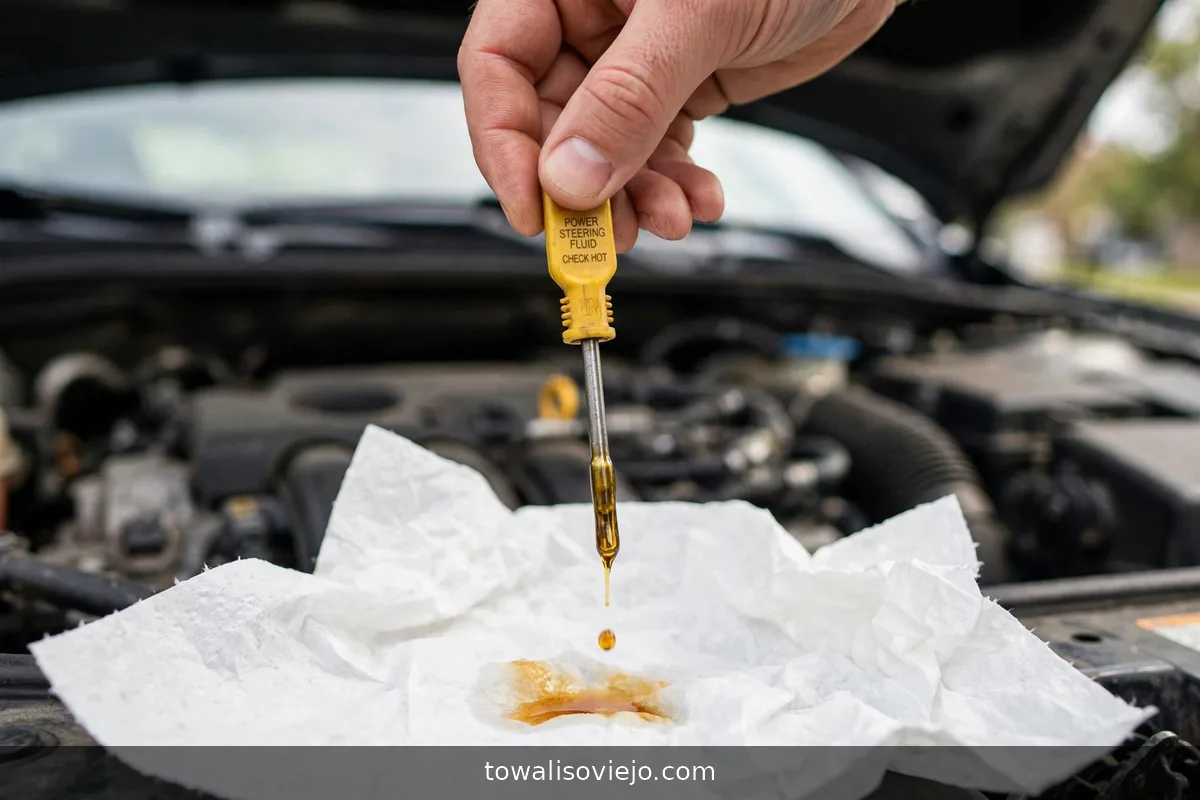
Fresh fluid is clear. It is usually amber, red, or pink, depending on the type. Color tells you its condition.
- Clear amber, pink, or red: Normal for new fluid.
- Dark brown or black: The fluid is old or overheated. It may smell burnt.
- Foamy or milky: Air or water has entered the system.
- Bubbles in the tank: Air in the lines or a leak.
- Metal flecks or glitter: Internal parts are wearing.
- Sludge on the cap: Dirt or breakdown inside.
Do a drop test. Put a drop on a white paper towel. Clean fluid leaves a clear spot. Dirty fluid leaves a dark ring. Rub a drop between your fingers. A gritty feel means metal or debris.
Never top off bad fluid. Adding fresh fluid to dirty fluid only hides the problem. Dark or foamy fluid needs a flush. Have a shop find out how the contamination started.
What Are the Signs of Low Power Steering Fluid?
Your car warns you before the pump dies. Watch for these signs.
- Heavy steering: The wheel feels hard to turn, mostly at low speed.
- Whining or groaning: A moan rises when you turn the wheel.
- Squealing at full lock: The belt or pump may slip.
- Jerky steering: The wheel feels notchy or uneven.
- Foam in the reservoir: Air is mixing with the fluid.
- Wet spots under the car: Look for red, pink, or amber drops.
- Burning smell: Fluid may be leaking onto hot parts.
Test it in a safe parking lot. Turn the wheel from lock to lock. Listen for noise. A hard turn with a loud whine often points to low fluid. Tight parking garages in Manhattan or Atlanta show the problem fast. You spin the wheel often, and weak assist feels worse.
Low fluid usually means a leak. A sealed system should not lose fluid. Common leak spots include hose ends, the pump shaft seal, and the steering rack boots. Fix leaks early. A pump that runs dry can overheat and wear out fast.
Can I Drive With Low Power Steering Fluid?
You can steer, but you should not make it a habit. Low fluid makes the wheel heavy. A pump that runs low can whine and overheat. Both raise the chance of a costly repair.
Top off the fluid with the right type, then watch for leaks. Keep trips short until you know the cause. Skip long highway runs on Interstate 80 or Interstate 10 with a leaking system.
Heavy steering is also a safety issue. A sudden swerve needs quick, strong input. Fix the problem before it fails in traffic. If the wheel locks up or feels very stiff, pull over and call for help.
Why Does My Power Steering Fluid Keep Going Low?
A sealed system should hold its fluid. A level that keeps dropping means a leak. Do not just keep topping it off.
Find the source in this order.
- Check the hoses and clamps for wet spots.
- Look at the pump shaft and the pulley area.
- Inspect the steering rack boots for oily residue.
- Check the reservoir seam and cap seal.
- Slide a clean sheet of cardboard under the car overnight.
Wipe the parts clean, then run the engine and turn the wheel. Fresh drips show the source. A shop can pressure test the system and find hidden leaks.
How Do I Add Power Steering Fluid the Right Way?
Add fluid only when the level is low at the right mark. Follow these steps.
- Wipe the cap and the area around it.
- Open the cap and place a clean funnel in the neck.
- Pour a small amount of the correct fluid.
- Check the level after each pour.
- Stop at the upper mark. Never go above the maximum line.
- Start the engine and turn the wheel from lock to lock.
- Shut off the engine and recheck.
- Close the cap and wipe up spills.
Overfilling causes foaming and seal damage. AAA advises drivers to avoid overfilling any fluid. Too much can hurt as much as too little. If you overfill, draw out the extra with a clean turkey baster.
Drive for a while after you top it off. If the noise or stiffness returns, have a mechanic check the system. A fluid level that keeps dropping means a leak.
Can I Use Any Fluid or Transmission Fluid in My Power Steering?
Only use what your owner’s manual lists. Cars differ. Some call for a special power steering fluid. Others call for automatic transmission fluid. A few call for a synthetic blend made for that system.
Wrong fluid can swell seals and cause leaks. Mixing types can also cause trouble. If the manual is gone, ask a parts counter to look up your car. Do not guess. A fluid with broad approval from carmakers is safer than a random bottle.
Do not use brake fluid, motor oil, or cooking oil. They harm rubber parts and clog the pump. Keep a small bottle of the correct fluid in your trunk for emergencies. Check that the cap is tight so it does not leak.
What If My Car Has Electric Power Steering?
Many newer cars use electric power steering. These systems have no fluid. A motor helps turn the wheel. There is no reservoir to check.
Look under the hood. No steering wheel cap near a pump means the car likely has electric steering. Check the owner’s manual to be sure. Some cars use a mix, with an electric pump that still feeds fluid to the rack.
Electric systems have other signs of trouble. A steering warning light may glow. The wheel may feel heavy. Low battery voltage can also cause odd steering. A healthy battery reads about 12.6 volts at rest. A bad battery or alternator can cut power to the motor. Test the battery and the charging system first.
How Often Should I Check and Change Power Steering Fluid?
Check the level every few months. Many drivers do it at an oil change. Check it more often if the car leaks or makes noise. Look before a long road trip on Interstate 95 or Interstate 10. Long highway drives stress the pump.
Fluid also ages. Many sources suggest a flush every 40,000 to 80,000 miles. Your owner’s manual sets the real schedule. Heat, towing, and stop and go traffic age the fluid faster.
A flush replaces all the old fluid. A simple top off does not. Old fluid carries dirt and worn metal. Over time it can wear the pump and rack. Dark fluid is a sign it is time.
A basic habit helps. Keep a clean paper towel in the trunk. Wipe the dipstick each time you check. Write the date and mileage in your service log.
Keep Your Steering Smooth for Years
Now you know how to check power steering fluid and what the results mean. Park level. Read the correct mark. Look at the color. Add only the right fluid, and never overfill.
Check the fluid every few months. Listen for whining when you turn. Fix leaks right away. If the fluid looks dark or the steering feels rough, ask a certified technician for a flush and inspection.
How do I check power steering fluid in 5 steps?
Park on flat ground with the engine off, find the reservoir, wipe and check the dipstick or read the clear tank, match the level to the hot or cold mark, and check the color and smell. Top up with the correct fluid if the level is low.
Should I check power steering fluid hot or cold?
Either works, as long as you read the right mark. Use the cold mark after the car has sat for several hours, and the hot mark after driving for 15 to 20 minutes. Keep the level between the minimum and maximum lines, and do not add fluid to reach the hot mark when the car is cold.
What color should power steering fluid be?
Fresh fluid is usually clear amber, pink, or red and looks clean and smooth. Dark brown or black fluid is old or burnt, milky or foamy fluid suggests water or air, metal flakes suggest internal wear, and sludge on the cap suggests contamination or overdue service.
What are the signs of low power steering fluid?
Heavy steering, whining or groaning when turning, jerky steering, slow response, reddish or amber puddles under the front of the car, a steering warning light, and a burning smell. If you notice more than one sign, check the level right away.
What if my car has electric power steering?
Many newer cars use electric power steering, with an electric motor instead of a hydraulic pump, hoses, and fluid. There is no fluid to check and no reservoir to top up. If steering feels heavy or a warning light comes on, have the system scanned for codes.