How to Parallel Park Like a Pro: A Mechanic’s Cone by Cone Guide
Nothing makes a driver sweat like a tight curb and a line of cars behind. I have watched grown adults circle a block six times to avoid it. Parallel parking is a skill, not a gift. This guide shows how to parallel park with simple steps and clear markers. You will also learn the curb rules, the hill rules, and how to protect your tires.
How to Parallel Park in 6 Steps
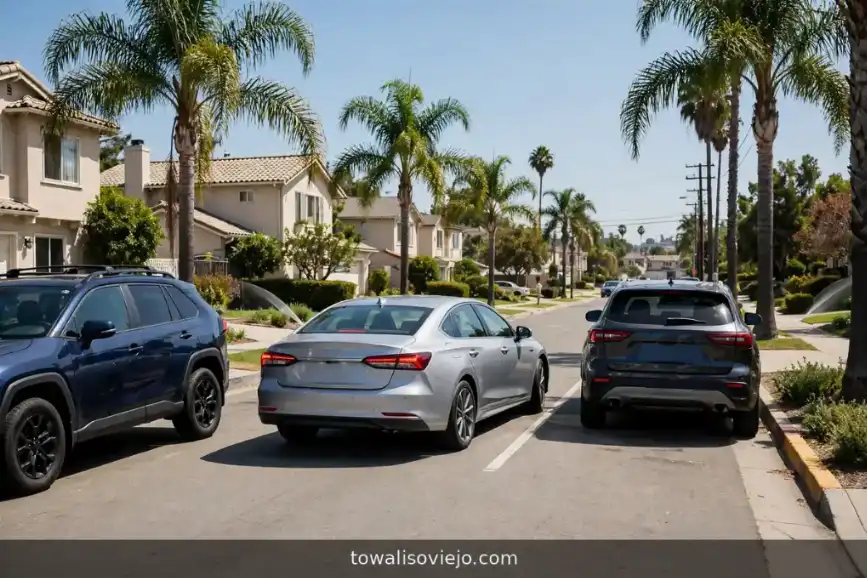
Find a space about one and a half times your car length. Pull up beside the front car, two to three feet away. Reverse and turn the wheel toward the curb. At about a 45 degree angle, turn the wheel the other way. Straighten out and center the car near the curb.
Here is the full routine.
- Find the space. Check the signs to confirm the spot is legal.
- Signal and pull alongside. Stop next to the car in front, about two to three feet away.
- Line up. Match your mirror with that car’s mirror, or your mid point with its rear bumper.
- Reverse and turn toward the curb. Go slowly with your foot off the gas.
- Straighten and swing. At about 45 degrees, turn the wheel the other way. Do it as your front clears the car ahead.
- Center the car. Leave room for others to get out.
Take your time. A calm, slow approach beats a fast one every time.
How Big Does the Space Need to Be?
Look for a space at least one and a half times your car length. Experienced drivers can use smaller spaces. Beginners need extra room. Some guides suggest a space about three feet longer than your car. That is a good rule for a first try.
Bigger cars need bigger spaces. A pickup or a long sedan eats room fast. A small hatchback fits in tight gaps. Know your own car length. Pace it out in your driveway.
Look for these signs.
- Posted limits: Check for time limits, permits, and meters.
- Colored curbs: Some colors ban parking.
- Driveways and hydrants: Never block them.
- Room to leave: Make sure you can pull out later.
If the space looks too small, drive on. A rushed try can dent two cars.
Where Do I Position My Car Before Backing In?
Start parallel to the car in front of the space. Leave about two to three feet between the sides. Stop when your rear view mirror lines up with that car’s mirror. Check your mirrors and blind spot. Look for walkers, bikes, and cars.
Turn on your signal before you start. Drivers behind you then know your plan. Stay put until the lane is clear.
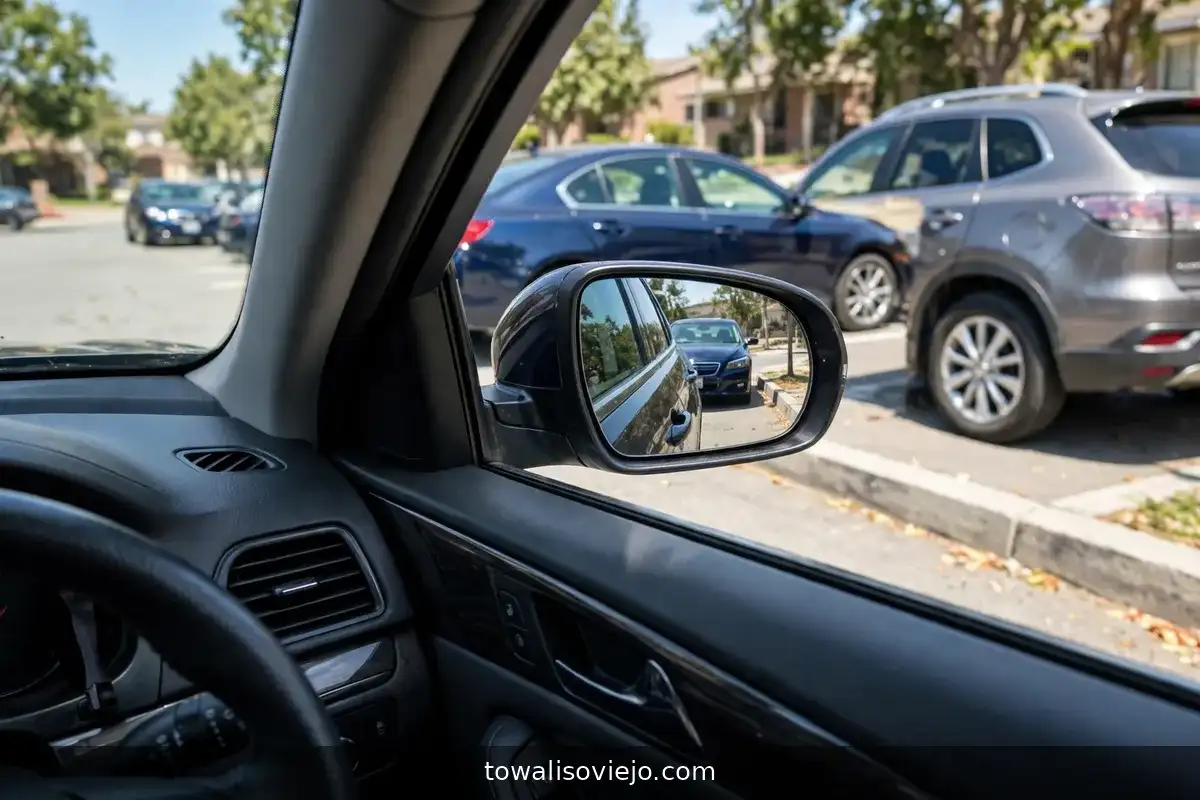
Adjust your mirrors for the job. Tilt the passenger mirror down slightly if you can. It shows the curb better. Many cars have a reverse tilt feature. Check your owner’s manual.
Keep your speed low. Let the car creep. A slow roll gives you time to see and steer. Lift your foot off the gas and cover the brake.
How Do I Know When I Have Hit the 45 Degree Angle?
The angle is the key to the whole move. Aim for about 45 degrees to the curb. Use these markers.
- Mirror check: You can see the front of the car behind your space in your mirror.
- Seat marker: Your seat lines up with the back of the car you park behind.
- Wheel marker: Your rear wheel nears the curb.
Cars differ, so pick one marker and stick with it. Practice shows which one works best.
Once you hit the angle, turn the wheel the other way. Do it quickly. A slow turn leaves you too far from the curb. Start straightening when most of the car sits in the space. A good cue is when your front bumper is next to the rear bumper of the car ahead.
Then pull forward or back to adjust. Watch both bumpers. Stop when you have equal room front and back.
How Far From the Curb Should I Park?
Many states set a limit. California requires you to park within 18 inches of the curb. Check your own state code.
Why does it matter? A car too far out blocks traffic. It also risks a sideswipe. A car too close can scuff the tires and wheels.
Use a quick check. Open your door and look. Can you see the curb through the window? A tape measure shows the exact distance.
Practice until you can land within a few inches. Then you will never worry about a ticket.
What If the Space Looks Too Small?
You can still try, but be honest about the room. If the gap is less than your car length plus a little, skip it. Hitting a bumper costs more than a long walk.
Tight spaces need extra patience. Take more time. Make small moves forward and back. Cut the wheel fully each time. Check your mirrors every few feet.
A few tips help.
- Pull up closer: Stay about two feet from the front car.
- Turn sharper: Use full lock when you reverse.
- Use short moves: Forward and back, forward and back.
- Use a spotter: A friend outside can guide you.
Cities like Manhattan, Boston, and Atlanta test this skill daily. Spaces vanish by noon. Learn to say no. Find a garage and save your paint.
How Do I Parallel Park Uphill or Downhill?
Hills change the rules. Gravity wants to roll your car into traffic. Turn your wheels so the curb stops it. This habit can save your car.
Use this guide.
- Downhill with a curb: Turn the front wheels toward the curb.
- Uphill with a curb: Turn the front wheels away from the curb. Let the car roll back until the tire gently touches the curb.
- Either way, no curb: Turn the wheels toward the road edge so the car rolls away from traffic.
Always set the parking brake. Leave the car in park. For a manual car, leave it in gear.
Some cities require curbed wheels on steep grades. One city sets the rule at slopes over 3 percent. Most drivers cannot measure a slope by eye. Make curbing a habit whenever you park on a hill. If you are unsure of the slope direction, shift to neutral. See which way the car rolls. Then curb the wheels the other way.
Winter adds risk. Snow berms in Chicago and Minnesota can trap cars. Ice makes a car slide. Leave extra space. Clear the snow from your tires before you leave.
Where Can’t I Park?
Rules vary, but some are common. California’s handbook gives these examples.
- Within 15 feet of a fire hydrant.
- Within 20 feet of a crosswalk.
- Within 3 feet of a wheelchair ramp on the sidewalk.
- On a crosswalk, sidewalk, or driveway.
- In a bike lane, tunnel, or bridge, unless signs allow it.
- Double parked.
- Where a no parking sign stands.
Curb colors carry meaning too. Red means no stopping. White means a quick stop for passengers. Green means time limited parking. Yellow means loading only. Blue means disabled placard parking.
Check your own state and city rules. Fines add up fast. Read every sign, top to bottom.
How Do I Pull Out of a Parallel Spot?
Leaving takes care too.
- Turn on your signal.
- Check your mirrors and look over your left shoulder.
- Back up just far enough to clear the car in front. Stop before you touch the car behind.
- Turn the wheel away from the curb.
- Let the front swing out slowly.
- Wait for a gap, then pull out and straighten.
Watch your front corner. It swings out first. Keep an eye on the car ahead. Yield to traffic. Do not rush because someone honks.
What Are the Most Common Mistakes?
Most mistakes come from rushing. Avoid these.
- Skipping mirror and blind spot checks. A cyclist can appear out of nowhere.
- Turning too slowly at the angle. The car ends up far from the curb.
- Backing too fast. You lose control.
- Hitting the car behind. Watch it in your mirror.
- Hitting the car in front. Watch its bumper when you pull forward.
- Not centering the car. Leave room for others.
- Giving in to pressure. Take your time.
Do not let waiting drivers rush you. Safety comes first. A short delay beats a dented fender.
How Do I Practice Without Risking a Dent?
Use cones. Set two cones or trash cans to mark the spot. Give yourself about one and a half car lengths. Practice in an empty lot or on a quiet street. Add more challenge as you improve.
Try these drills.
- Park in a wide space until you feel smooth.
- Shrink the space by a foot each round.
- Practice on both sides of the street.
- Practice at night.
- Add a real curb once you feel ready.
Technology can help. A backup camera shows what you cannot see. Parking sensors beep when you get close. These tools are helpers, not replacements. Keep your eyes on the mirrors. Clean the camera lens. A dirty lens blurs the view. Wipe it with a soft cloth.
What Happens If I Hit the Curb?
A light bump may do little harm. A hard hit can damage a tire, a wheel, and your steering parts. Check right away.
Use this inspection list.
- Tire sidewall: Look for bulges, cuts, or bubbles. Replace a bulged tire.
- Wheel rim: Look for bends or cracks.
- Tire pressure: Check with a gauge. Fill to the number on the door placard.
- Alignment: If the car pulls or the wheel sits off center, get an alignment check.
- Suspension: Listen for clunks over bumps.
Curb rash scratches the wheel face. It looks bad but is mostly cosmetic. Damage to the inner edge or the tire matters more. A tire shop can inspect it in minutes. In heat like Phoenix or Las Vegas, a damaged tire fails faster on the highway. Do not take a damaged tire onto Interstate 10 or Interstate 95. Fix it first.
Park With Confidence Every Time
Now you know how to parallel park without panic. Find a big enough space. Line up. Reverse and turn toward the curb. Swing the wheel at 45 degrees. Center the car and set the brake.
Practice with cones until the move feels easy. Curb your wheels on hills. Check your tires after any bump. When in doubt about damage, ask a certified technician to take a look.
How big does a parallel parking space need to be?
Look for a space at least one and a half times your car length. Some guides suggest a space about three feet longer than your car, which is a good rule for a first try. Bigger cars need bigger spaces.
How far from the curb should I park?
Many states set a limit, and California requires you to park within 18 inches of the curb. Check your own state code. A car too far out blocks traffic, while a car too close can scuff the tires and wheels.
How do I parallel park on a hill?
Turn your wheels so the curb stops the car: downhill with a curb, turn the front wheels toward the curb; uphill with a curb, turn them away and let the car roll back until the tire gently touches the curb. Always set the parking brake.
Where can’t I park?
Common rules include within 15 feet of a fire hydrant, within 20 feet of a crosswalk, within 3 feet of a wheelchair ramp, on a crosswalk, sidewalk, or driveway, in a bike lane, tunnel, or bridge unless signs allow it, and double parked.
What should I check if I hit the curb while parking?
Check the tire sidewall for bulges, cuts, or bubbles and replace a bulged tire, look for bends or cracks on the wheel rim, check tire pressure, and get an alignment check if the car pulls. Do not take a damaged tire onto the highway.