

Car Smells Like Gas: Causes, Safe Checks, and Fixes
A strong fuel odor in your cabin scares every driver. When a car smells like gas, you need answers fast. The cause might be a ten dollar gas cap. It might also be a leaking fuel line. Both deserve a careful look. This guide comes from the shop floor. It explains each common cause, the tests a mechanic runs, and the safe next step. Read the safety section first if the odor is strong. Fuel vapor ignites easily, and a hot exhaust pipe can supply the spark.
What Causes a Gasoline Odor Inside a Vehicle?
Five sources cause most gasoline odors. A loose gas cap ranks first. A cracked EVAP hose or charcoal canister ranks second. Leaking fuel lines and injector seals rank third. A bad fuel pressure regulator ranks fourth. Spilled fuel on shoes or carpet ranks fifth. Strong odors while driving usually mean liquid fuel is leaking.
Your fuel system has two jobs. The first job moves liquid fuel from the tank to the engine. The second job traps fuel vapor so it never reaches the open air. SAE International sets the standard code format your scan tool reads. Your engine computer follows those rules.
The liquid side includes the tank, pump, lines, fuel rail, and injectors. A leak here puts raw fuel on the ground or on hot parts. That creates the most dangerous odor. The vapor side is the EVAP system. It includes the gas cap, filler neck, vent hoses, charcoal canister, and purge valve. A leak here releases vapor but rarely drips liquid. It often sets the check engine light. Knowing which side you smell narrows the search quickly.
Why Does My Car Smell of Fuel Right After Filling Up?
A fresh fill up is the most common time to notice the odor. The usual culprit is the gas cap. Turn it until it clicks. Most caps need one to three clicks. Then check the rubber seal for cracks, flat spots, or dirt. A worn seal lets vapor escape every time the tank warms up. A new cap costs about 10 to 25 dollars. Many drivers fix the problem in five minutes.
Overfilling causes the next problem. Drivers on long Interstate 95 trips often squeeze in extra fuel after the pump clicks off. That liquid fuel floods the vent line and soaks the charcoal canister. The canister then smells strong for days. Stop at the first click. Never top off the tank.
A stuck open purge valve also causes trouble after refueling. The purge valve must stay closed while you fill the tank. If it sticks open, the engine may start hard right after a fill up. A rough idle and a check engine light often follow. A cracked filler neck or a dry rubber vent hose near the tank can leak too. Look for wet stains and cracked rubber near the filler door.
Scan the codes if the light is on. P0457 points to a loose or missing cap. P0455 points to a large EVAP leak. P0456 points to a very small leak. After you tighten the cap, the light may stay on for days. The computer needs several clean drive cycles before it clears the code.
Why Does My Car Smell of Fuel When Parked?
A parked vehicle gives vapor time to build up. Heat makes it worse. Gasoline vapor expands as the tank warms. In Phoenix or Las Vegas, a dashboard can top 150 degrees Fahrenheit on a summer afternoon. A tiny EVAP leak that stays quiet in January will smell strong in July.
Garages trap the odor. Tight parking garages in Manhattan or Atlanta hold vapor at nose level. A faint smell there may only mean a weak seal. A strong smell means you should look underneath. Slide a sheet of cardboard under the tank overnight. Fresh wet spots on the cardboard mean liquid fuel. Gasoline leaves a thin, rainbow tinted stain that dries fast. Oil leaves a darker, slower stain.
Mechanics find hidden vapor leaks with a smoke machine. The machine pushes harmless smoke into the EVAP system at about 0.5 psi. Smoke drifting from a hose, canister seam, or filler neck marks the leak. Never use shop air for this test. Higher pressure can damage the fuel tank pressure sensor.
Why Does a Fuel Smell Hit Right at Startup?
Cold engines run rich. The computer adds extra fuel for the first minute. A faint tailpipe odor is normal on freezing mornings in Chicago or Minnesota. A faint odor outside the car that fades in two minutes is usually fine. A strong odor inside the cabin is not.
Leaking injector seals show up at startup. Each injector seals to the intake with small rubber O rings. Heat cycles harden those rings. Fuel then seeps onto the hot intake. The smell rises through the cowl vent and into the cabin. Check this with the engine off. Turn the key to on, then off, three times. That builds fuel pressure without cranking. Shine a flashlight along the fuel rail. Wet injector tops confirm the leak.
Do not crank an engine with a wet fuel rail. Fuel on a hot manifold can ignite. Tow the vehicle instead.
Most port fuel injected engines hold about 40 to 60 psi at the rail. Check the factory spec for your engine. A fuel pressure gauge on the rail test port shows the real number. A reading far above spec points to a stuck regulator. Pressure that drops fast after shutdown points to a leaking injector.
Why Does My Car Smell of Gas but Show No Leak?
No puddle does not mean no problem. Vapor leaks leave no stain. The fuel pressure regulator is another hidden source. Its rubber diaphragm can tear. Fuel then travels through the vacuum hose into the intake. Wear eye protection and keep a rag ready. Pull the vacuum hose off the regulator with the engine idling. Wet fuel inside the hose confirms a bad regulator.
A rich running engine also creates a fuel odor at the tailpipe. A failed oxygen sensor, a dirty mass airflow sensor, or a stuck open injector can cause it. Fuel economy drops as well. A scan tool shows fuel trims. Long term trims below minus 15 percent mean the computer is fighting a rich mixture.
Outside air can fool you. Heavy truck traffic on Interstate 80 pushes fumes through the fresh air intake. Press the recirculate button. If the odor fades in a minute, the source sits outside. Also replace a dirty cabin air filter. A clogged filter holds odors for months. Hybrid owners sometimes notice a brief odor after refueling, because the engine purges vapor less often.
Do not confuse exhaust with fuel. Exhaust can carry carbon monoxide, which has no odor of its own. Headaches or dizziness mean you should open every window and stop driving.
Is It Safe to Drive With a Gas Smell in the Car?
A faint odor right after refueling is usually safe. Tighten the cap, open the windows, and watch the check engine light. A strong odor is different. Do not drive a vehicle that smells strongly of fuel. Gasoline vapor ignites from one spark or one hot exhaust part. The risk rises fast on a hot day. Fumes also contain benzene, a known health hazard. Long exposure can cause headaches and nausea.
Stop driving at once for any of these signs:
- Liquid fuel drips or pools under the vehicle.
- A strong odor stays in the cabin after five minutes with the windows open.
- A flashing check engine light appears with the odor.
- You see smoke or smell burning.
On a highway such as Interstate 10 or Interstate 80, pull onto the shoulder. Turn off the engine. Leave the vehicle and stand well away from traffic. Call a roadside plan like AAA or a local tow service for a flatbed. Do not restart the engine to see if the odor returns. Also check the NHTSA recall lookup with your VIN. Fuel system recalls happen often, and dealers fix them for free.
What To Do the Moment Your Car Smells Like Gas
Follow these steps in order:
- Pull over and turn off the engine.
- Open the doors and windows, then step away from the vehicle.
- Keep flames, cigarettes, and sparks far from the car.
- Wait five minutes, then check the gas cap for a tight click.
- Look under the tank, lines, and engine bay for wet spots.
- Call for a flatbed tow if you see liquid fuel or the odor stays strong.
- Scan for codes once the vehicle sits in a safe, open area.
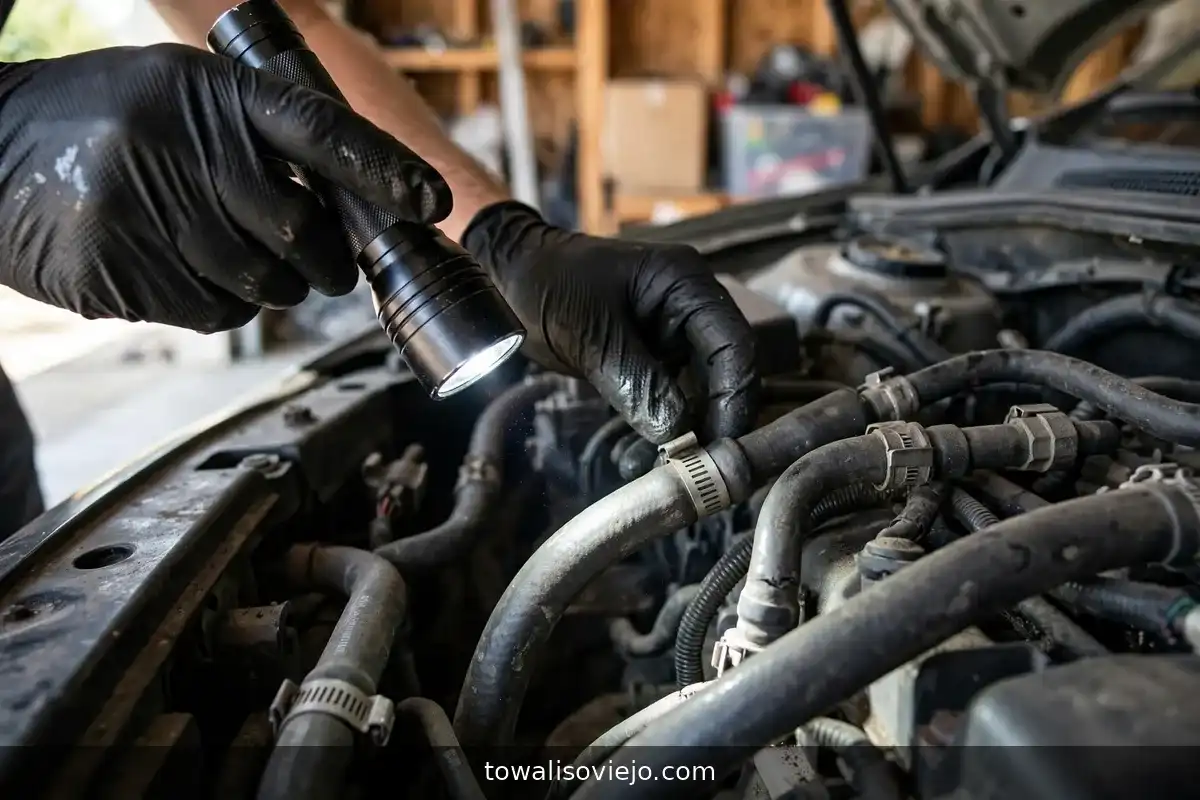
Use a flashlight to look for leaks. Never use a lighter or a match. Keep your phone away from any wet area until the vapor clears.
How Mechanics Find the Source
A methodical check beats guessing. Mechanics follow the same order on most vehicles.
- Verify the battery. A healthy battery reads 12.4 to 12.6 volts with the engine off. A weak battery skews every voltage test.
- Read the codes. A scan tool pulls EVAP codes such as P0440, P0442, P0455, P0456, and P0457.
- Inspect the cap. Check the seal, the threads, and the click count.
- Run a smoke test. Low pressure smoke exposes leaks at hoses, the canister, and the filler neck.
- Test the purge valve. It works as a 12 volt solenoid. With the key on, the power wire should show about 12 volts.
- Gauge the fuel pressure. Compare the reading with factory spec at idle and after shutdown.
- Inspect lines and seals. Use a mirror and a flashlight along steel lines, rubber hoses, clamps, and injector O rings.
Simple Ways To Prevent Fuel Odors
Prevention costs very little.
- Replace a cracked gas cap right away. Check the seal at every oil change.
- Stop fueling at the first click. Topping off soaks the charcoal canister.
- Fix a check engine light early. Some states fail a vehicle with an EVAP code at the emissions test.
- Inspect rubber fuel hoses on vehicles older than ten years. Heat and ethanol blends harden rubber.
- Keep spare gas cans out of the cabin and the trunk.
- Park in shade during summer when you can.
Final Word Before You Drive
Treat every fuel odor as a message. A faint odor after refueling usually has a simple fix. A strong odor deserves a tow, not a test drive. When a car smells like gas for more than a day, book a diagnosis. Check the cap, read the codes, and look for wet spots. Those three checks solve most cases in under 15 minutes. Anything beyond that belongs in a shop with the right gauges and a lift. Stay safe, keep the windows open, and respect the fuel system.
What causes a car to smell like gas?
The most common causes are a loose gas cap, a cracked EVAP hose or charcoal canister, leaking fuel lines or injector seals, a bad fuel pressure regulator, or spilled fuel on shoes or carpet. Strong odors while driving usually mean liquid fuel is leaking.
Why does my car smell like gas after filling up?
The usual culprit is the gas cap: turn it until it clicks and check the rubber seal for cracks. Overfilling also causes it, because extra fuel floods the vent line and soaks the charcoal canister, so stop at the first click and never top off the tank.
Is it safe to drive with a gas smell in the car?
A faint odor right after refueling is usually safe: tighten the cap, open the windows, and watch the check engine light. A strong odor is different: do not drive, because gasoline vapor ignites from one spark or one hot exhaust part.
What should I do the moment my car smells like gas?
Pull over and turn off the engine, open the doors and windows and step away, keep flames and sparks far from the car, check the gas cap, look for wet spots, and call for a flatbed tow if you see liquid fuel or the odor stays strong.
How do mechanics find the source of a fuel smell?
They read EVAP codes such as P0440, P0455, P0456, and P0457, inspect the gas cap, run a low-pressure smoke test, test the purge valve, gauge the fuel pressure, and inspect lines and injector seals with a mirror and flashlight.