
How to Change Oil: A Mechanic’s Step by Step Guide
Knowing how to change oil is the best first skill a car owner can learn. It takes a driveway, a few basic tools, and about an hour. I have drained thousands of oil pans, and I still follow the same steps every time. This guide gives you those steps, the numbers that matter, and the mistakes that cause leaks. Read it once, then keep your owner’s manual open while you work.
How to Change Oil: The Short Answer
Follow these six steps.
- Warm the engine, then park level and lift the car safely.
- Remove the drain plug and drain the oil.
- Replace the oil filter.
- Install the drain plug with a new washer.
- Add the correct oil in the right amount.
- Check the level and look for leaks.
Those six steps work on nearly every gas car, SUV, and pickup. The details change by engine. Your owner’s manual lists your oil type, oil amount, and torque specs. The rest of this guide explains each step in plain words.
What Tools and Supplies Do I Need?
Gather everything before you crawl under the car. Hunting for a socket with oil on your hands wastes time.
- Motor oil in the grade and amount your manual lists.
- A new oil filter that matches your engine.
- A new drain plug washer.
- A socket or box wrench that fits the drain plug.
- An oil filter wrench.
- A torque wrench.
- A drain pan that holds more than your engine’s oil capacity.
- A funnel, gloves, and shop rags.
- Ramps, or a jack with two jack stands. Add wheel chocks.
Check the bottle before you buy. SAE International sets the viscosity grades, such as 0W 20 or 5W 30. The American Petroleum Institute adds a service symbol. Match both to your manual. Most four cylinder engines hold about four to five quarts. Many V8 trucks hold six to eight.
Picking the Right Oil for Your Engine
Oil comes in three types. Conventional oil costs the least. Synthetic blend mixes the two. Full synthetic resists heat and cold best. Your manual names the type your engine needs. Many newer engines require full synthetic.
The grade tells you how thick the oil runs. The W stands for winter. The number before it shows cold flow. A lower number flows better on a freezing morning in Chicago. The second number shows thickness at engine heat. Use the grade in your manual. The wrong thickness can slow oil flow at startup.
High mileage oils add seal conditioners for older engines. Consider one if your car has more than 75,000 miles.
Step One: Warm Up, Park, and Lift
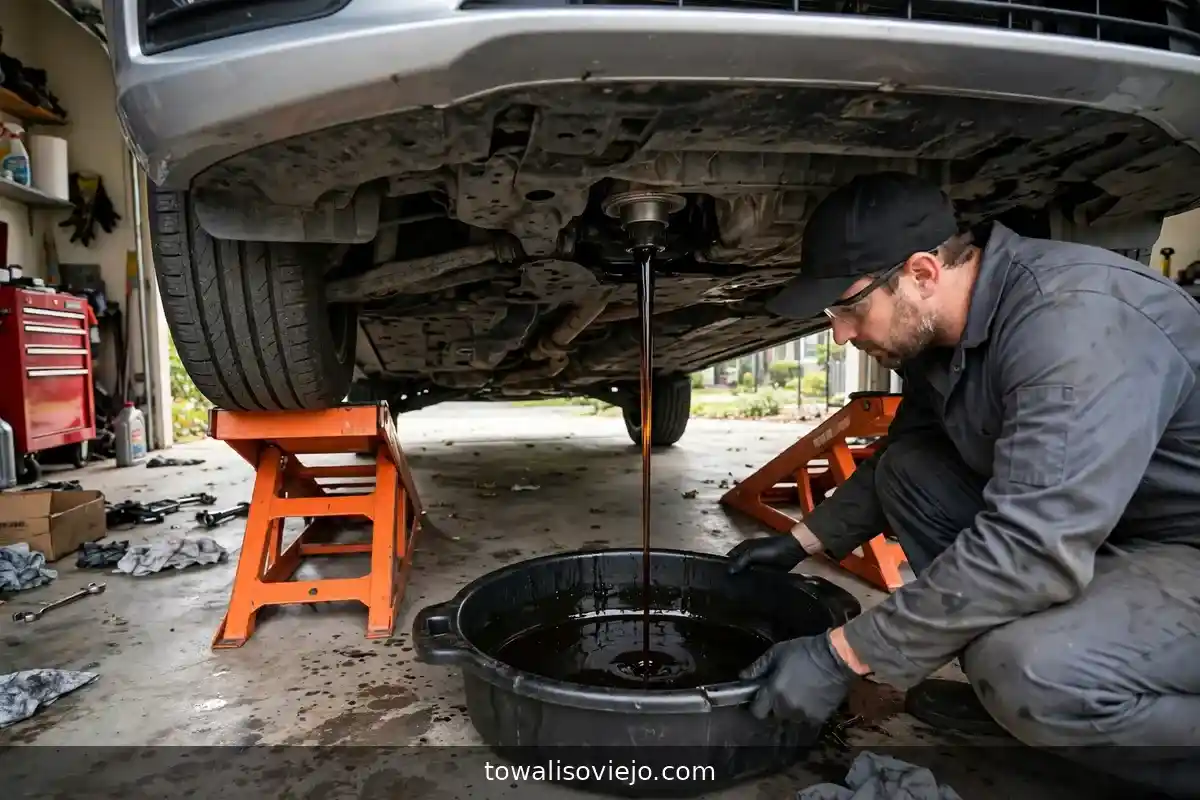
Idle the engine for about five minutes. Warm oil flows faster and carries more dirt out with it. Then shut the engine off and wait about ten minutes. The oil stays thin, but it will not scald you.
Park on level concrete. Set the parking brake. Chock the rear wheels if you lift the front. Then use ramps, or a jack with jack stands.
Never crawl under a car held only by a jack. Jacks slip. Stands hold. Check that the stand rating fits your vehicle weight. Give the car a firm shove before you slide under. It should not rock.
Step Two: Drain the Old Oil
Many newer cars have a plastic splash shield under the engine. Remove its fasteners first. Keep them in a cup so none roll away. Some shields have an access hatch for the plug and filter.
Wear nitrile gloves. Used oil irritates skin. Wash up with soap and water afterward.
Slide the drain pan under the oil pan. Pop the hood and remove the oil filler cap. That lets air in so the oil drains fast.
Find the drain plug at the lowest point of the oil pan. Fit your socket and turn it counterclockwise. Press up on the plug as you finish the last turns. Then pull it away fast. Oil comes out in a rush.
Let it drain until it slows to a drip. That takes about ten minutes. Inspect the plug while you wait. Look for damaged threads and a flattened washer. Wipe the plug clean. Set it aside with a new washer.
Step Three: Replace the Oil Filter
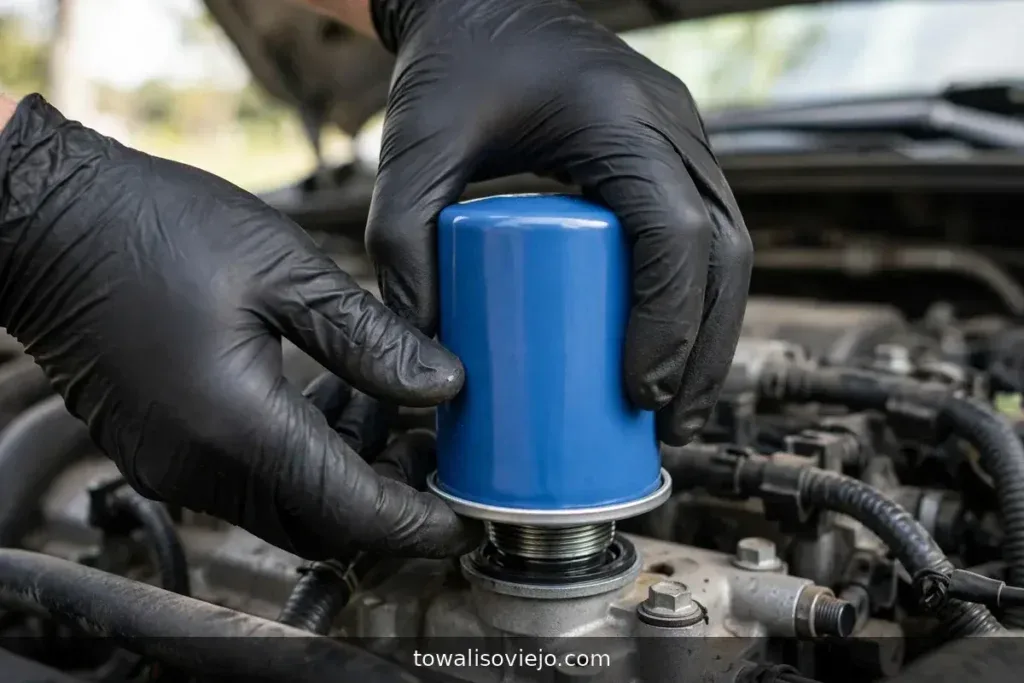
Slide the pan under the filter. Loosen it with the filter wrench, then spin it off by hand. Oil will spill, so tilt it with care.
Now check the engine’s mounting surface. The old rubber gasket must leave with the old filter. If it stays stuck to the engine, scrape it off. A second gasket on top causes the double gasket leak. Wipe the surface clean.
Dab a thin film of fresh oil on the new filter’s gasket. Thread it on by hand until the gasket touches. Then turn it about three quarters of a turn, or follow the box. Do not crank it tight with a wrench. Some engines use a cartridge inside a plastic housing. Follow your manual for those.
Once the pan stops dripping, thread the drain plug and new washer in by hand. Then use the torque wrench. Many drain plugs call for roughly 18 to 30 foot pounds. Your manual lists your exact number. Over tightening strips the threads in the pan. That repair costs far more than a washer.
Step Four: Add Oil and Check the Level
Lower the car. Set the funnel in the filler hole. Pour in about three quarters of the capacity first. Wait a minute while the oil settles.
Pull the dipstick, wipe it, and push it back in. Read the level. Add oil a little at a time. The gap between the two marks equals about one quart on many engines. Stop at the full mark. Never go past it. Too much oil can foam, and foamed oil protects poorly.
Replace the filler cap. Start the engine and let it idle for a minute. The oil pressure light should go out within seconds. Shut the engine off and wait five minutes. Check the dipstick again on level ground. Then look under the car for drips at the plug and the filter.
If your car has an oil life monitor, reset it. Your manual shows how.
Check the dipstick again after your first week of driving. A new filter soaks up some oil. Top off if the level dropped.
The Four Point Check Before You Drive Away
Every shop has a story about an oil change that went wrong. Most start with a skipped check. Run these four points before you drive away.
- The drain plug is tight and has a new washer.
- The new filter is on, and the old gasket is gone.
- The new oil is in the engine, and the jugs are empty.
- The filler cap is back on, and the dipstick sits fully in.
Yes, people forget to add oil. Counting the empty jugs catches it. Count your tools too. A socket left on the engine can fall into the belts.
How Long Does an Oil Change Take?
Plan on 45 minutes to an hour for your first change. Experienced owners finish in about 30. Most of the time goes to draining and cleanup, not to wrenching.
Work on a cool, dry day. Lay cardboard under the car. Keep a roll of shop towels nearby. A tidy driveway makes the job feel easy.
Doing it yourself also saves money. You pay for oil, a filter, and a washer. You skip the labor charge. Full synthetic costs more per quart, but you still skip the shop fee.
How Often Should I Change My Oil?
Your owner’s manual sets the interval. The old 3,000 mile rule no longer fits most modern cars. AAA says most new vehicles can go about 7,500 miles between changes. Some go past 10,000.
If your car has an oil life monitor, follow it. If not, use the mileage in your manual or 12 months, whichever comes first. Drivers who barely hit 5,000 miles a year should watch the calendar.
Severe driving shortens the interval. Short trips in Manhattan or Atlanta stop and go traffic never fully warm the engine. Towing a trailer up Interstate 80 loads the oil. Desert heat in Phoenix thins it. Freezing mornings in Minnesota make it hard to flow. In these cases, change closer to every 5,000 miles.
Write the date and mileage in a log after every change. Keep your receipts for the oil and filter too.
Did you miss a change by a few hundred miles? Do not panic. One late change rarely hurts. A habit of delay builds sludge, so get back on schedule.
Why Is My Car Leaking Oil After a Change?
Three mistakes cause most leaks. The first is a drain plug that is too loose or too tight. The second is a reused washer. The third is the double gasket on the filter.
Read the puddle. Oil pooled right under the oil pan points to the drain plug. Drips off to one side point to the filter.
Fix the plug first. Wipe it dry, fit a new washer, and torque it to spec. If the filter leaks, shut the engine off at once. A bad filter seal can dump a quart in seconds. Remove the filter and check for a stuck old gasket. Then install a fresh filter.
Where Do I Take the Used Oil?
Never pour used oil down a drain or onto the ground. Used oil can foul a lot of water.
Pour the old oil into the empty jugs from your new oil. Seal them tight. Take them to an auto parts store or a local recycling center. Many accept used oil and old filters for free. Call ahead to confirm.
Ready to Change It Yourself?
Now you know how to change oil with the same steps a shop uses. Gather your supplies. Read your manual. Use a torque wrench and a new washer every time.
Start with a car that has easy filter access. Take your time. Your first change may feel slow. By the third one, you will do it without thinking. You will also know your engine better than any quick shop ever could.
What tools and supplies do I need to change oil?
Motor oil in the grade and amount your manual lists, a new oil filter that matches your engine, a new drain plug washer, a socket or box wrench that fits the drain plug, an oil filter wrench, a torque wrench, a drain pan that holds more than your engine’s oil capacity, a funnel, gloves, and shop rags, plus ramps or a jack with two jack stands and wheel chocks.
How often should I change my oil?
Your owner’s manual sets the interval. The old 3,000 mile rule no longer fits most modern cars; AAA says most new vehicles can go about 7,500 miles between changes and some go past 10,000. If you have no oil life monitor, use the mileage in your manual or 12 months, whichever comes first, and change closer to every 5,000 miles under severe driving.
How do I pick the right oil for my engine?
Use the type your manual names: conventional costs least, synthetic blend mixes the two, and full synthetic resists heat and cold best, with many newer engines requiring full synthetic. Match the viscosity grade, such as 0W 20 or 5W 30, where the W stands for winter, and consider a high mileage oil with seal conditioners if your car has more than 75,000 miles.
Why is my car leaking oil after a change?
Three mistakes cause most leaks: a drain plug that is too loose or too tight, a reused washer, or a double gasket on the filter. Oil pooled right under the oil pan points to the drain plug, while drips off to one side point to the filter. Fix the plug first with a new washer torqued to spec; if the filter leaks, shut the engine off at once, check for a stuck old gasket, and install a fresh filter.
Where do I take the used oil?
Never pour used oil down a drain or onto the ground. Pour it into the empty jugs from your new oil, seal them tight, and take them to an auto parts store or a local recycling center; many accept used oil and old filters for free, but call ahead to confirm.