
Toyota 4Runner Towing Capacity: What It Can Really Pull
You love your 4Runner because it goes where other SUVs quit. Then you hook up a trailer, and the questions start. The brochure says 6,000 pounds. Your door sticker tells a different story. This guide breaks down Toyota 4Runner towing capacity in plain words. You will learn the real limits, the hitch rules, and the checks I run in my shop. Read it before you buy that boat or camper.
What Is the Toyota 4Runner Towing Capacity?
A 2026 4Runner tows up to 6,000 pounds based on the maker’s listed rating. Some listings show 5,000 pounds with a standard ball mount. Tongue weight and payload can lower your real number. Check your owner’s manual and door labels before you hook up any trailer.
The sixth generation truck arrived for 2025 and carries into 2026. The maker’s press material lists a 6,000 pound maximum under the SAE J2807 test method. SAE International wrote that standard so every truck gets tested the same way. The test covers hill climbs, braking, and acceleration with a trailer attached.
Fifth generation trucks topped out at 5,000 pounds. So the new model gains 1,000 pounds on paper. The 2026 lineup offers nine grades, from the SR5 up to the Platinum.
Treat that 6,000 pound figure as a ceiling, not a target. It assumes a light cab and a trailer built to the test spec. Your family, your cooler, and your roof rack change the math fast.
Four Numbers That Decide Everything
Every 4Runner carries the same four numbers. Learn them, and the brochure stops fooling you.
Curb weight is the truck empty, with fluids. Payload is what it can carry in the cab and on the hitch. GVWR is the most the loaded truck may weigh. GAWR is the limit for each axle. The rear axle often runs out first when a trailer sits heavy on the hitch.
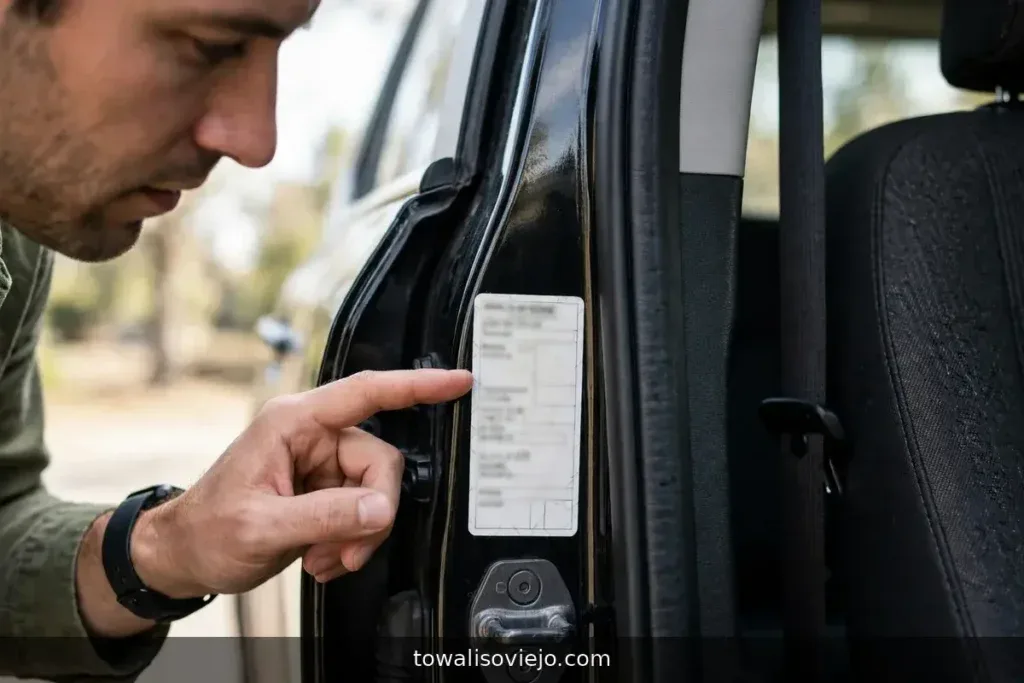
Find GVWR and GAWR on the certification label in the driver door jamb. Find payload on the tire and loading label. Take a photo of both. You will use those numbers every trip.
Does the Hybrid 4Runner Tow More?
The hybrid sounds like the obvious winner. The iForce Max pairs a 2.4 liter turbo four with an electric motor. It makes 326 horsepower and 465 pound feet of torque. The standard iForce engine makes 278 horsepower and 317 pound feet.
You might expect a higher rating. In the US, the maker lists the same 6,000 pound cap for the lineup. Some dealer pages split it, with 5,000 pounds for gas and 6,000 for the hybrid. Listings in Canada show different numbers again. Trust the label on your own truck.
More torque makes towing feel easier. It does not raise the rating. The hybrid also weighs several hundred pounds more. Its GVWR sits at 6,505 pounds on every hybrid grade. Gas trucks range from 6,005 to 6,395 pounds.
Fuel matters too. The tank holds 19 gallons. The hybrid earns about 24 mpg on the highway when empty. A trailer cuts that number fast. Plan your fuel stops earlier than you would with an empty truck.
The Payload Trap Hiding on Your Door Sticker
Here is where most buyers get burned. Payload is what your 4Runner can carry inside and on the hitch. Passengers, gear, a roof rack, and tongue weight all count. Owners report door stickers that list from about 900 pounds to about 1,400 pounds. The number depends on trim and build date.
Run the math. Say your sticker reads 1,000 pounds. Your family weighs 400 pounds. Camp gear adds 200. The hitch and ball mount add 75. That leaves 325 pounds for tongue weight.
Tongue weight should run 10 to 15 percent of the loaded trailer weight. So 325 pounds supports a trailer between 2,200 and 3,250 pounds. That sits far from 6,000.
Add a rooftop tent or bumper armor, and your payload shrinks again. Do not guess. Drive to a public truck scale with everyone and everything aboard. Subtract that weight from the GVWR on the door label.
You can win some payload back. Remove the roof rack when you do not need it. Pack heavy gear low and over the trailer axle, not in the truck. Skip the full water tank until you reach camp.
Do I Need a Weight Distribution Hitch?
Often, yes. A weight distribution hitch spreads tongue weight across the truck and trailer axles. It levels the rig and calms the ride.
Here is the asterisk. One 2026 dealer listing shows 5,000 pounds and 500 pounds of tongue weight with a standard ball mount. It shows 6,000 pounds with a weight distribution hitch. Read your manual to see which numbers apply to your truck.
Installers often suggest this hitch when the trailer weighs more than half the tow vehicle. A 4Runner weighs about 4,500 to 5,500 pounds. So any trailer past roughly 2,500 pounds deserves a hard look.
Pick a hitch whose tongue weight range puts your trailer near the middle. Then check the setup with a tape measure. Measure from the wheel center to the fender lip before and after hooking up. The front should return close to its unhitched height.
Tall trailers may need sway control on the hitch itself. Skip it only on short, low trailers.
Do I Need a Trailer Brake Controller?
If your trailer has electric brakes, yes. Dealers say trailers over about 1,000 pounds generally need their own brakes. State rules vary, so check yours.
The factory tow tech package adds an integrated brake controller. It also adds a trailer backup guide with straight path assist. Platinum trucks get the controller as standard. Trailer sway control comes standard too. It brakes single wheels to calm a swaying trailer.
Set the gain on flat pavement at about 25 mph. Squeeze the manual lever. The trailer should tug back and slow without locking its tires. Too little gain lets the trailer push your truck. Too much makes it skid.
Can a 4Runner Tow a Camper or a Boat?
Yes, if you pick the right size. Teardrops, pop ups, and small travel trailers suit this truck. A loaded trailer near 3,000 pounds fits most families. That is half the brochure figure, and it feels easy.
Use the trailer’s gross weight rating, not the dry weight. Water, propane, batteries, and gear add up fast. Many owners stay near 80 percent of any rating. That margin protects your brakes and your nerves.
Sleeping gear, bikes, and a full propane tank add more. Weigh the loaded trailer once at a truck scale. Then you can stop guessing.
Boats follow the same rule. Add the motor, the gear, and the fuel. Gasoline weighs about 6 pounds per gallon. A full tank adds more than you think.
Three Myths That Cost Owners Money
Myth one says the rating works anywhere. It does not. Test crews run the standard on one road in one set of conditions. Your hills, heat, and headwinds are different.
Myth two says a stronger hitch raises the rating. It never does. The lowest rated part in the chain wins. That part might be the hitch, the ball, the axle, or the brakes.
Myth three says a trailer with its own brakes ignores payload. It does not. Tongue weight still rides on your truck. Trailer brakes help you stop. They do not lighten the hitch.
Three Mistakes I See at the Boat Ramp
Mistake one is loading the tail. Put about 60 percent of the load ahead of the trailer axle. Too much weight behind the axle lifts the tongue and starts sway.
Mistake two is dunking hot hubs. Wheel bearings heat up on the road. A cold dip can pull water past the seals. Touch the hub first. Wait if it is too hot to hold your hand on.
Mistake three is skipping the light check. A wet plug or a corroded pin kills brake lights fast. Test them on every trip, especially after a launch.
Where the Rating Meets the Road
Test numbers come from controlled climbs. Real highways add wind, heat, and cold.
Interstate 5 over the Grapevine north of Los Angeles is a long, steep grade. Use tow haul mode and let the engine hold your speed. Never ride the brakes.
Interstate 40 across Arizona in July bakes engines. Watch the temperature gauge. Leave early, while the air is cooler.
Crosswinds on Interstate 90 in Montana push tall trailers around. Slow down and keep both hands on the wheel.
Freezing mornings in Chicago and Minnesota drop tire pressure about 1 PSI for every 10 degrees. Check pressure cold. Ice also stretches your stopping distance.
Stop and go traffic on Interstate 75 near Tampa heats brakes and cooling systems. Leave extra space and watch your temperature gauge.
Tight garages in Manhattan or Atlanta turn a long trailer into a headache. Measure first. Park outside when in doubt.
The Five Minute Pre Tow Check
Run this list on level ground before every trip.
- Battery: Expect 12.4 to 12.6 volts at rest. Expect 13.8 to 14.4 volts with the engine running. Use a multimeter.
- Trailer plug: Test the seven pin connector. Lights should read near 12 volts when active. Clean corroded pins with contact cleaner.
- Tires: Set truck tires to the door label cold pressure. Set trailer tires to the sidewall maximum.
- Lug nuts: Use a torque wrench and the owner’s manual spec. Recheck after 50 miles.
- Coupler: Latch it, pin it, and cross the safety chains. Connect the breakaway cable.
- Tongue weight: Weigh it once with a tongue scale or a truck scale. Then you know the real number.
Ready to Hitch Up?
Toyota 4Runner towing capacity starts as a big number and ends as a scale ticket. Learn your payload first. Pick the hitch your manual supports. Set your brakes. Stay near 80 percent of the limit. Write your numbers on a card and keep it in the glove box.
AAA and NHTSA both publish towing safety tips. The advice matches mine. Respect the weight ratings on your vehicle labels. I have seen the cost of ignoring them. Do the math, and your 4Runner will carry you and your trailer to the trailhead and back.
What is the Toyota 4Runner towing capacity?
A 2026 4Runner tows up to 6,000 pounds under the SAE J2807 test method, though some listings show 5,000 pounds with a standard ball mount. Fifth generation trucks topped out at 5,000 pounds. Treat 6,000 pounds as a ceiling, not a target, and always check your owner’s manual and door labels first.
Does the hybrid 4Runner tow more?
No. In the US the maker lists the same 6,000 pound cap for the lineup, even though the iForce Max hybrid makes 326 horsepower and 465 pound feet of torque versus 278 horsepower and 317 pound feet for the standard engine. More torque makes towing feel easier but does not raise the rating, and the hybrid weighs several hundred pounds more, with GVWR at 6,505 pounds on every hybrid grade.
Why does payload limit towing before the rating does?
Payload counts everything in and on the truck, including passengers, gear, a roof rack, and tongue weight. For example, a 1,000 pound payload minus 400 pounds of family, 200 pounds of gear, and 75 pounds of hitch and ball mount leaves only 325 pounds for tongue weight, and at 10 to 15 percent tongue weight that supports a trailer of only about 2,200 to 3,250 pounds, far from 6,000.
Do I need a weight distribution hitch?
Often, yes. It spreads tongue weight across the truck and trailer axles, levels the rig, and calms the ride. One 2026 dealer listing shows 5,000 pounds and 500 pounds of tongue weight with a standard ball mount versus 6,000 pounds with a weight distribution hitch, so read your manual for the numbers that apply to your truck. Installers often suggest one when the trailer weighs more than half the tow vehicle, roughly 2,500 pounds for a 4Runner.
Can a 4Runner tow a camper or a boat?
Yes, if you pick the right size. Teardrops, pop ups, and small travel trailers suit this truck, and a loaded trailer near 3,000 pounds fits most families. Use the trailer’s gross weight rating, not the dry weight, and many owners stay near 80 percent of any rating. For boats, add the motor, the gear, and the fuel, remembering gasoline weighs about 6 pounds per gallon.