

How to Remove Water Spots From a Car: A Mechanic’s Escalation Guide
You wash the car, park it in the sun, and come back to white rings on every panel. Those spots look small, but they can scar your paint. I see them on cars from Phoenix driveways to Atlanta apartment lots. This guide shows how to remove water spots from a car, starting with the gentlest fix. You only move up a step when the last one fails.
How to Remove Water Spots From a Car Step by Step
Wash the car in the shade and dry it fully. Spray equal parts white vinegar and water on light spots. Wipe with microfiber and rinse well. Use a clay bar for rough spots. Polish deep etching. Seal the paint with wax afterward. Work on cool panels only.
Think of this as a ladder. Each rung removes a little more material from the surface. Start at the bottom. Stop as soon as the spots disappear. Aggressive steps on easy spots waste clear coat, and you cannot put it back.
Here is the ladder in order.
- Wash and dry: Removes loose dirt and fresh spots.
- Mild acid wipe: Dissolves light mineral rings.
- Clay bar: Lifts stuck mineral deposits.
- Polish: Levels the clear coat and removes etching.
- Professional help: Handles deep damage that polish cannot fix.
What Causes Water Spots on Car Paint?
Water itself does not leave spots. Minerals do. Tap water carries calcium, magnesium, and silica. Rain can carry pollution. When the water evaporates, the minerals stay behind. They form the white rings you see.
Heat makes it worse. A hot panel dries the water in seconds. The minerals have no time to run off. Dark paint shows every ring.
Common causes include these.
- Hard tap water from a garden hose.
- Sprinkler overspray along a driveway or parking lot.
- Rain mixed with road grime and pollution.
- Washing a car in direct sun.
- Letting soap or rinse water air dry.
Climate matters. Desert cities like Phoenix and Las Vegas have very hard water and fierce sun. A single wash in July can leave marks. Winter changes the picture. In Chicago and Minnesota, road salt and slush dry on the paint after every storm. Long drives on Interstate 95 add rain, bugs, and industrial fallout.
Garages help, but they do not solve it. A tight parking garage in Manhattan keeps the rain off. Drips from pipes can still spot a car.
Are These Spots on the Surface or Etched Into the Paint?
Know which type you have before you start. The fix depends on it.
Surface spots. Mineral deposits sit on top of the clear coat. They look chalky and white. A mild acid or a clay bar often removes them.
Etched spots. Minerals or acidic water can eat into the clear coat when the sun bakes them. The paint gets tiny peaks and valleys. Etching looks like a dull ring or a faint scratch. Wiping will not remove it.
Run this simple test. Wash and dry the panel. Then rub your bare palm over the spot. Rough means mineral buildup. Smooth but still visible often means etching.
You can also use a plastic bag. Put your hand in a thin sandwich bag. The bag lets your fingertips feel tiny bumps better. Check the whole hood, roof, and trunk. Those flat panels collect the most water.
Do Vinegar and Water Remove Water Spots From a Car?
Yes, on light spots. White vinegar is a mild acid. It dissolves fresh mineral deposits. Use it with care, because acid can dull clear coat if you leave it on too long.
Follow these steps.
- Park in the shade. Make sure the panel feels cool to your hand.
- Mix equal parts white vinegar and distilled water in a spray bottle.
- Spray one panel at a time. Never spray the whole car.
- Let it sit for about 30 seconds.
- Wipe with a clean, soft microfiber towel.
- Rinse the panel well with clean water.
- Dry it right away.
Do not let vinegar dry on the paint. Do not use it on hot panels. Avoid it on trim, rubber, and bare metal. If the spots remain after two tries, stop. Move up the ladder.
A dedicated water spot remover works the same way and costs a little more. Many contain citric acid. Work a small area, about 8 inches square, then wipe it clean. Follow with a quick detail spray to neutralize leftover acid.
Does a Clay Bar Remove Water Spots?
It removes the spots that sit on top of the paint. A clay bar pulls out bonded contamination. That includes mineral deposits, tree sap, and fallout from the road.
Use plenty of lubricant. A clay bar on a dry panel will scratch the paint. Diluted car shampoo in a spray bottle works well.
Follow this routine.
- Wash and dry the car.
- Flatten the clay in your palm to a small pancake.
- Spray lubricant on a two foot square section.
- Glide the clay back and forth with light pressure.
- Wipe the section and feel it with your palm. It should feel glass smooth.
- Fold the clay to expose a clean side often.
- Drop the clay if it hits the ground. Throw it away.
Start with the roof, hood, and trunk. Those panels hold the most spots. Move to the doors, fenders, and bumpers last. Rinse and dry each section before you move on.
Clay does not fix etching. It cannot level a pit in the clear coat. If spots stay after clay, you have etching. Go to polish.
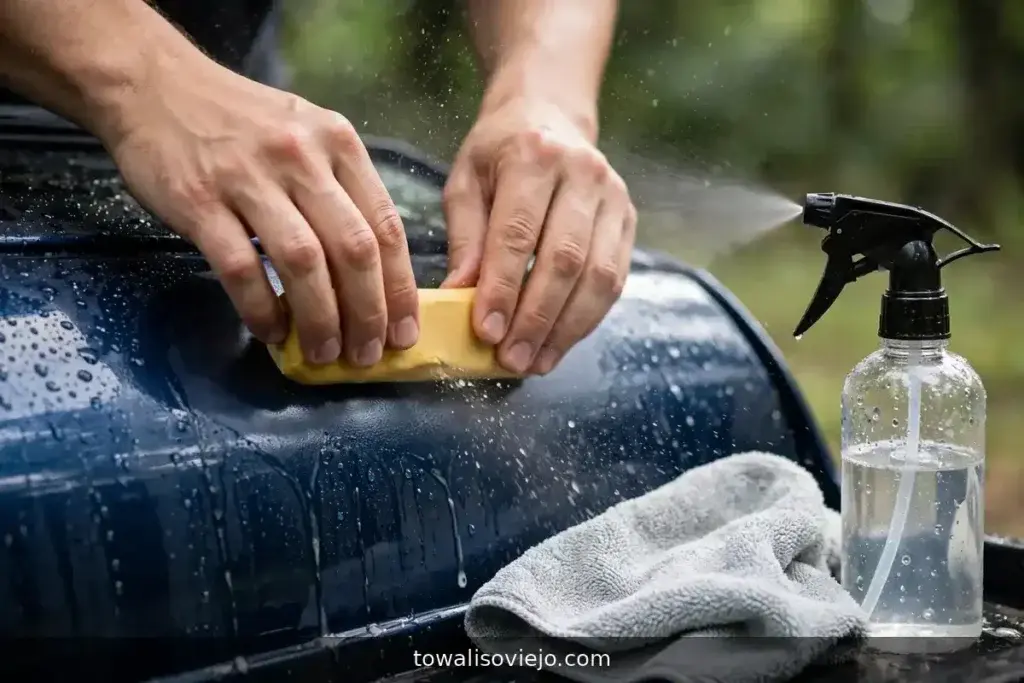
How Do I Remove Etched Water Spots From Paint?
Polish removes a very thin layer of clear coat. That layer holds the etching. When it is gone, the paint looks smooth again. Use a pure polish, not a polish and wax combo.
Hand polishing works for light etching.
- Wash and clay the panel first.
- Put three pea sized drops of polish on a foam pad.
- Work a small area in small circles with firm pressure.
- Wipe it off before it dries.
- Check the result in bright, indirect light.
- Repeat once if needed. Do not repeat more than twice.
A dual action polisher speeds up the job and gives better results. It needs practice. Use a light compound first. Keep the pad flat and the machine moving. Never hold it in one spot, because heat can burn through the paint.
Older cars have thinner paint. Check with a paint depth gauge if you can. A new car has about 4 to 6 mils of paint and clear. Excess polishing can expose the color coat. When in doubt, stop.
Wet sanding is a last resort. It removes more clear coat than polish. Let a professional handle it. A mistake costs a repaint.
Always seal the paint after polishing. Bare polished paint has no protection. Wax or sealant fills the surface and helps water bead.
How Do I Remove Water Spots From Car Windows?
Glass needs a different method. Paint is soft. Glass is hard, so you can use stronger products. But ordinary glass cleaner does not dissolve minerals.
Use this process.
- Wash the window and dry it.
- Feel the glass. Light spots feel smooth. Heavy spots feel rough.
- Apply a glass polish or spot remover to a foam pad.
- Work one small section at a time with firm circles.
- Do not let it dry on the glass.
- Wipe with a damp microfiber towel using straight passes.
- Finish with a light mist of glass cleaner and a straight wipe.
- Check it from an angle in natural light.
Skip paper towels. They can micro scratch the glass. Skip steel wool on a windshield. It can leave permanent marks. Use plain white vinegar only on light spots, because it can leave residue.
Spots that sit for weeks can etch the glass. Deep etching needs a stronger glass polish or professional work. A seal on clean glass helps. Water then beads and rolls off the window. Wipers clear it at highway speed on Interstate 10 or Interstate 80.
Treat the wiper blades too. A worn blade leaves streaks that look like spots. Replace blades once a year.
Can Water Spots Damage My Paint?
Yes. Fresh spots are cosmetic. Old spots can etch the clear coat. Etching is permanent damage. You then have to polish or repaint.
The clear coat is a thin shield. It protects the color layer from sun and rain. Once water spots break through that shield, fading and peeling can start. A hot summer afternoon speeds the damage. Acid rain does too.
Act fast. Spots that sit for a day come off easily. Spots that sit for a month do not. Dry the car after every wash. Wipe off rain before it dries. Keep a spray bottle of detail spray and a microfiber towel in the trunk.
A quick note on safety. Never use harsh chemicals like brake cleaner, thinner, or oven cleaner. They strip paint and hurt trim. Wear gloves when you work with acids. Keep products away from kids and pets.
How Do I Stop Water Spots From Coming Back?
Prevention takes less time than repair. Build these habits.
- Wash in the shade. Never wash a hot car.
- Dry right away. Use a clean microfiber or a drying towel.
- Use a final rinse of soft water. Distilled or filtered water leaves no minerals.
- Avoid sprinklers. Park away from lawn spray in apartment lots and office parks.
- Wax often. A coat of wax every month or after each season helps.
- Consider a ceramic coating. It lasts years and makes water bead off.
- Use a detail spray between washes. It refreshes the water beading effect.
Think about protection by climate. In Phoenix and Las Vegas, wax breaks down fast in the heat. Reapply every few weeks. In Chicago and Minnesota, wash off salt often during winter. A heated garage bay or a self serve wash with a spot free rinse works well.
A car cover helps outdoors. Use a breathable cover. A tight cover on a dirty car can scratch the paint. Wash first, then cover.
Check your tools too. A dirty mitt or a rough towel causes swirls that look like spots. Wash your towels separately. Skip fabric softener, since it clogs the fibers.
Finish Strong and Protect the Shine
Now you know how to remove water spots from a car without guesswork. Start with a wash. Try a mild acid wipe. Move to clay, then polish only if you must. Seal the paint when you finish.
Check your paint each season. Run a palm over the hood. Catch spots early, and a ten minute wipe fixes them. Wait, and the fix gets longer and costlier.
If the damage looks deep, ask a certified detailer or a body shop to check the clear coat. A quick look can save your paint. A little care keeps the finish bright for years.
What causes water spots on car paint?
Minerals in the water cause them, not the water itself. Tap water carries calcium, magnesium, and silica, and when the water evaporates those minerals are left on the paint. Heat makes it worse, and common causes include hard tap water, sprinkler overspray, rain mixed with road grime, washing in direct sun, and letting rinse water air dry.
Do vinegar and water remove water spots from a car?
Yes, on light spots. White vinegar is a mild acid that dissolves fresh mineral deposits. Park in the shade on a cool panel, mix equal parts white vinegar and distilled water, spray one panel at a time, let it sit about 30 seconds, wipe with a clean soft microfiber towel, rinse well, and dry right away. Do not let vinegar dry on paint or use it on hot panels.
Does a clay bar remove water spots?
Yes, for spots that sit on top of the paint. A clay bar pulls out bonded contamination off the paint. Use plenty of lubricant, and never use it on a dry panel. It does not fix etching, so spots that remain after clay point to etching.
How do I remove etched water spots from paint?
Polish removes a very thin layer of clear coat that holds the etching. For light etching, wash and clay first, then hand polish a small area in small circles, wipe before it dries, and repeat at most once more. A dual action polisher speeds the job. Wet sanding is a last resort for a professional, and always seal the paint after polishing.
How do I stop water spots from coming back?
Wash in the shade, never wash a hot car, dry right away, and use a final rinse of soft or distilled water, avoid sprinklers, wax often, consider a ceramic coating, use detail spray between washes, and use a breathable car cover outdoors.