How Often to Replace Brake Pads: A Mechanic’s Mileage and Thickness Guide
Brake pads wear a little every time you stop. No single number fits every driver. I have pulled pads at 20,000 miles and at 70,000 miles on the same model of car. This guide shows how often to replace brake pads for your driving. You will learn the mileage ranges, the thickness limits, and the warning signs that matter most.
How Often to Replace Brake Pads on a Typical Car?
Most drivers should replace brake pads every 40,000 to 50,000 miles. Real life varies from 20,000 to 65,000 miles. City driving, towing, and mountain grades shorten pad life. Highway commuting extends it. Replace pads when friction material reaches about 3 to 4 millimeters, or sooner if you hear squealing or grinding.
Treat mileage as a rough guide only. Thickness tells the real story. A pad that looks thin at 30,000 miles needs service at 30,000 miles. A pad that still looks healthy at 55,000 miles can keep going.
Use this quick rule. Check your pads at every oil change. Measure them once a year at minimum. Replace them when the numbers say so, not when the calendar says so.
Does Driving Style Change How Long Brake Pads Last?
Yes, and it changes the answer more than any other factor. Here is what I see in the shop.
- Highway commuting: Often 60,000 miles or more. Steady speeds mean fewer stops.
- Mixed driving: About 40,000 to 50,000 miles.
- City and stop and go traffic: About 25,000 to 40,000 miles.
- Mountain driving, towing, or hard braking: Often half the normal life.
- Electric and hybrid cars: Often 80,000 miles or more, because regenerative braking does much of the work.
Think about where you drive. A commuter on Interstate 95 around Atlanta or the Northeast corridor stops constantly. A driver in Manhattan may brake a thousand times a week. Those pads wear fast.
Long descents hurt even more. Interstate 80 over the Sierra and the grades near Interstate 10 in Arizona cook pads. Heat breaks down friction material. Downshift and let the engine share the load.
Driving habits matter too. Late, hard stops wear pads quickly. Resting your left foot on the pedal wears them too. Look ahead, ease off early, and coast to a stop when you can.
How Thick Should Brake Pads Be?
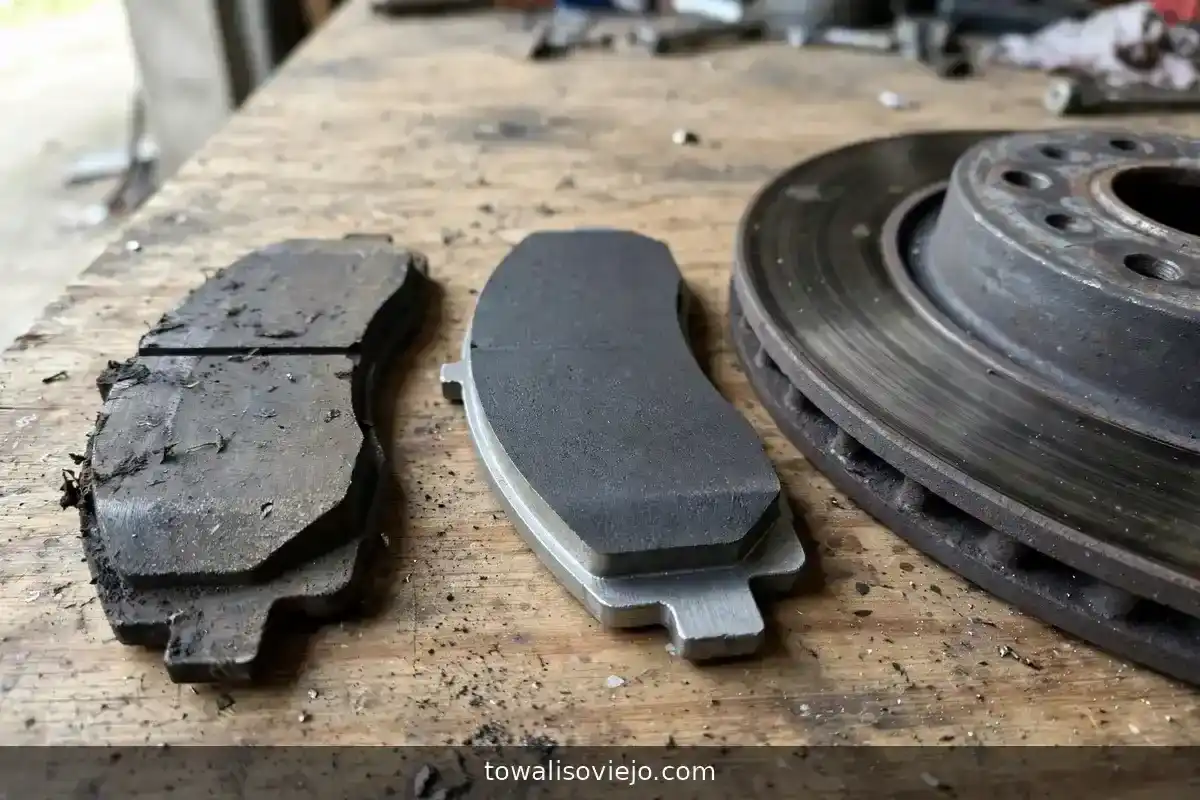
New pads carry about 10 to 12 millimeters of friction material. That material wears down with each stop. The steel backing plate sits underneath. Once the material is gone, metal touches metal. That ruins rotors fast.
Use these zones as a guide.
- Above 6 millimeters: Healthy. No action needed.
- 4 to 6 millimeters: Monitor. Plan your repair.
- 3 to 4 millimeters: Replace soon. Many wear indicators touch the rotor near 3 millimeters.
- Below 3 millimeters: Replace now. Many makers set the minimum at 3 millimeters, or one eighth inch.
Some shops use a simpler rule. Replace pads at one quarter inch or less. That is about 6 millimeters, so it gives you extra margin. Always check the minimum in your owner’s manual. The maker’s number wins.
Wear is not steady. A pad may take 40,000 miles to lose its first 5 millimeters. It may lose the next 4 millimeters in only 15,000 miles. Thin pads run hotter and wear faster. Do not assume you have years left because the pad looks fine today.
What Are the Signs My Brake Pads Are Worn Out?
Your car warns you before the pads fail. Listen and feel for these signs.
- Squealing or squeaking: A small metal tab on the pad scrapes the rotor when material runs low.
- Grinding: Metal now touches metal. Stop driving and call for a tow if it gets loud.
- Pedal vibration: The pedal pulses when you brake. Worn pads or damaged rotors can cause it.
- Longer stopping distance: The car takes more room to stop.
- Pulling to one side: One pad wears faster than the other, or a caliper sticks.
- Dashboard light: Some cars have a pad wear sensor and a warning light.
- Thin pads: You can see the friction material through the wheel spokes.
Not every squeak means worn pads. Morning moisture can cause a short squeal that fades after a few stops. Winter in Chicago or Minnesota makes this common. If the noise stays, check the pads.
Do not confuse the lights on your dash. The ABS light does not tell you about pad wear. A brake system light can point to low fluid or a parking brake issue. Check the manual.
Do Front and Rear Brake Pads Wear at the Same Rate?
No. The front brakes handle about 60 to 70 percent of the stopping force. Weight shifts forward when you brake. The front pads work harder and wear faster. Many cars need front pads twice as often as rear pads.
Check all four wheels anyway. Rear pads can wear unevenly if a caliper slide pin sticks. A rear pad may look worn while the front looks fine. That points to a seized pin.
Replace pads in axle pairs. Never replace only one side. New pads on the left and old pads on the right will cause pulling. Both sides need matched friction.
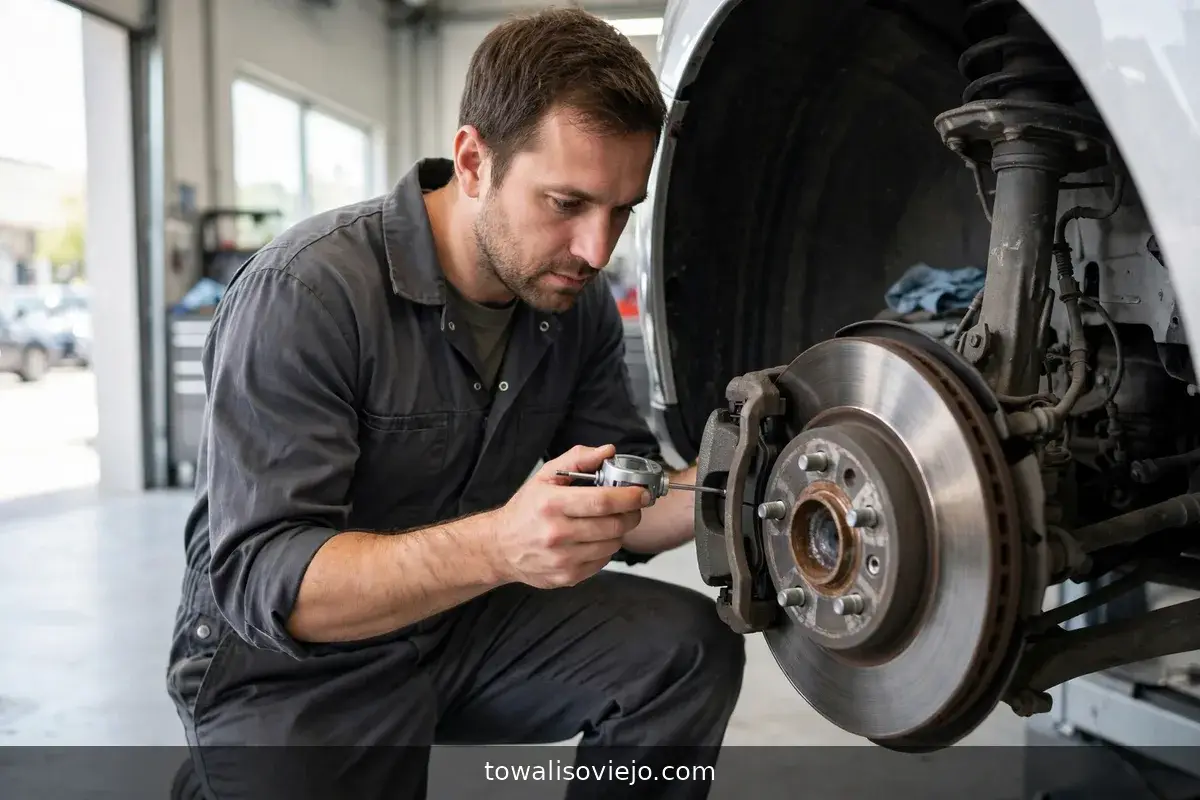
Inspect rotors each time. A rotor must stay above its minimum thickness, stamped on the rotor hat. Measure it with a micrometer. Look for grooves, blue heat marks, and a raised lip at the edge.
Which Brake Pad Type Lasts the Longest?
The pad material changes wear, noise, and dust. Compare the three main types.
- Ceramic pads: Quiet and clean. They usually last the longest in daily driving. They cost more.
- Semi metallic pads: Strong in heat and cold. They suit towing and heavy trucks. They can wear rotors faster and make more dust.
- Organic pads: Soft and cheap. They wear fastest and fade under heat.
Price does not always equal life. A good organic pad can outlast a poor ceramic pad. Buy from a maker with a solid reputation and match the pad to your driving.
Match the pad to the job. A pickup that tows through the Rockies needs a different pad. A small commuter in Atlanta traffic needs another. Desert heat in Phoenix or Las Vegas also tests pads hard. Choose a heat tolerant compound in hot places.
Always replace the hardware too. Clips, shims, and slide pins affect how the pad sits. Worn hardware causes noise and uneven wear.
Can I Check My Brake Pads at Home?
You can, with basic tools. Do this when the brakes are cool.
- Park on level ground and set the parking brake.
- Loosen the lug nuts slightly.
- Raise the car and set it on jack stands. Never trust a jack alone.
- Remove the wheel.
- Look at the pad through the caliper window.
- Measure the friction material with a pad gauge or a caliper.
- Check both inner and outer pads. The inner pad often wears faster.
- Torque the lug nuts to spec in a star pattern when you finish.
Many cars need 80 to 100 foot pounds on the lug nuts, so check your manual. A torque wrench protects the wheel and rotor.
You can also do a quick check without removing the wheel. Shine a flashlight through the spokes. If you see less than about a quarter inch of pad, schedule service. Take a photo. Compare it next month.
Check brake fluid too. A low reservoir can mean worn pads, because the pistons sit farther out. A leak can also drop the level. Fluid should look clear to light amber. Dark fluid needs a flush.
What Happens If I Wait Too Long to Replace Brake Pads?
Worn pads get worse in stages. First, the wear tab squeals. Next, the friction material disappears. Then the steel backing plate scrapes the rotor. That scrape digs deep grooves and makes a harsh grinding sound.
The damage spreads. The rotor overheats and can warp. The caliper piston extends too far and can leak or stick. Brake fluid can boil from the extra heat. A pedal that sinks or feels spongy is an emergency.
A pad job that costs about 150 dollars can turn into a rotor and caliper job. Those parts add hundreds of dollars. You also lose stopping power when you need it most.
Think about a long downhill run on Interstate 80 with thin pads. The pads fade, the pedal softens, and the car does not slow. Do not take that risk. Replace pads early.
Should I Replace the Rotors Every Time I Replace the Pads?
Not always. Rotors wear slower than pads. Many last through two sets of pads. Measure them each time. Replace them if they fall below the stamped minimum thickness.
Replace rotors in these cases.
- The surface shows deep grooves or cracks.
- Blue or dark heat spots cover the face.
- The edge has a raised lip.
- The pedal pulses even with new pads.
- A micrometer reading shows the rotor is under spec.
A shop can resurface rotors that stay above the minimum. That cut removes rust and glaze. Fresh pads then seat evenly. Skipping this step on worn rotors can cause noise and early wear.
Bed in new pads the right way. Make a series of moderate stops from about 35 miles per hour. Let the brakes cool between rounds. This lays an even film of pad material on the rotor.
How Much Does It Cost to Replace Brake Pads?
Costs vary by car, pad type, and region. Pads often run about 150 dollars per axle at many shops. Luxury cars and premium pads cost more. Doing the work yourself saves on labor, but you still need good tools and skill.
Plan for rotors. Worn pads can damage rotors. Resurfacing or replacing them adds to the bill. Calipers and hardware can add more. A late repair costs far more than a timely one.
Waiting also hurts safety. NHTSA treats brake performance as a core safety system. Worn pads stretch your stopping distance and raise crash risk. The right time to replace pads is before the grinding starts.
Know the Number and Check Your Pads Often
Now you know how often to replace brake pads. Start with 40,000 to 50,000 miles as a rough guide. Adjust for your driving, your climate, and your pad type. Measure thickness at every oil change.
Remember the key points. Replace pads at 3 to 4 millimeters. Act on squealing right away. Treat grinding as an emergency. Replace pads in pairs and inspect the rotors each time.
When in doubt, ask a certified technician to measure the pads and rotors. A quick check takes minutes. It protects your brakes, your wallet, and everyone on the road.
How often should I replace brake pads?
Most drivers every 40,000 to 50,000 miles, real range 20,000 to 65,000 miles; check at every oil change and replace at 3 to 4 mm.
How thick should brake pads be?
New pads carry 10 to 12 mm; replace soon at 3 to 4 mm and immediately below 3 mm.
What are the signs my brake pads are worn out?
Squealing from the wear tab, grinding metal on metal, pedal vibration, longer stopping distance, pulling to one side, or a pad-wear warning light.
Do front and rear brake pads wear at the same rate?
No, fronts handle 60 to 70 percent of stopping force and often need replacing twice as often; always replace pads in axle pairs.
Should I replace the rotors every time I replace the pads?
Not always; many rotors last through two sets of pads, but replace them for deep grooves or cracks, heat spots, a raised edge lip, pulsing with new pads, or a reading below minimum thickness.