Car Jerks When Accelerating: Causes, Fixes, and Safety Tips
You press the gas pedal and the whole car bucks. Your hands tighten on the wheel. When a car jerks when accelerating, the engine or transmission is sending you a warning. Most causes are simple and cheap to fix. Others need fast attention. This guide explains what goes wrong, how to test it at home, and when to park the car.
Why a Car Jerks When Accelerating: The Short Answer
Most jerking comes from a misfire, a fuel delivery problem, or a transmission fault. Worn spark plugs, a dirty mass airflow sensor, a weak fuel pump, and low transmission fluid top the list. Scan the engine for trouble codes first. That one step points you to the right system quickly.
An engine needs three things to run smoothly: air, fuel, and spark. The transmission then passes that power to the wheels. A fault in any one of these parts breaks the flow of power. You feel that break as a jerk, a stumble, or a shudder.
Pay close attention to when the jerk happens. Speed, engine temperature, and road load all give clues. The sections below match common symptoms to likely causes.
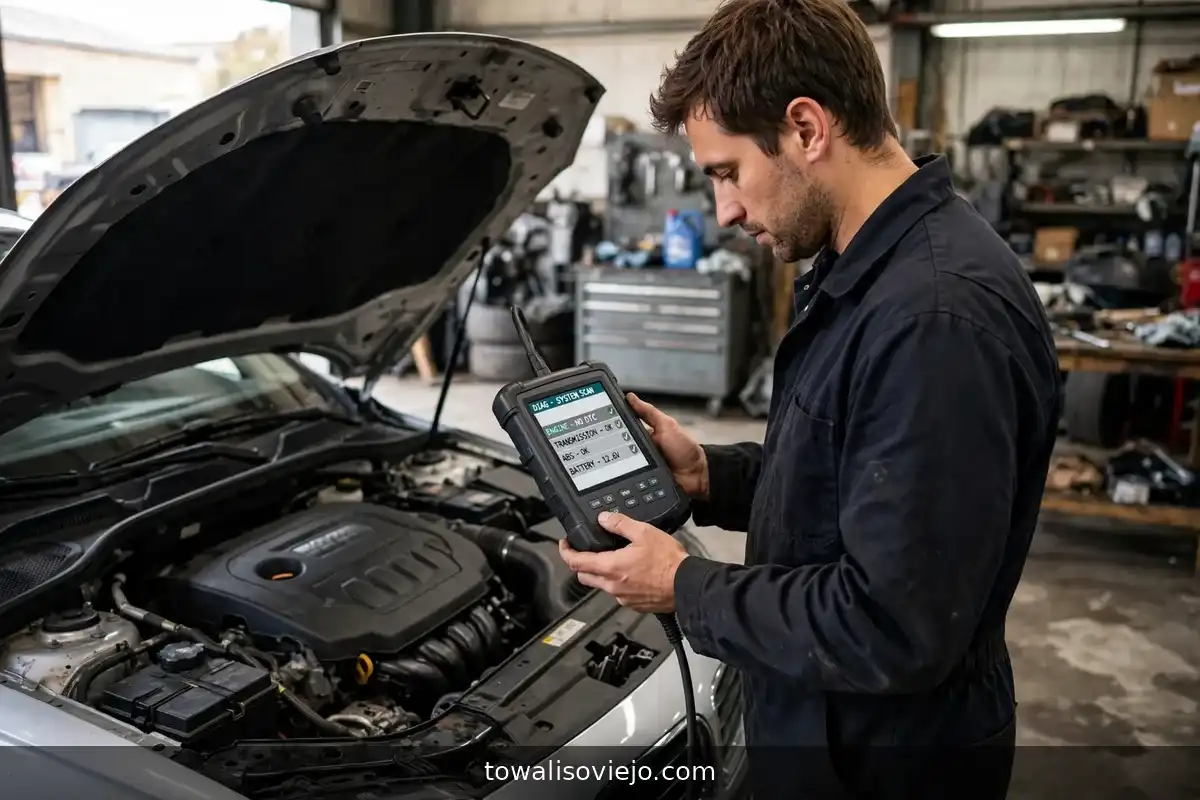
Your first tool should be a scan tool. It reads fault codes that the engine computer stores. SAE International sets the standards behind those OBD II codes. A code such as P0300 means a random misfire. A code such as P0171 means the engine runs lean. Write every code down before you clear anything.
Why Does My Car Jerk When I Accelerate From a Stop?
A jerk at launch usually points to low speed airflow, fuel delivery, or the transmission. Start with the simplest suspect, the throttle body. Carbon builds up around the throttle plate over time. That buildup disturbs airflow when the plate sits almost closed. The engine hesitates, then surges. Spray a cleaner made for throttle bodies onto a rag, and wipe the bore. Never force the plate open by hand on a drive by wire system. Some cars need an idle relearn afterward.
Fuel delivery comes next. A weak pump or a clogged filter cannot hold pressure when you demand power. Many port injected engines want 40 to 60 psi at the rail. Check the factory spec for your engine. Pressure should hold steady when you snap the throttle. A drop during the snap means the pump or filter is failing.
Cold weather makes all of this worse. Freezing mornings in Chicago or Minnesota thicken transmission fluid and slow the engine’s warm up routine. A car that jerks only for the first few minutes often has a sensor, fluid, or fuel supply issue.
Stop and go traffic in Manhattan or Atlanta adds more stress. Automatic transmissions shift constantly in that driving. Worn clutch packs and a shuddering torque converter show up there first. Worn motor mounts also cause a hard lurch at launch. Ask a helper to shift between drive and reverse with the brake held. Watch the engine. Heavy rocking means a bad mount.
Manual transmission drivers should also check their habits. Dumping the clutch too fast causes a jerk. So does a worn clutch disc that grabs.
Why Does My Car Jerk Around 40 to 50 MPH?
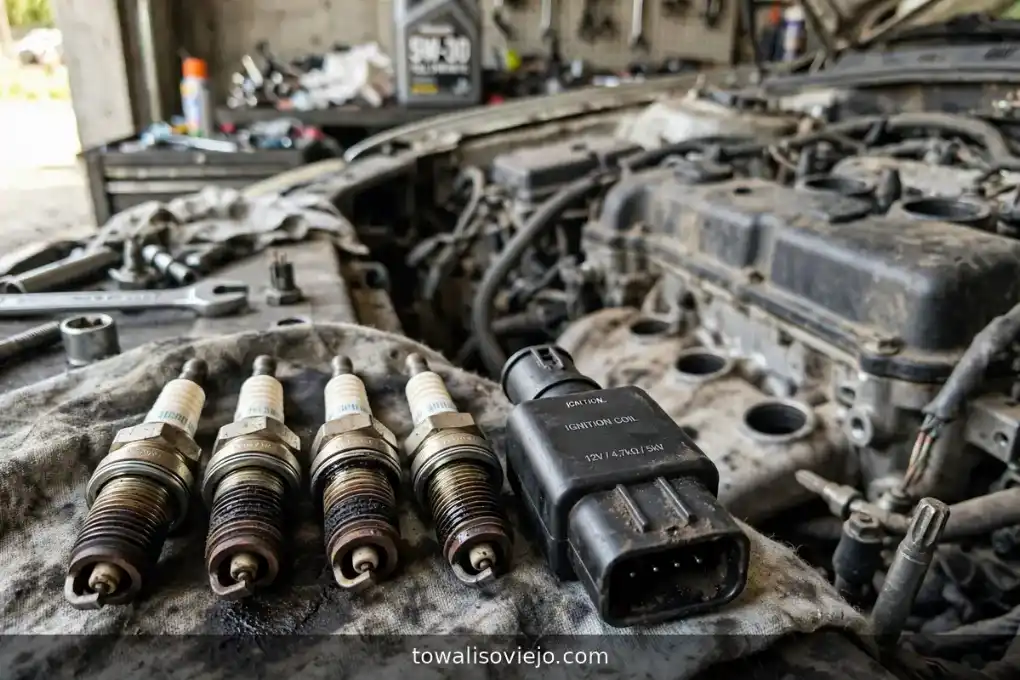
A jerk at cruising speed often signals a misfire under load. Spark plugs work harder when the engine pulls against the road. A weak plug fails to fire, and you feel a stumble. Copper plugs often last 20,000 to 30,000 miles. Iridium and platinum plugs often last 60,000 to 100,000 miles. Pull one and check the gap. Gaps usually run from 0.028 to 0.060 inch, so match your factory spec.
Ignition coils also fail under load. Heat makes this worse. In Phoenix or Las Vegas, a coil may fail on a hot afternoon and work again after it cools. A code such as P0302 points to a plug or coil on cylinder two. Swap that coil with a neighbor. If the misfire code follows the coil, you found the culprit.
Airflow problems show up here too. A dirty mass airflow sensor reads too little air. The computer adds too little fuel, and the engine stumbles on a long on ramp. Spray only MAF sensor cleaner on the sensor wires. Never touch the wires with a brush or a cloth. Let the part dry fully before you reinstall it.
A clogged catalytic converter chokes the exhaust. Power fades as speed climbs, and the car may feel like it hits a wall. You may smell rotten eggs. Drivers on Interstate 95 or Interstate 80 notice this on long grades. The engine needs the most airflow there.
The torque converter lock up clutch often engages near this speed range, too. An erratic lock up feels like a repeated, light jerk. It often points to dirty fluid or a faulty solenoid.
Can Low Transmission Fluid Make a Car Jerk?
Yes, it can. Transmission fluid carries the hydraulic pressure that engages the clutches inside an automatic. Low fluid drops that pressure. The clutches slip, then grab hard. You feel a jerk between gears. Burnt, dirty fluid causes the same problem by clogging small passages in the valve body.
Check the fluid with the engine warm and the car on level ground. Many manufacturers want the engine running in park, so read your owner’s manual first. Fresh fluid looks bright red or amber. Brown or black fluid with a burnt smell signals trouble. Many newer cars have sealed transmissions with no dipstick. A shop must check those with a scan tool and a fill plug.
Continuously variable transmissions, known as CVTs, shudder when the fluid ages. They need the exact fluid in the owner’s manual. The wrong fluid can damage the belt and pulleys. Heavy towing over mountain passes, such as Interstate 70 in Colorado, heats fluid fast. Hot fluid breaks down sooner.
Software matters as well. A transmission control module sets shift timing. Manufacturers often release updates, called technical service bulletins. You can search NHTSA records for bulletins and complaints that match your model and symptom.
Why Does My Car Jerk Only When I Accelerate Through a Turn?
Turns load the engine mounts, axles, and fuel system in odd ways. That makes a turn a handy test. A jerk only during a turn narrows the list quickly.
Start with the fuel level. A low tank can let fuel slosh away from the pump pickup in a tight turn. The pump starves for a moment, and the engine stumbles. Tight parking garage ramps in Manhattan or Atlanta show this fast. Keep the tank above one quarter and see if the problem fades.
Next, look at the CV axles. A worn CV joint clicks when you turn and press the gas. The click rises with speed. Grease inside the wheel and a torn rubber boot confirm the diagnosis.
Worn engine and transmission mounts also let the powertrain shift under torque. That movement tugs on wiring, hoses, and linkages. You feel it as a jerk. Replacing the mount usually fixes it.
Is It Safe to Drive a Car That Jerks?
It depends on the warning signs. A flashing check engine light means an active misfire. Raw fuel enters the exhaust and overheats the catalytic converter. Stop driving soon, because converter damage costs far more than plugs. A steady light with mild symptoms gives you more time. Drive gently and book a repair this week.
Risk grows on fast roads. A sudden loss of power while merging on Interstate 10 or Interstate 95 can cause a crash. Never ignore a jerk that comes with a loss of power. Turn on your hazard lights and move to the shoulder.
Some cars enter limp mode when the computer finds a serious fault. The car limits power and shifting to protect itself. Treat limp mode as a stop sign. NHTSA tracks owner complaints about hesitation and surging. Search its database to see if your model has known problems.
Step by Step Diagnosis You Can Do at Home
Follow this order. It moves from cheap and fast tests to harder ones.
- Read the codes. Plug a scan tool into the port under the dash. Record every code and the freeze frame data.
- Test the battery. A multimeter should read 12.4 to 12.6 volts with the engine off. It should read 13.7 to 14.7 volts with the engine running. Low voltage upsets the computer and sensors.
- Inspect the air path. Check the air filter, the intake boot, and the vacuum hoses. A hissing sound means a leak. A vacuum gauge should read 17 to 21 inches of mercury at idle near sea level. Readings drop at altitude, such as in Denver.
- Clean the mass airflow sensor and the throttle body. Use products made for each part.
- Pull the spark plugs. Tan tips look healthy. Black soot means a rich mixture. Oil on the tip points to a leaking seal.
- Test fuel pressure with a gauge on the rail test port. Compare it with your factory spec.
- Check the transmission fluid level and color.
- Take a test drive and take notes. Record the speed, the engine rpm, and the load for each jerk.
Smart Repair Order and Maintenance Habits
Spend money in the right order. Start with the cheap parts: the air filter, spark plugs, and sensor cleaning. Move to fuel parts next. Look at the transmission last, unless the symptoms point there. A set of plugs costs far less than a transmission rebuild.
Prevent repeat problems with routine care. Replace the engine air filter every 15,000 to 30,000 miles. Dusty roads in the desert Southwest shorten that interval. Follow the owner’s manual for spark plug and transmission fluid changes. Severe use, such as towing or stop and go driving, usually calls for shorter intervals. Buy fuel from busy stations. High turnover keeps the supply fresh.
Final Checklist Before You Visit a Shop
Remember this rule: when your car jerks when accelerating, start with air, spark, and fuel. Most fixes live in those three systems.
Use this short list before you pay for a repair:
- Read and write down every trouble code.
- Note when the jerk happens: cold or hot, slow or fast, straight or turning.
- Check plugs, filters, and fluid levels.
- Tell the technician what you already tested.
A clear description saves diagnostic time and money. A smooth running car gives you confidence on every road, from city blocks to long Interstate runs. Fix the small problem today, before it grows into a large one.
What causes a car to jerk when accelerating?
Most jerking comes from a misfire, a fuel delivery problem, or a transmission fault. Worn spark plugs, a dirty mass airflow sensor, a weak fuel pump, and low transmission fluid top the list. Scan the engine for trouble codes first.
Why does my car jerk when I accelerate from a stop?
A jerk at launch usually points to low speed airflow, fuel delivery, or the transmission. Suspects include carbon buildup on the throttle body, a weak pump or clogged filter, and worn motor mounts that let the engine rock.
Why does my car jerk around 40 to 50 mph?
A jerk at cruising speed often signals a misfire under load: a weak spark plug or ignition coil, a dirty mass airflow sensor, a clogged catalytic converter, or an erratic torque converter lock-up clutch.
Can low transmission fluid make a car jerk?
Yes. Low fluid drops the hydraulic pressure that engages the clutches, so they slip and then grab hard. Check fluid warm on level ground; fresh fluid looks bright red or amber, while brown or black fluid with a burnt smell signals trouble.
When should I stop driving a jerking car?
A flashing check engine light means an active misfire that can overheat the catalytic converter, so stop driving soon. A sudden loss of power on a fast road, or limp mode limiting power and shifting, is a stop sign: hazards on, move to the shoulder.