Steering Wheel Shakes When Braking: A Mechanic’s Feel and Fix Guide
You press the brake pedal and the wheel starts to shudder. The shake can scare you. I have felt it on long downhill stretches of Interstate 80 and in stop and go traffic in Atlanta. A steering wheel shakes when braking for a few clear reasons. This guide shows you how to match what you feel to the part that is failing. You will also learn which fixes are safe at home.
What Does It Mean When the Steering Wheel Shakes When Braking?
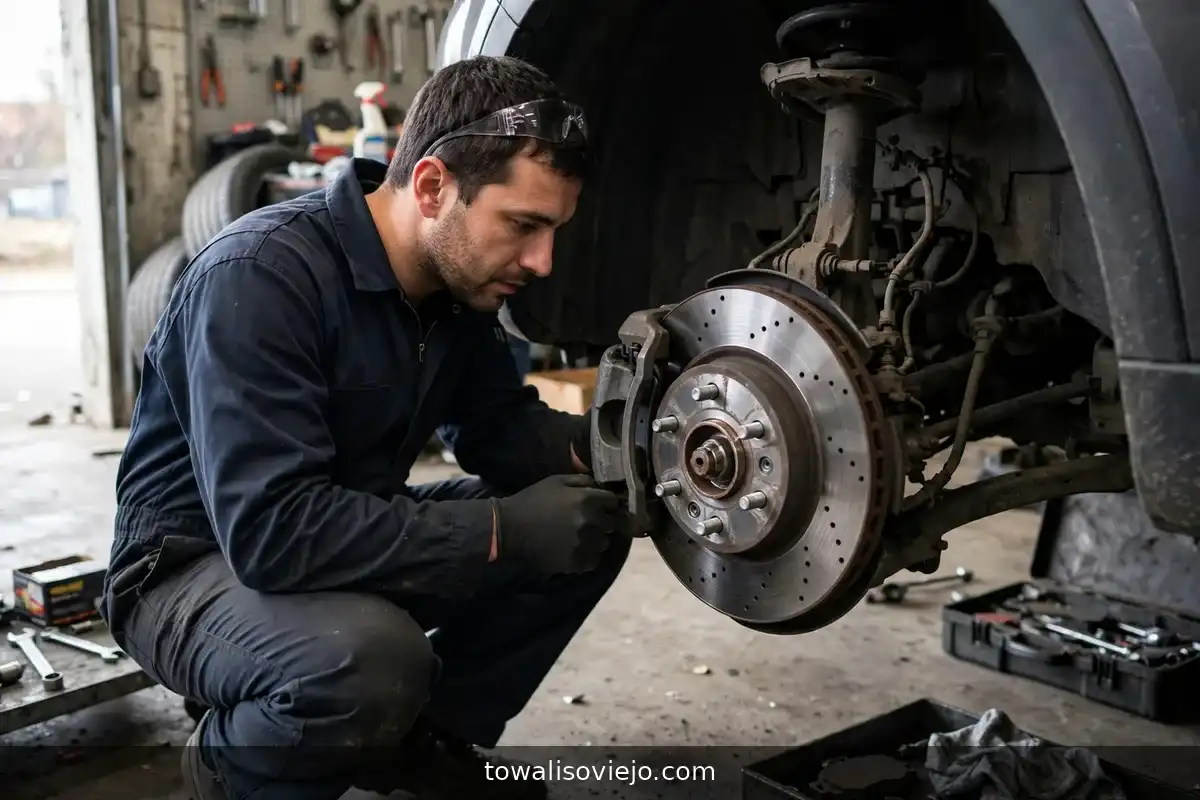
Warped or unevenly worn front brake rotors cause most braking shakes. Heat and uneven pad contact make the rotor thickness vary. The pads then pulse against the rotor, and you feel it in the wheel. A sticking caliper, worn suspension, or loose lug nuts can also cause it.
Use this feel map to narrow the cause.
- Wheel shakes only when braking: Front rotors, front pads, or a front caliper.
- Brake pedal pulses under your foot: Uneven rotor thickness at any wheel.
- Seat or whole car shakes when braking: Rear rotors or rear drums.
- Wheel shakes at speed without braking: Tire balance, bent wheel, or worn suspension.
- Car pulls to one side when braking: Sticking caliper or a collapsed brake hose.
- Clunk or loose feel with the shake: Worn ball joint, tie rod, or control arm bushing.
Test it on a safe, straight road. Brake gently from 60 miles per hour. Note whether the shake grows with speed or fades as you slow down. Write down what you feel. That detail speeds up any shop visit.
Are Warped Rotors Really the Cause?
Often yes, but the real problem is a bit different. Rotors rarely bend like a potato chip. They develop uneven thickness. Mechanics call it disc thickness variation. They also check lateral runout, which is a wobble as the rotor spins.
Here is how the shake starts.
- The rotor thickness varies as it turns.
- The pads and caliper pistons follow those high and low spots.
- The pistons push in and out and move brake fluid.
- The pulses travel to the pedal and the steering wheel.
New rotors usually carry about 0.0005 to 0.001 inch of runout. A hub should show less than 0.002 inch. A small error adds up quickly. A dial indicator measures runout. A micrometer measures thickness at several points around the rotor.
Heat triggers the problem. Hard stops and long downhill runs push rotors to extreme temperatures. Pad material can also transfer unevenly onto the rotor. That leaves thick and thin patches that grab differently.
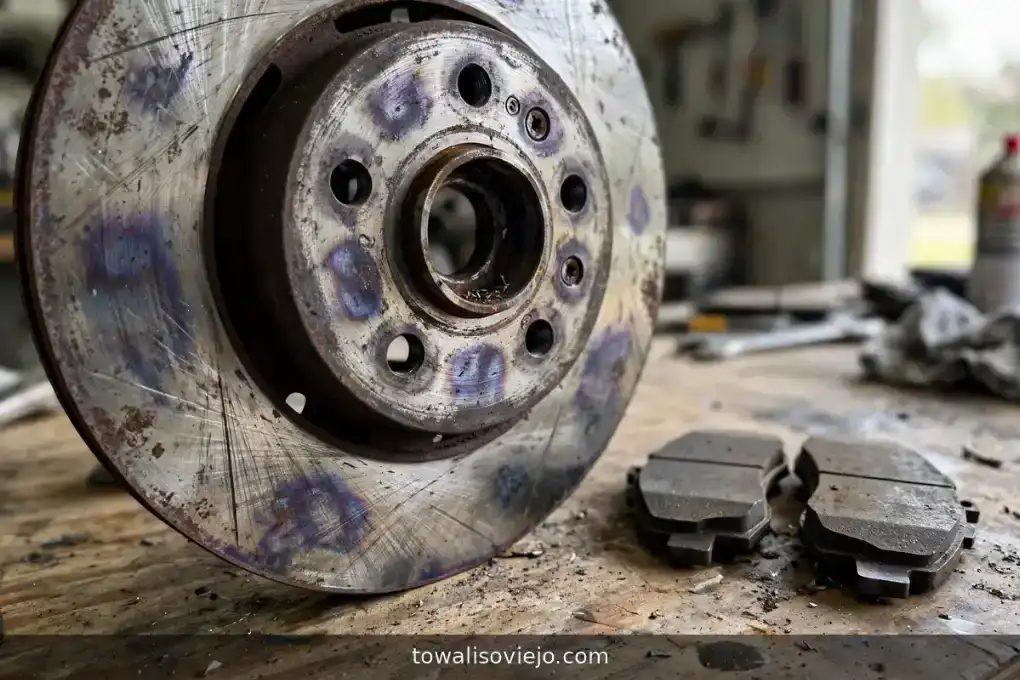
Check the rotor surface. Look for blue heat marks, grooves, or a lip at the edge. Look at the thickness stamp on the rotor hat. A rotor below the minimum thickness needs replacement.
Is It the Rotors or the Tires?
Both cause steering shake, so test the timing. Rotor shake shows up when you brake. Tire shake shows up at certain speeds, often 50 to 70 miles per hour. It stays when you take your foot off the pedal.
Check the tires first. They cost less to fix.
- Set tire pressure to the number on the door placard. Many cars call for 32 to 36 psi.
- Look for bulges in the sidewall. Replace a bulged tire at once.
- Run your hand across the tread. Jagged or cupped wear points to alignment or worn parts.
- Inspect the inside of each wheel for mud or a lost weight.
A tire balance often costs around 20 dollars. It is the first test I run. A flat spot from a long sit can also cause shake. The shake often fades after a few miles of warm driving.
Loose lug nuts cause a wobble too. Check them after any tire change. A loose nut can move by hand. Stop driving and tighten them with a torque wrench. Many cars need 80 to 100 foot pounds, so check your manual. Tighten in a star pattern.
Can a Sticking Caliper Make the Steering Wheel Shake?
Yes. The caliper squeezes the pads against the rotor. A stuck caliper may clamp too hard or fail to release. Either way, the pressure is uneven. One rotor heats up faster than the others and wears unevenly.
Watch for these signs.
- The car pulls to one side when braking.
- You smell burning pads after a short drive.
- One wheel looks darker with brake dust than the others.
- One wheel feels much hotter than the rest.
- The brake pedal feels soft or sinks.
An infrared thermometer helps here. Drive a few miles with light braking. Then point it at each rotor. A rotor that runs far hotter than the opposite side points to a dragging caliper. In desert heat, around Phoenix or Las Vegas, heat builds even faster.
Dirt and rust jam the slide pins. A torn rubber boot lets water in. An old brake hose can swell inside and hold pressure. A shop can free the pins, lube them, or replace the caliper. Do not ignore this fault. It can lead to brake failure.
Can Worn Suspension Parts Cause Shaking When I Brake?
Yes. Braking throws weight onto the front wheels. A loose ball joint, tie rod, or control arm bushing can move under that load. The wheel then shimmies and the steering wheel shakes.
You can check for play with the car safely on jack stands.
- Park on level ground and set the parking brake.
- Lift the front end and set it on jack stands.
- Grab the wheel at the top and bottom. Rock it in and out.
- Grab it at the sides. Rock it left and right.
- Watch for play, clunks, or movement in a joint.
Movement at the top and bottom points to a ball joint or wheel bearing. Movement at the sides points to a tie rod. Cracked rubber on a bushing also signals wear. Worn parts also cause uneven tire wear and a loose feel on bumps.
Alignment matters too. A poor alignment makes the car pull and wears the tires. Roads full of potholes, like winter streets in Chicago or Minnesota, shorten suspension life. Replace worn parts before they fail.
Is It Safe to Drive With a Shaking Steering Wheel?
A light pulse when braking is usually safe for a short drive to a shop. Drive gently and leave extra stopping room. Avoid highways and steep hills until the shop fixes it. NHTSA treats brake problems as safety issues for good reason.
Stop driving if any of these happen.
- The shake grows fast or turns violent.
- The brake pedal sinks to the floor.
- You smell burning or see smoke from a wheel.
- The car pulls hard to one side.
- A grinding noise comes from the brakes.
- The brake warning light stays on.
Do not confuse this with normal ABS pulses. The antilock system makes the pedal buzz when tires slip on ice or wet roads. That is normal. A shake on dry pavement is not.
Remember that shaking rotors stretch your stopping distance. Rotors and pads wear faster too. A small fix now often prevents a big bill.
Should I Resurface or Replace the Rotors?
Both options work in the right case. A shop can resurface a rotor if it stays above the minimum thickness. A lathe shaves a thin layer off each side. Mechanics often limit that cut to about 0.02 inch per side. A better method machines the rotor on the car, so it runs true to the hub.
Replace the rotors if they are thin, grooved, cracked, or blue from heat. Replace the pads at the same time. New pads on old rotors will not fix the shake. Old pads can also leave uneven material on new rotors.
Good prep makes the repair last.
- Clean the hub face with a wire brush. Rust causes runout.
- Check the hub runout with a dial indicator.
- Install the rotor and caliper.
- Torque the lug nuts to spec in a star pattern.
- Bed in the new pads as the maker directs.
Skip the cheapest parts. Low quality rotors can warp again within months. A brake job on one axle often costs a few hundred dollars, so ask for a quote. Ask the shop to measure runout and thickness. That check protects your money.
How Much Does It Cost to Fix a Shaking Brake?
Costs depend on the cause, so match the fix to the diagnosis. Prices vary by car and region.
- Tire balance: around 20 dollars per wheel at many shops.
- Caliper slide pin service: a modest labor charge if the caliper is not seized.
- Pads and rotors on one axle: often a few hundred dollars.
- Caliper replacement: adds parts and labor to the brake job.
- Suspension parts: vary widely, from a tie rod to a full control arm.
Ask for a written quote before work starts. A good shop shows you the measured runout and the rotor thickness. Skipping a cheap fix often turns it into a bill near 500 dollars later. Pads often last about 50,000 miles, so track your mileage.
How Do I Keep the Shaking From Coming Back?
A few habits protect your brakes.
- Do not rest your foot on the pedal when stopped after hard braking. Hot pads can leave a mark on the rotor.
- Torque lug nuts by hand with a wrench, not an impact gun.
- Bed in new pads with a series of moderate stops.
- Replace brake fluid every two to three years.
- Rinse road salt from the wheels in winter.
- Downshift on long descents so the engine helps slow the car.
- Drive the car often. Sitting causes rust on the rotors.
City driving in Manhattan or Atlanta keeps brakes hot and stressed. Highway drivers on Interstate 95 should check pads every oil change. Look at the pad thickness through the wheel. Replace pads at about one eighth inch.
Smooth Stops Start With a Quick Check
When the steering wheel shakes when braking, listen to what your car tells you. Find the feel, test the tires, then check rotors, calipers, and suspension. Fix the cause, not just the symptom. Keep stopping power strong, and your car stays safe.
Schedule a brake check at least once a year. If the shake returns after a repair, ask the shop to measure runout again. When in doubt, ask a certified technician. A smooth pedal and a steady wheel are worth the effort.
What causes a steering wheel to shake when braking?
Warped or unevenly worn front brake rotors cause most braking shakes. Heat and uneven pad contact make rotor thickness vary, and the pads pulse against the rotor. A sticking caliper, worn suspension, or loose lug nuts can also cause it.
How can I tell if it is the rotors or the tires?
Rotor shake shows up when you brake. Tire shake shows up at certain speeds, often 50 to 70 miles per hour, and stays when you take your foot off the pedal. Check tire pressure against the door placard, look for sidewall bulges, and try a tire balance first.
Can a sticking caliper make the steering wheel shake?
Yes. A stuck caliper clamps too hard or fails to release, so pressure is uneven and one rotor heats and wears faster. Watch for pulling to one side, a burning pad smell, one wheel darker with brake dust, or one wheel much hotter than the rest.
Is it safe to drive with a shaking steering wheel?
A light pulse when braking is usually safe for a short, gentle drive to a shop. Stop driving at once if the shake turns violent, the brake pedal sinks, you smell burning or see smoke, the car pulls hard, you hear grinding, or the brake warning light stays on.
Should I resurface or replace the rotors?
Resurface only if the rotor stays above its minimum thickness; a lathe cut is often limited to about 0.02 inch per side. Replace rotors that are thin, grooved, cracked, or blue from heat, and replace the pads at the same time.