
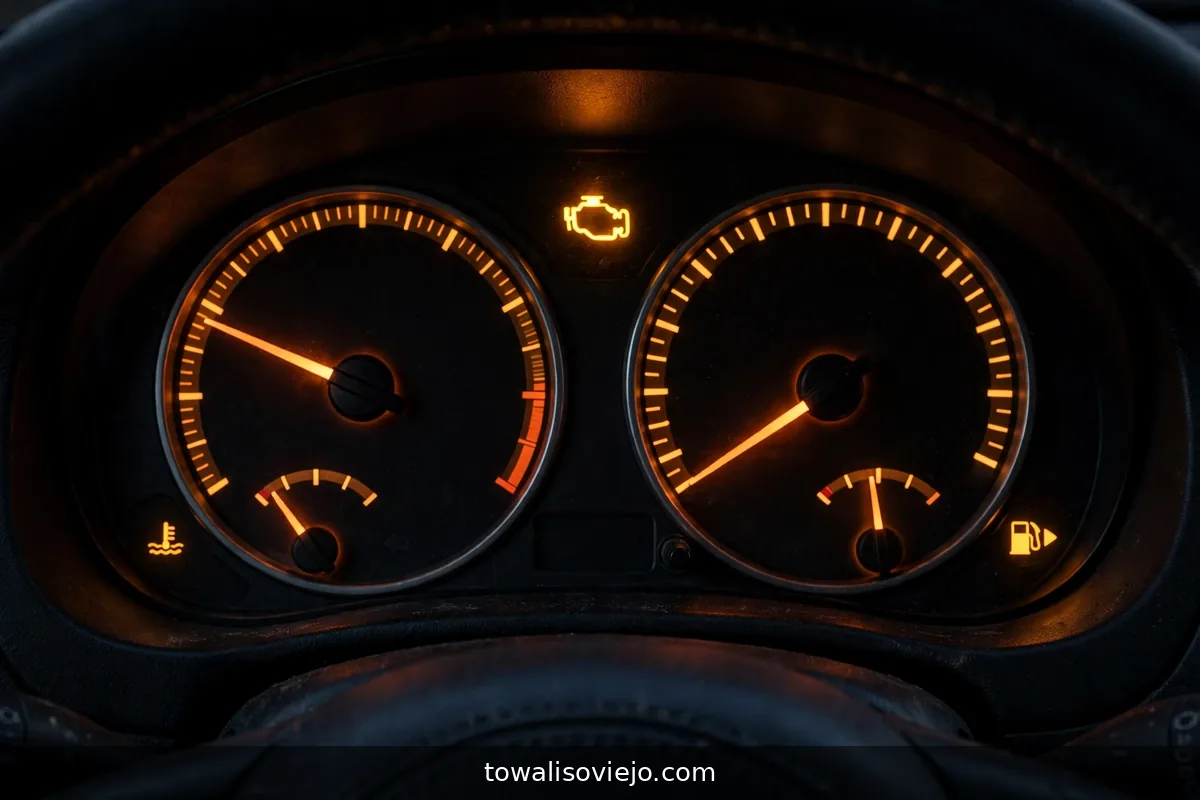
Why Is My Check Engine Light On? A Mechanic’s Step by Step Guide
That amber light on your dash can ruin a good day. Many drivers ask why is my check engine light on when the car feels fine. The answer is usually simple. The engine computer found a fault and stored a code. This guide explains the common causes, the real risks, and the exact steps I use in the shop. You will know when to keep driving and when to pull over.
Why Is My Check Engine Light On?
The check engine light comes on when the engine computer logs a fault. Common causes include a loose gas cap and a bad oxygen sensor. Worn spark plugs, a failing converter, and a dirty airflow sensor also trigger it. A solid light needs a check soon. A flashing light means stop driving and get help.
Every car built since 1996 carries a system called OBD2. Dozens of sensors feed data to the engine computer. The computer compares each reading to a safe range. When a reading falls outside that range for several drives, it stores a trouble code. Then it lights the dash lamp. SAE International sets the code format that every maker follows.
Technicians call the dash lamp the malfunction indicator lamp. The light only tells you a problem exists. The code tells you which system acted up. Neither one names the broken part. That gap causes most wasted repair money.
Is It Safe to Drive With the Check Engine Light On?
A solid light usually allows a short, careful drive. Check three things first. Look at the temperature gauge. Look for an oil pressure warning. Feel for any loss of power, shaking, or odd noise. If all three look normal, drive to a shop or your driveway.
Stop right away if the engine overheats or the oil light appears. Pull off the highway and shut the engine down. A stalled engine on Interstate 10 in Phoenix heat turns a small fault into a big bill.
Do not ignore a solid light for months. A small fault can hurt fuel economy and damage the catalytic converter. It can also fail your state emissions test. States like California and New York read the OBD2 port during every inspection.
Many drivers wait too long to act on a solid light. Most of those faults start small. A cheap sensor left alone can ruin a costly converter. Early action keeps the repair bill low.
Does the Color of the Check Engine Light Matter?
Yes. Amber or yellow means the computer found a fault. Schedule a visit soon. Red signals a serious problem, such as overheating or low oil pressure. Stop the car at once. Some newer cars show a wrench or a text message instead. Read your owner’s manual to learn what each symbol means.
What Does a Flashing Check Engine Light Mean?
A flashing light signals an active engine misfire. Fuel in one cylinder fails to ignite on time. Raw fuel then rushes into the exhaust. That fuel burns inside the catalytic converter and can melt it within minutes. A new converter often costs 500 to 2,500 dollars.
Act fast when the light flashes. Follow these steps.
- Ease off the gas pedal and avoid hard acceleration.
- Skip hills, towing, and highway speeds.
- Pull over at the first safe spot.
- Shut the engine off.
- Call roadside help or tow the car.
A mechanic will check the spark plugs first. Most plug gaps fall between 0.035 and 0.060 inch, depending on the engine. We measure the gap with a feeler gauge. Then we test the ignition coils and fuel injectors. A compression test comes next if the plugs look good. Healthy cylinders usually read within 10 percent of each other.
Will a Loose Gas Cap Turn On the Check Engine Light?
Yes, it can. The fuel system seals in gasoline vapors. Mechanics call this sealed network the EVAP system. A loose, cracked, or missing cap breaks the seal. The computer then sets a code such as P0457 or P0455.
Fix it in seconds. Turn the cap until it clicks. Inspect the rubber seal for cracks. Replace the cap if it looks worn. A new cap costs very little.
The light will not vanish at once. The computer must run its leak test again. That test usually passes within a few days of normal driving. Heat adds to the problem in places like Las Vegas, because hot fuel makes more vapor. Always tighten the cap after every fill up.
How Do I Read Check Engine Light Codes?
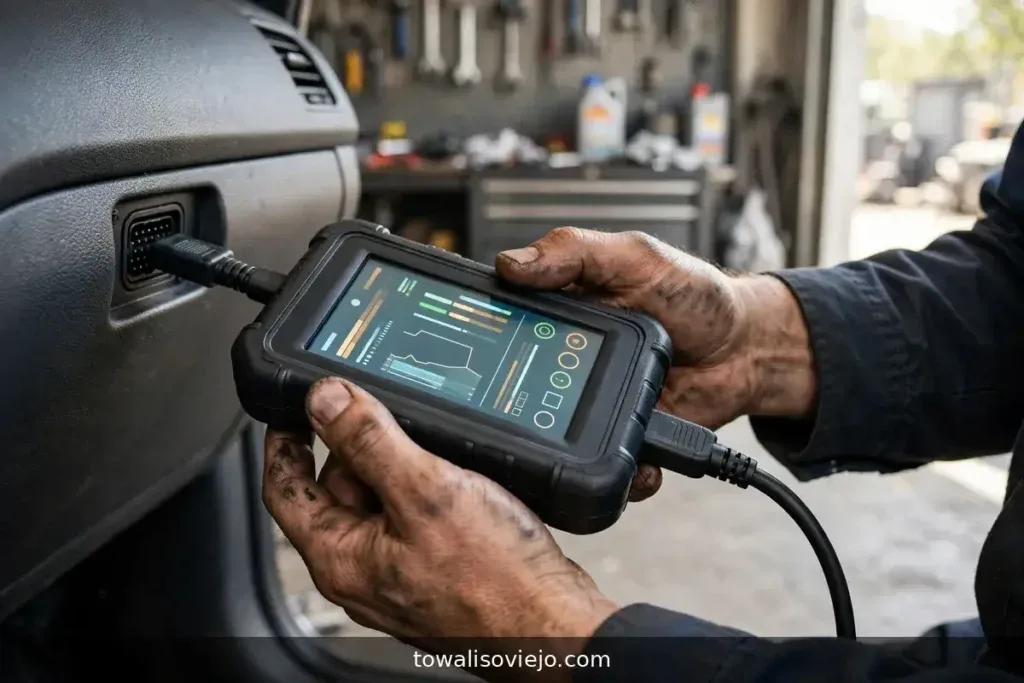
Reading codes takes five minutes and a basic scanner. Here is the process.
- Find the OBD2 port. It sits under the dash on the driver side.
- Turn the key to on, with the engine off.
- Plug in the scanner and select read codes.
- Write down every code and any freeze frame data.
- Look up each code before you touch a part.
Do not clear the codes yet. The saved data helps the mechanic. Freeze frame data shows engine speed, load, and temperature at the moment the fault set.
You have three ways to get a reading. Many auto parts stores scan codes for free. A personal OBD2 reader costs 25 to 80 dollars. A shop diagnosis runs about 75 to 150 dollars. Some shops credit that fee toward the repair.
A scanner can also clear codes, but wait. Fix the cause first. Clearing a code erases the clues. The light will return if the fault remains.
Learn a few common codes. Each one points to a system, not a part.
- P0457 or P0455: fuel vapor leak, often the gas cap.
- P0171: fuel mixture too lean on bank one.
- P0300: random misfire.
- P0420: catalytic converter efficiency low.
- P0128: engine runs too cool, often a thermostat.
What Are the Most Common Causes and Fixes?
These parts cause most check engine lights. Here is what I see in the bay every week.
Oxygen sensor. This sensor reads oxygen in the exhaust. A good sensor swings between 0.1 and 0.9 volts. A lazy sensor wastes fuel and can harm the converter. Parts often cost 30 to 100 dollars.
Mass airflow sensor. It measures air entering the engine. Dirt on its tiny wire throws off the fuel mix. Spray it with a cleaner made for that sensor. Replace it only if cleaning fails.
Spark plugs and coils. Worn plugs cause misfires and rough idle. Most plugs last 30,000 to 100,000 miles. Check your owner’s manual for the exact interval.
Catalytic converter. This part cleans harmful gases from the exhaust. A P0420 code often points to a bad oxygen sensor or an exhaust leak instead. Test those first. A converter swap is expensive and should come last.
Vacuum leaks. A cracked hose lets extra air into the engine. The car idles rough and sets a P0171 code. A vacuum gauge on a healthy engine reads steady at 17 to 21 inches of mercury at idle.
EGR valve and thermostat. A clogged EGR valve causes rough idle and a P0401 code. A stuck open thermostat sets P0128 and hurts cabin heat in winter. Both parts cost little to replace.
Aftermarket electronics. Remote starters, alarms, and stereos can tap into engine wiring. A bad splice can set odd codes. Tell your mechanic if the light appeared after an install.
A weak battery can also confuse the computer. A good battery rests near 12.6 volts. The charging system should read 13.7 to 14.7 volts with the engine running. Low voltage can set strange codes in many modules. Check the battery before you chase a ghost.
Can the Check Engine Light Turn Off by Itself?
Yes. Fix the root cause, and the computer clears the light on its own. It needs about three clean drive cycles. A drive cycle includes a cold start, steady cruising, and a stop. Expect two to seven days of normal driving.
Some drivers disconnect the battery to clear the light. That trick wipes the code but not the problem. It also resets the readiness monitors. Those monitors must finish before an emissions test. A full reset can take 50 to 100 miles of mixed driving. Do not clear codes right before an inspection.
Weather matters too. A freezing start in Chicago or Minnesota can set a temporary code. Cold thickens oil and weakens batteries. If the light appears on a frigid morning and then vanishes, note the date. Mention it to your mechanic if it returns.
How Do I Keep the Light From Coming Back?
Prevention costs less than repair. Build these habits.
- Change the oil on schedule. Dirty oil harms sensors and sludge builds up.
- Replace the engine air filter about every 12,000 to 15,000 miles.
- Replace spark plugs at the interval in your manual.
- Buy fuel from busy stations. Fresh fuel burns cleaner.
- Tighten the gas cap after every fill up.
- Drive on the highway now and then. Stop and go traffic in Manhattan or Atlanta leaves carbon in the engine.
Long road trips on Interstate 95 stress the whole system. Hot pavement and heavy loads push every sensor harder. Cold starts in Minnesota do the same in winter. Run a quick scan before you leave. A free code read can catch a stored fault early. Pending codes show a fault before the light turns on. That head start lets you fix a small issue on your own schedule.
Keep the Light Off for Good
Next time you ask why is my check engine light on, start with the gas cap. Read the code with a scanner. Watch for a flashing light, because that one demands action. Keep a basic scanner in your glove box.
Never guess and swap parts. Parts stores rarely take back electrical sensors once you install them. A wrong guess costs real money. A short test with a multimeter or scan tool costs far less. Match the code to the symptoms, test the part, and then repair it. If the fix feels beyond your tools, ask a certified technician for help. A small repair today protects your engine for the next hundred thousand miles.
Why is my check engine light on?
The engine computer logged a fault and stored a trouble code. Common causes are a loose gas cap, a bad oxygen sensor, worn spark plugs, a failing catalytic converter, or a dirty airflow sensor.
Is it safe to drive with the check engine light on?
A solid light usually allows a short, careful drive if the temperature gauge, oil pressure warning, and engine power all look normal. Stop at once if the engine overheats or the oil light appears.
What does a flashing check engine light mean?
An active engine misfire. Raw fuel can melt the catalytic converter within minutes, so ease off the gas, pull over at the first safe spot, shut the engine off, and call for a tow.
Will a loose gas cap turn on the check engine light?
Yes. It breaks the EVAP system seal and sets codes such as P0457 or P0455. Click the cap tight and check the rubber seal; the light usually clears after a few days of normal driving.
How do I read check engine light codes?
Find the OBD2 port under the driver-side dash, turn the key to on with the engine off, plug in a scanner, and write down every code plus freeze frame data. Do not clear codes before fixing the cause.