
How to Disconnect Car Battery Safely: A Mechanic’s Step by Step Guide
Every driver faces a dead battery or a repair job sooner or later. Learning how to disconnect car battery cables takes about ten minutes. It also protects your skin, your wiring, and your computers. I have done this job on freezing Minnesota mornings and in Phoenix summer heat. The steps stay the same in both places. This guide walks you through each one. You will also learn the mistakes that cost drivers real money.
Which Battery Terminal Do I Disconnect First?
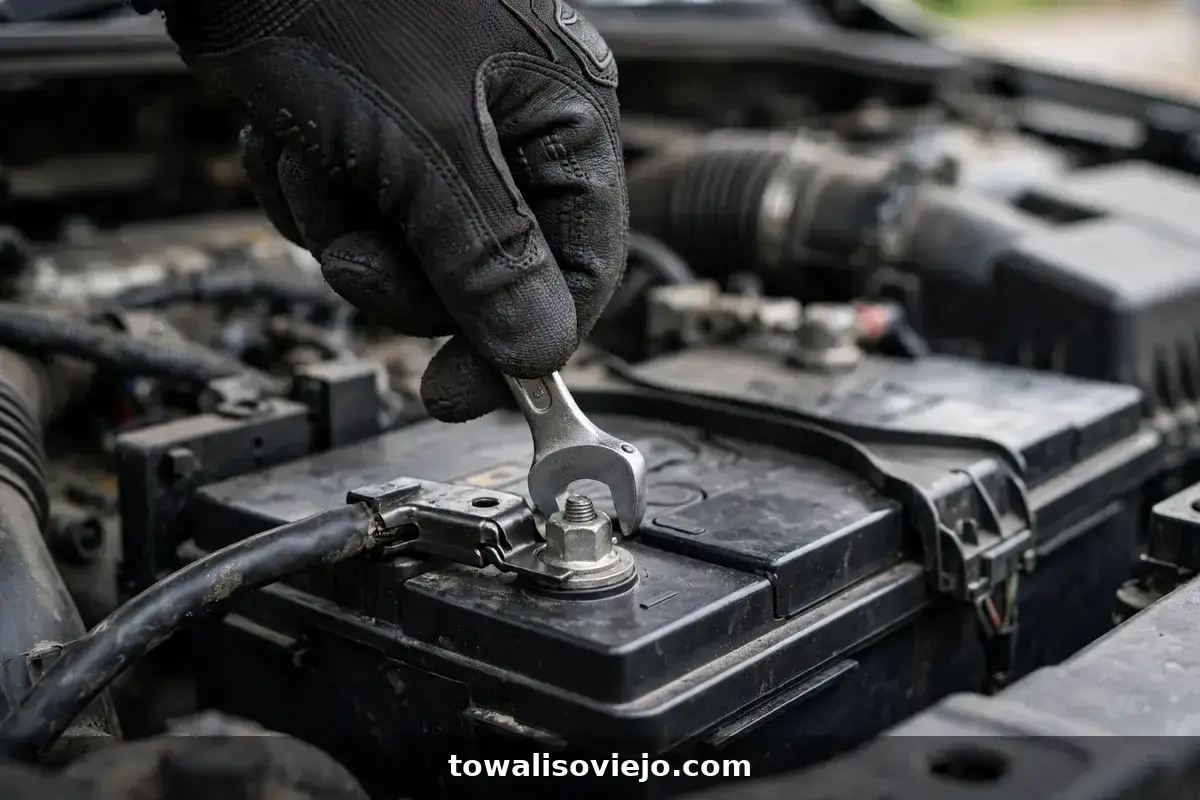
Always disconnect the negative terminal first. It carries a minus sign and usually wears a black cover. Loosen the clamp nut, lift the cable off, and tuck it away from the post. Then remove the positive terminal. Reverse the order when you reconnect: positive first, negative last. This order prevents sparks and short circuits.
The reason comes down to the chassis. Your car body acts as the ground. The negative cable bolts straight to it. Loosen the positive clamp first, and your wrench can touch metal nearby. That contact completes the circuit through the body. You get a hard spark, a melted tool, or a blown fuse. A battery also vents hydrogen gas, which ignites easily. Removing the negative cable first breaks the circuit. After that, a stray wrench on the positive post does nothing. SAE International publishes standards for automotive batteries, including terminal polarity markings. Those markings help you pick the right post every time.
Why Would You Need to Disconnect a Battery?
Most drivers disconnect a battery for one of five reasons.
- Replacing a worn out battery. Most last three to five years, and heat shortens that.
- Repairing electrical parts, such as an alternator or starter.
- Installing a stereo, alarm, or remote starter.
- Parking a car for a month or longer.
- Resetting the engine computer after a minor electrical glitch.
Electrical shorts rank among the common causes of vehicle fires that agencies like NHTSA study. Disconnecting the battery before electrical work removes that risk. AAA also reports that dead batteries rank among the most common roadside calls. A little care now saves a tow later.
What Tools and Gear Do I Need?
You need basic hand tools. Gather everything before you touch a cable.
- A 10 mm wrench or socket. Many terminal clamps use this size.
- A 13 mm wrench or socket for larger clamps and hold down brackets.
- Safety glasses and gloves. Battery acid burns skin and eyes.
- A battery terminal puller for stuck clamps. Never pry with a screwdriver.
- A wire brush and a baking soda and water mix for corrosion.
- A digital multimeter to check voltage before and after.
- A memory saver that plugs into the OBD port, if you want to keep settings.
Take off rings, watches, and metal necklaces. A ring can weld itself across a battery post. That injury happens fast and hurts badly.
Set your multimeter to 20 volts DC. A fully charged battery rests near 12.6 volts. A reading of 12.4 volts means about 75 percent charge. Anything under 12.0 volts means a discharged battery.
Work in a ventilated area. A tight parking garage in Manhattan or Atlanta traps fumes. Open the doors and keep sparks away.
Step by Step: How to Disconnect Car Battery Terminals
Step 1: Park and Power Down
Park on level ground and set the parking brake. Turn the ignition off and remove the key. Close all doors and switch off the lights. Let the engine cool if you ran it recently. Cool metal makes the work safer and easier. Keep the key fob away from the car. Some push button cars stay awake when the fob stays close.
Step 2: Find and Identify the Battery
Most batteries sit under the hood on a side tray. Some cars hide them under a rear seat or in the trunk. Check the owner’s manual if you cannot see it. Look for plus and minus markings on the case. The positive post usually has a red cover. The negative post usually has a black one. Some cars use a remote jump post under the hood. Do not confuse that post with the battery itself.
Step 3: Loosen and Remove the Negative Cable
Fit your wrench on the clamp nut. Turn it counterclockwise until the clamp loosens. Hold the wrench steady so it never touches nearby metal. Twist the clamp gently and lift it straight up. Use a puller if the clamp sticks. Tuck the cable away from the post. A rag or a plastic bag works well as a cover.
Step 4: Remove the Positive Cable
Slide back the red cover on the positive clamp. Loosen the nut and lift the clamp off the post. Move it clear of the battery. Check that neither cable can swing back and touch a post.
Step 5: Release the Hold Down and Lift the Battery
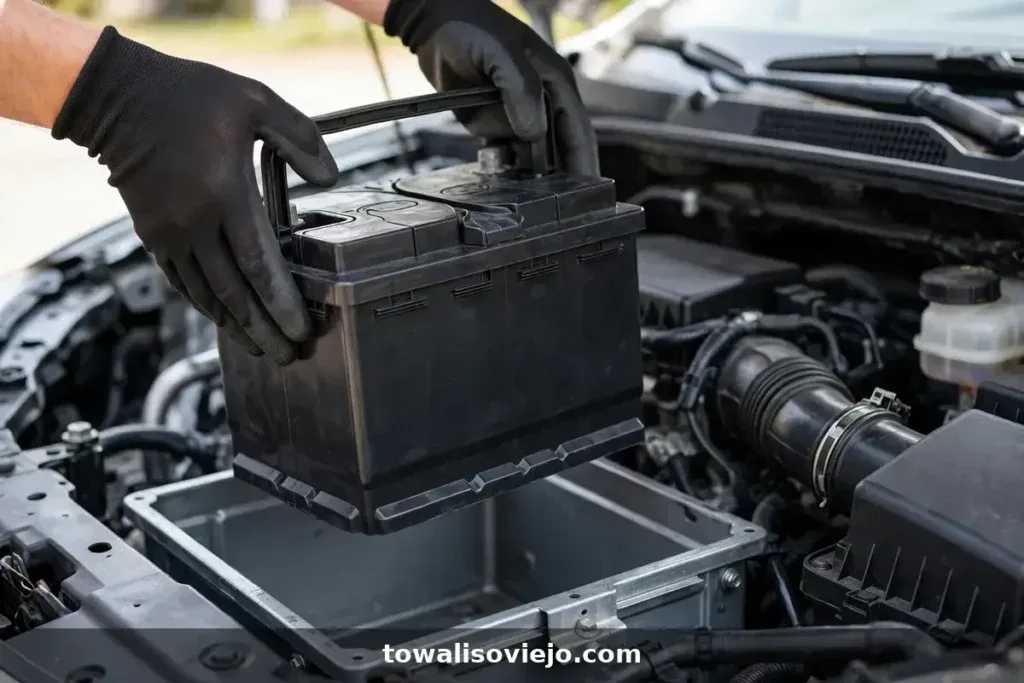
Skip this step if you only need the power off. To remove the battery, unbolt the hold down bracket. Most use a 10 mm or 13 mm nut. Lift with your legs and keep the battery level. A typical car battery weighs 30 to 60 pounds. Carry it by the case or a strap. Set it on a wood or plastic surface, away from open flames.
Step 6: Clean the Posts and Clamps
Check the posts for white or blue green crust. Mix one tablespoon of baking soda with one cup of water. Scrub with a wire brush until the metal shines. Wipe everything dry with a clean rag. Desert heat in Phoenix or Las Vegas speeds up battery wear and corrosion. Check your posts at every oil change in hot states.
Can I Disconnect a Car Battery While the Engine Is Running?
No. Never disconnect a battery while the engine runs or the key sits in the on position. The alternator makes power while the engine runs. The battery acts as a buffer for that power. Pull the battery, and voltage can spike. Technicians call this surge a load dump. It can damage the engine computer, sensors, and the radio.
Some old forum posts claim this trick saves your radio code. Skip it. One slip can short the positive cable to ground. A stalled car on Interstate 80 creates a bigger problem than a flashing clock.
How Long Should I Leave the Battery Disconnected to Reset the ECU?
Most mechanics wait 10 to 30 minutes with the negative cable off. That time lets the capacitors in the engine computer drain. The computer then clears its short term memory. This includes fuel trim values and some stored fault codes.
Know the limits of this trick. Newer cars store many settings in memory that survives a disconnect. A disconnect rarely fixes a real fault. A scan tool clears codes properly and shows you the cause. Pulling the battery also resets the emissions readiness monitors. Those monitors must finish before an emissions test. Do not disconnect the battery right before an inspection.
After you reconnect, expect a rough idle for a few miles. The computer relearns idle speed and fuel trim. Drive normally on a mix of city and highway roads. The engine usually smooths out within about 50 miles.
Will I Lose My Radio Code If I Disconnect the Battery?
Maybe. Many factory radios lock after they lose power. They then ask for a code. The code often sits in the owners manual or on a card in the glove box. A dealer can retrieve it with your vehicle identification number. Find the code before you disconnect anything.
A memory saver avoids the problem. It plugs into the OBD port or the cigarette lighter socket. It feeds steady power from a small battery pack while the main battery sits off. Use a unit made for this job. Never connect loose wires to a power source.
Clocks, seat memory, and trip data may also reset. Some power windows need a quick relearn. Hold the window switch up for several seconds after you reconnect.
Can I Leave a Battery Disconnected During Storage?
Yes. This works well for a parked car. Modern cars draw 25 to 50 milliamps with the key off. That small draw can drain a battery in four to six weeks. Disconnect the negative cable if you park the car for a month or more. A battery disconnect switch makes this easy.
A battery tender works even better. It holds the charge near 12.6 volts. This matters in winter. A discharged battery can freeze solid. A charged battery resists freezing far better.
Special Cases: Hybrids, Start Stop, and Newer Cars
Newer cars add a few steps. Many have a battery sensor clamped to the negative post. Treat that sensor gently. Never pull on its wires or plug. Some cars need a scan tool to register a new battery. Without that step, the charging system may undercharge the new unit.
Start stop cars often use an AGM battery. Replace it with the same type. Hybrids and electric cars also carry a 12 volt battery. Orange cables carry high voltage. Never touch or cut them. Use the owner’s manual to find the 12 volt battery or jump post. Some hybrids place it in the trunk.
How Do I Reconnect the Battery the Right Way?
Reverse the order. Connect the positive cable first. Connect the negative cable last. Tighten each clamp until it will not twist by hand. Snug is enough, about 5 to 7 foot pounds. Overtightening can crack the post or strip the stud.
Check voltage with your multimeter. Expect 12.4 to 12.7 volts at rest. Start the car. The reading should climb to 13.7 to 14.7 volts with the engine running. That range shows the alternator charges the battery.
Climate Tips From Coast to Coast
Weather changes how you handle this job. In Chicago or Minnesota, winter cold cuts battery power roughly in half near zero degrees Fahrenheit. A weak battery that survived summer often fails on the first freezing morning. Test it in the fall.
Hot engine bays bake batteries on summer road trips along Interstate 10 or Interstate 95. Park in the shade when you can. In tight garages in Manhattan or Atlanta, you may lack room to swing a wrench. Use a short socket and a small ratchet. Cover the positive post before you work near it.
Common Mistakes and Quick Troubleshooting
- Wrong order. Removing the positive cable first risks a short circuit.
- Touching the wrench to a fender. Wrap the wrench handle in electrical tape.
- Forgetting the radio code. Find it before you start.
- Yanking a sensor wire. The negative post may hold a battery monitor.
- Skipping battery registration. Some cars need a scan tool after a new battery.
- Touching hybrid high voltage parts. Stick to the 12 volt battery only.
If the car will not start after you reconnect, check the clamps first. A loose clamp causes a clicking sound. Wiggle each cable. If it moves, tighten it. If warning lights appear on the dash, drive a few miles. Lights often clear after the systems relearn. Lights that stay on need a scan tool.
If you smell rotten eggs, stop work. That smell signals a leaking or overheating battery. Ventilate the area and call a certified technician.
Final Checklist Before You Close the Hood
Confirm the posts are clean, the clamps are snug, and resting voltage sits near 12.6 volts.
Now you know how to disconnect car battery cables like a working mechanic. The job takes ten minutes and a 10 mm wrench. Go slow, wear glasses, and keep metal tools away from both posts. A healthy battery keeps you moving on any highway in America. If anything feels wrong, ask a certified technician for help.
Which battery terminal do I disconnect first?
Always disconnect the negative terminal first. Loosen the clamp nut, lift the cable off, and tuck it away from the post, then remove the positive terminal. Reverse the order when you reconnect: positive first, negative last. This order prevents sparks and short circuits, because the car body acts as the ground and the negative cable bolts straight to it.
Can I disconnect a car battery while the engine is running?
No. Never disconnect a battery while the engine runs or the key sits in the on position. The battery acts as a buffer for the alternator’s power, and pulling it can cause a voltage spike (load dump) that damages the engine computer, sensors, and radio.
How long should I leave the battery disconnected to reset the ECU?
Most mechanics wait 10 to 30 minutes with the negative cable off so the engine computer’s capacitors drain and clear short term memory, including fuel trim values and some stored fault codes. After you reconnect, expect a rough idle for a few miles; the engine usually smooths out within about 50 miles.
Will I lose my radio code if I disconnect the battery?
Maybe. Many factory radios lock after they lose power and ask for a code, which often sits in the owner’s manual or on a card in the glove box, or a dealer can retrieve it with your vehicle identification number. A memory saver that plugs into the OBD port avoids the problem. Clocks, seat memory, and trip data may also reset.
Can I leave a battery disconnected during storage?
Yes. Modern cars draw 25 to 50 milliamps with the key off, which can drain a battery in four to six weeks, so disconnect the negative cable if you park for a month or more. A battery tender works even better, holding the charge near 12.6 volts.