
Why Won’t My Car Start? A Mechanic’s Symptom by Symptom Guide
You turn the key and nothing happens. Your stomach drops. I have heard this call from Interstate 95 rest stops to Phoenix parking lots. Most drivers ask why won’t my car start before they check the basics. The good news is simple. Your car gives clues through sound, lights, and feel. This guide helps you read those clues and find the fix fast.
Why Won’t My Car Start? Check the Sound First
Listen when you turn the key. Fast clicking means a weak battery. One loud click points to the starter. Slow cranking means a tired battery. Fast cranking with no start means a fuel or spark problem. Silence and dim lights mean a dead battery or a bad connection.
Use this quick map before you touch a tool.
- Fast clicking: Weak battery or loose cables. Test the battery first.
- One loud click: Starter or solenoid. Check the starter circuit.
- Slow, heavy cranking: Low battery or cold oil. Charge or jump the battery.
- Normal cranking, no start: Fuel, spark, or sensor fault. Check fuel and spark.
- Whirring with no engine turn: Failed starter gear. Replace the starter.
- No sound, no lights: Dead battery, loose terminal, or blown fuse. Check cables first.
Start with the cheapest checks. Most no start calls end with a battery or a cable. Save the fuel and spark tests for when the engine turns over.
Why Does My Car Click but Not Start?
Rapid clicking almost always means low battery power. The starter solenoid tries to engage but lacks current. Each click is the solenoid dropping out. The engine never turns.
Run the headlight test. Turn the headlights on and then try to start. Bright lights that fade hard mean a weak battery. Lights that stay bright with a single click point to the starter.
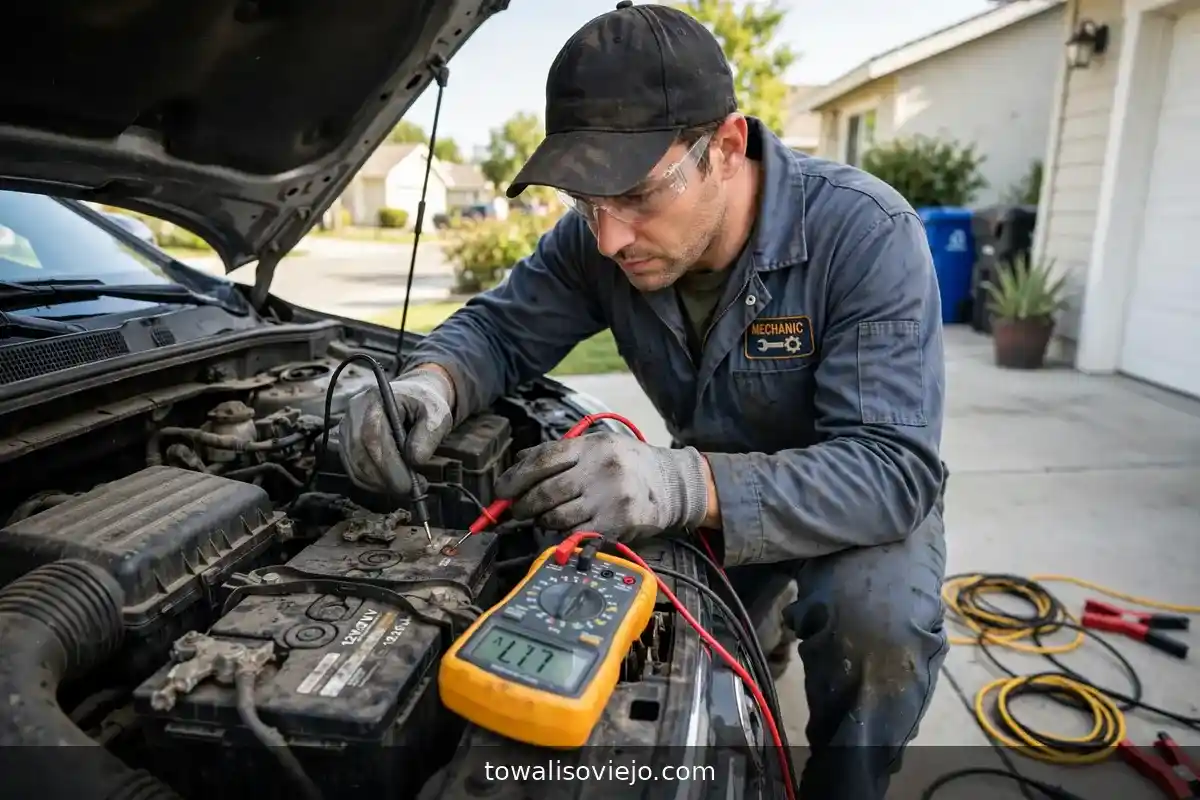
Then test with a multimeter. Set it to 20 volts DC. Touch the probes to the battery posts.
- 12.6 volts or higher: healthy charge.
- 12.4 volts: about 75 percent charge.
- 12.0 volts or lower: discharged battery.
Wiggle each cable at the battery. A clamp should not move at all. Loose or corroded terminals block current. Clean them with a wire brush and a baking soda mix. Tighten them with a 10 mm wrench.
During cranking, voltage should stay above 9.6 volts. A deeper drop means a tired battery or a bad cable. A jump pack can also confirm the diagnosis. If the car starts with the pack, the battery is the culprit. Many auto parts stores test batteries for free. A battery over five years old often needs replacing.
If the battery tests fine, suspect the starter. A single loud click with bright lights points that way. Check for battery voltage at the starter signal wire while a helper turns the key. Voltage present with no crank means a bad starter.
What Should I Do When Cold Weather Kills My Battery?
Cold hits batteries hard. A battery loses roughly a third of its power at 32 degrees Fahrenheit. It loses about half near zero. Cold oil also thickens and makes the engine harder to turn. A weak battery that worked all summer often quits on a freezing Chicago or Minnesota morning.
Try these steps.
- Turn off the lights, heater, and radio.
- Wait one minute, then try again.
- Jump start the car if it still clicks.
- Drive for at least 20 to 30 minutes to recharge.
- Test the battery the same day.
Prevent the problem next winter. Park in a garage when you can. Use a battery maintainer if the car sits for days. A block heater helps in deep cold. Test the battery every fall.
Heat causes trouble too. Desert heat in Phoenix or Las Vegas wears out batteries quickly. Many fail at three years. A battery that dies in July often showed signs in spring.
How Do I Jump Start a Car the Right Way?
A jump start gets you moving when the battery is low. Use the steps below and keep the order exact.
- Park the donor car close, but keep the cars from touching.
- Turn both engines off and set both parking brakes.
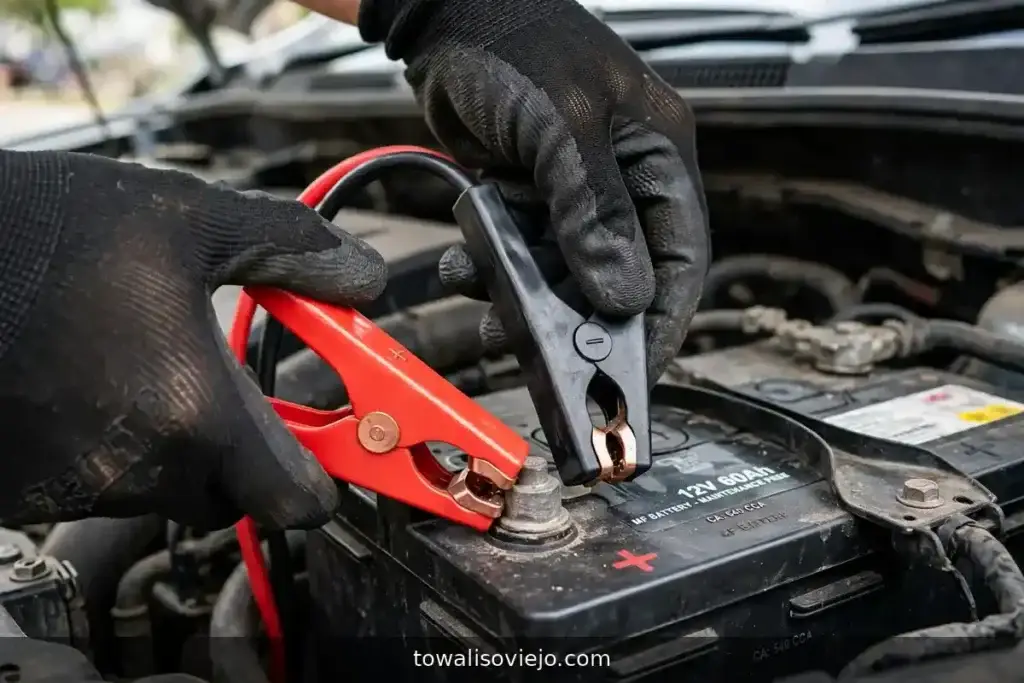
- Clamp one red cable to the dead battery positive post.
- Clamp the other red cable to the donor battery positive post.
- Clamp one black cable to the donor battery negative post.
- Clamp the last black cable to bare metal on the dead car. Pick a thick bolt or bracket away from the battery.
- Start the donor car and let it run for a few minutes.
- Start the dead car.
- Remove the cables in the exact reverse order.
Never let the clamps touch each other. A battery vents hydrogen gas, so keep sparks away. Skip the final negative clamp on the dead battery itself. That order cuts the risk of a spark near the gas.
If the car still will not start after about five minutes of charging, the issue lies elsewhere. Check the cables and the starter next.
Why Does My Car Crank but Not Start?
A car that cranks normally has a good battery and starter. The problem moves to fuel, spark, or air. An engine needs all three. Check them in that order.
Fuel. Check the fuel gauge, but do not trust it. A bad gauge can read half full on empty. Add a gallon of gas to rule it out. Next, listen for the fuel pump. Turn the key to run, not start. Silence the radio and fans. You should hear a short whir from the rear for about two seconds. No whir suggests a bad pump, a blown fuse, or a bad relay.
A fuel pressure gauge gives a real answer. Most port injected engines run near 40 to 60 psi. Check the exact number in your service manual. Zero pressure points to the pump or its power.
Spark. Worn plugs and weak coils cause no start. Pull a plug and check the gap. Most gaps fall between 0.035 and 0.060 inch. Use a spark tester or a known good plug. Ground it against bare metal while a helper cranks the engine. Hold it by the rubber boot. No spark means a bad coil, sensor, or wiring fault.
Sensors. A failed crankshaft position sensor stops the spark and the fuel. The engine cranks but never fires. The computer has no speed signal. A scan tool often shows a code.
Moisture. Heavy rain or a car wash can soak older ignition parts. Dry the coils and wires, then try again.
Timing parts. A fast spinning crank with no resistance can mean a broken timing belt or chain. Stop cranking. Further tries can wreck the engine. Tow the car to a shop.
What If the Battery Is Good but the Car Is Dead?
You have power, bright lights, and no crank. Several parts can block the signal.
Ignition switch. Worn contacts fail to send power. Dash lights may flicker when you turn the key.
Neutral safety switch. An automatic will not crank outside park or neutral. Wiggle the shifter and try neutral.
Starter relay or fuse. A blown fuse cuts the signal. Check every fuse box. Never use a bigger fuse. The rating protects the wiring.
Immobilizer. A security light that blinks fast means the car does not trust the key. Try the spare key.
Loose ground strap. A bad ground wire starves the starter. Look for a frayed or rusty strap.
A quick voltage test helps. Place the red probe on the starter signal wire. Turn the key to start. You should see close to battery voltage. A big drop means a bad connection or switch.
Some mechanics tap a stuck starter with a wooden handle. It can free worn contacts for one more start. Treat that as a short term trick. Replace the starter soon after.
Can a Bad Alternator Stop My Car From Starting?
Yes, but only in a roundabout way. The alternator charges the battery while you drive. A failed alternator lets the battery drain. Then the car will not crank the next morning.
Look for these signs.
- The battery light stays on while driving.
- Headlights dim and brighten.
- The car dies a few miles after a jump start.
- A whining or grinding sound comes from the engine bay.
Test the charging voltage. Start the engine and read the battery with a multimeter. You should see 13.7 to 14.7 volts. A reading under 13 volts means a weak alternator. A reading over 15 volts means overcharging.
A battery that is good but drained after a long sit may have a parasitic drain. That means a part draws power while the car sits off. Most cars draw 25 to 50 milliamps. A much higher draw empties the battery in days.
When Should I Call a Tow Truck?
Some problems need a pro. Call for help if you notice any of these.
- A strong smell of gas or burning wires.
- A grinding noise during cranking.
- A fast spinning crank with no compression feel.
- Smoke from the engine bay.
- A blocked lane, a highway shoulder, or a dark road.
Never push your luck on a busy interstate. Interstate 10, Interstate 80, and Interstate 95 move fast. Turn on your hazards and stay in a safe spot. A roadside club like AAA can send a tow or a battery tech.
In a tight parking garage in Manhattan or Atlanta, a jump pack is the best tool. It works without a second car. Keep one in your trunk. A small unit costs less than one tow call.
Get Back on the Road With Confidence
Now you know why won’t my car start and what each sound means. Test the battery first. Clean the cables. Check fuel and spark if the engine cranks. Use a jump start only with the right steps.
Write down what you hear and see before you call a mechanic. Note the sound, the dash lights, and recent events like fueling or heavy rain. Those clues cut diagnosis time.
Keep a multimeter, a jump pack, and a wire brush in your trunk. Test the battery every fall and every spring. If the problem looks beyond your tools, call a certified technician.
Why does my car click but not start?
Rapid clicking almost always means low battery power: the starter solenoid tries to engage but lacks current. Run the headlight test, then check voltage: 12.6 volts or higher is healthy, 12.0 volts or lower is discharged. Clean and tighten the terminals; during cranking voltage should stay above 9.6 volts.
How do I jump start a car the right way?
Park the donor car close without touching, both engines off, both parking brakes set. Red to dead positive, red to donor positive, black to donor negative, black to bare metal on the dead car away from the battery. Start the donor, let it run a few minutes, start the dead car, then remove cables in exact reverse order.
What should I do when cold weather kills my battery?
A battery loses roughly a third of its power at 32 degrees Fahrenheit and about half near zero. Turn off lights, heater, and radio, wait one minute, try again, jump start if it still clicks, then drive 20 to 30 minutes and test the battery the same day.
Why does my car crank but not start?
The battery and starter are fine, so check fuel, spark, and air in that order. Check the gauge, listen for the fuel pump whir for about two seconds, check plug gaps (usually 0.035 to 0.060 inch), and suspect the crankshaft position sensor if there is no spark or fuel.
When should I call a tow truck?
Call for help with a strong smell of gas or burning wires, grinding during cranking, a fast spinning crank with no compression feel, smoke from the engine bay, or a blocked lane, highway shoulder, or dark road.