
What Is Wheel Offset? A Mechanic’s Plain Guide
Drivers ask me what is wheel offset almost every week. The idea sounds technical, but it is simple. Offset tells you how far a wheel sits in or out of the fender. A wrong number can rub tires, strain bearings, and change steering feel. This guide explains the term, the math, and the checks I run before mounting new wheels. You will also learn how spacers change the number.
What Is Wheel Offset in Simple Terms?
Wheel offset is the distance from the hub mounting surface to the wheel centerline, measured in millimeters. A higher number tucks the wheel toward the vehicle. A lower number pushes it toward the fender. Offset sets how far your wheel and tire sit inside the wheel well.
Picture a wheel sliced in half down the middle. That line is the centerline. The hub mounting surface is the flat face that bolts to your hub. Offset is the gap between those two points.
Every wheel carries this number. Many makers stamp it on the back of a spoke or on the hub face. Look for the letters ET or the word offset. Engineers pick the number to fit the brakes, suspension, and body. Change it, and the wheel sits in a new spot.
I see one mistake often. A driver buys wheels with the right bolt pattern and the right diameter. The offset is wrong, so the tire scrapes the strut or the fender. Always check offset before you pay.
What Does ET Mean on a Wheel?
ET comes from a German phrase that means press in depth. It is the same number as offset. A wheel marked ET45 has an offset of positive 45 millimeters. Some truck wheels show a negative value, such as negative 12 millimeters.
Size labels in the United States often read 17 by 8 inch, ET35. The 17 is the diameter. The 8 is the width. The ET35 is the offset. Check the number twice, because one digit changes the fit.
What Is the Difference Between Positive and Negative Offset?
Wheels fall into three groups: positive, zero, and negative. The difference comes down to where the mounting surface sits.
Positive Offset
The mounting surface sits toward the outer face of the wheel. That pulls the wheel deeper into the wheel well. Most front wheel drive cars and modern sedans use positive offset. Many fall between 30 and 50 millimeters. This setup keeps tires tucked inside the fenders.
Zero Offset
The mounting surface lines up exactly with the centerline. Half the wheel sits on each side of the hub. Zero offset is less common on modern cars. Some older rear wheel drive vehicles and trailers use it.
Negative Offset
The mounting surface sits toward the inside of the wheel. That pushes the wheel outward, toward the fender. Lifted trucks and off road rigs often use it. You see the deep dish look on pickups across Texas and Colorado. Negative offset widens the stance, but it adds stress to the suspension.
What Is Backspacing and How Is It Different?
Backspacing is the distance from the hub mounting surface to the wheel’s inner edge. Shops quote it in inches. Offset runs to the centerline and uses millimeters. Both numbers describe the same fit.
Backspacing changes with wheel width. Offset does not. Here is why. A wider wheel with the same offset grows evenly around the centerline. A wheel one inch wider reaches half an inch farther in and half an inch farther out. That extra half inch toward the suspension can cause rubbing.
Truck and off road catalogs love backspacing. Car catalogs and tire shops prefer offset. Learn both, so you can compare wheels from any source.
How Do You Measure Wheel Offset?
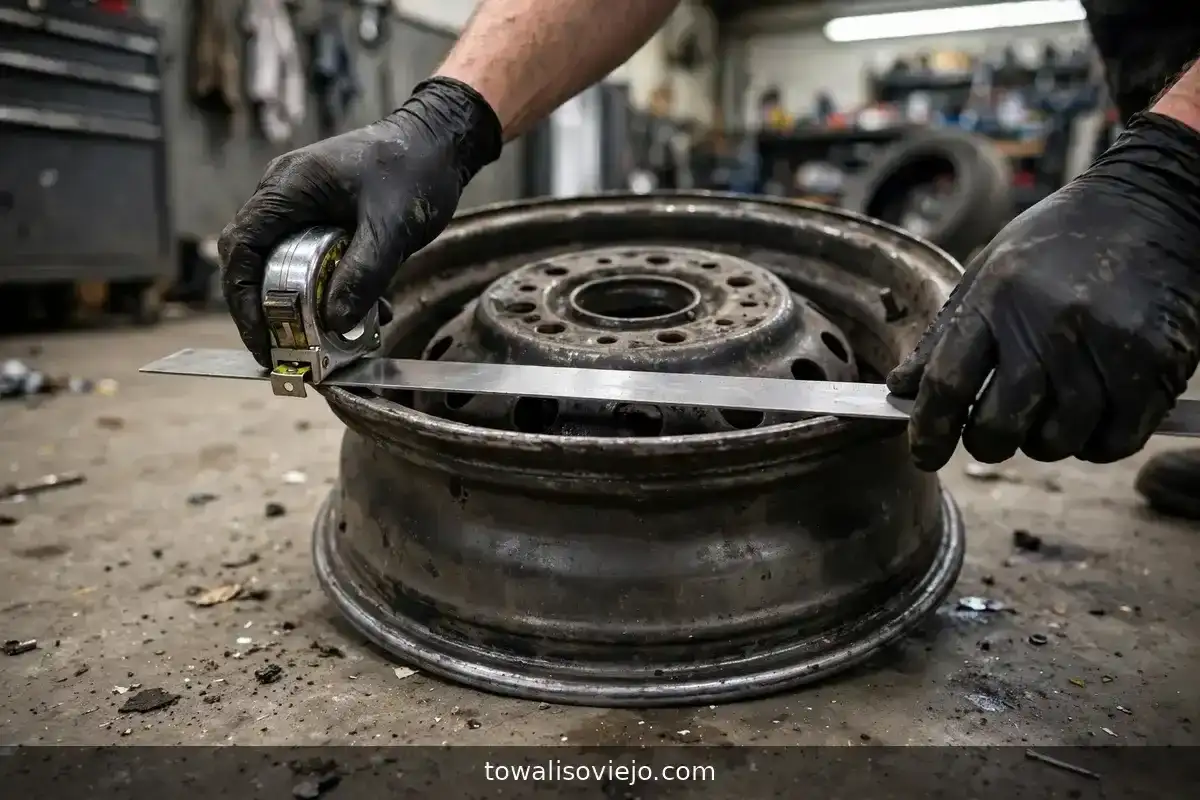
Measure with the wheel off the vehicle. Wear gloves, because wheel edges are sharp. You need a tape measure and a straightedge.
- Lay the wheel face down on a flat floor.
- Measure the overall width across the outer flanges. It usually runs about one inch more than the listed width.
- Divide that width by two. The result is the centerline distance.
- Lay a straightedge across the back lip of the wheel. Measure down to the mounting surface. That number is backspacing.
- Subtract the centerline distance from backspacing. Multiply the answer by 25.4 to get millimeters.
Here is a real example from an 11 inch wheel. The overall width is 12 inches, so the centerline distance is 6 inches. Backspacing measures 5.1875 inches. Subtract 6, and you get negative 0.8125 inch. Multiply by 25.4, and the offset is about negative 20 millimeters.
Read the stamp first. Measure only when the stamp is worn or missing. Aftermarket wheels sometimes carry wrong stamps, so verify the first set you mount.
Will a Wider Wheel Fit My Car?
Start with the numbers on your current wheel. Say your stock wheel is 17 by 7 inch with ET45. You want a 17 by 8 inch wheel with ET35. Run the math in two steps.
The wheel grows one inch wider. That is 25.4 millimeters. Half of that growth goes each way, so each edge moves 12.7 millimeters. The lower offset then pushes the whole wheel outward by 10 millimeters.
The outer edge moves out about 22.7 millimeters. The inner edge moves in only about 2.7 millimeters. That tells you the fender is the likely rub point, not the strut.
Next, check the gaps on the vehicle. I like at least a quarter inch of clearance at the strut, springs, and fender lip. Turn the steering to full lock and look again. Push down on the fender to see the tire move up. A friend with a flashlight helps.
Does Wheel Offset Affect Handling?
Yes. Offset changes scrub radius. Scrub radius is the distance between two points on the road. One is where the steering axis line meets the pavement. The other is the center of the tire contact patch.
Pushing the wheels outward makes scrub radius more positive. Larger positive values make steering feel heavier. They also make the car tug sideways during hard braking. Many newer cars with ABS use a negative scrub radius. Those cars use wheels with more inboard offset. Negative scrub radius keeps braking steadier when one side has less grip.
Extra leverage matters too. A wheel that sits farther from the hub bearing adds load to that bearing. Ball joints and tie rod ends feel it as well. On a pothole filled stretch of Interstate 95 in winter, weak parts fail first. I replace worn bearings before I fit wider wheels.
Wheels that stick out also scrape curbs. Tight garages in Manhattan and Atlanta chew up rims fast. A wheel that sits flush with the fender avoids most of that damage.
Can Wheel Spacers Change Offset?
Yes. A spacer sits between the hub and the wheel. It moves the wheel outward by its thickness. A 10 millimeter spacer lowers offset by 10 millimeters. A set of ET45 wheels then acts like ET35.
Two types exist. Slip on spacers use your factory studs. Bolt on spacers have their own studs and mount to the hub. Choose hub centric spacers, so the wheel stays centered. Buy from a known maker. Cheap spacers can crack or run out of true.
Spacers can fix rubbing against the inner suspension. They can also cause rubbing against the fender. Test clearance at full steering lock. Then test with the suspension compressed. A loaded truck on a bumpy stretch of Interstate 10 can squash its springs.
Thread engagement matters. A stud should thread into the lug nut at least one full stud diameter. Follow the torque spec in your manual. Torque the lug nuts again after 50 to 100 miles.
What Happens If Your Offset Is Wrong?
A wrong offset shows up in clear ways. Too low, and the tire rubs the fender or hits the lip on bumps. Too high, and the tire hits the strut, the springs, or the brake lines. Both cases wear the tire edge fast.
You may also feel a pull in the steering wheel. Hard braking can tug the car to one side. Wheel bearings may growl or run hot after a few thousand miles. Those signs mean the load on the hub has changed. Stop and measure before the damage grows.
Fixing it costs far less than replacing bearings. The right set of wheels or a small spacer change often solves the problem. Ask a shop to check your alignment after any wheel swap.
How Much Offset Change Is Safe?
Small changes cause few problems. Many shops stay within about 5 millimeters of the factory number. Bigger changes need a clearance check. Some need fender rolling or a small lift.
Offset is only one number. Confirm these five before you buy:
- Bolt pattern, such as 5 by 114.3
- Center bore, which should match your hub or use rings
- Offset, within a small range of the factory number
- Width, matched to your tire size
- Load rating, equal to or above the factory wheel
Tires matter too. A wider tire needs more room in both directions. In Minnesota, many drivers run narrower winter tires. Those fit with less rubbing. In Phoenix heat, check tire pressure monthly, as NHTSA advises. Hot pavement raises pressure, so check it when the tires are cold.
Brakes need room too. Big calipers can touch the spokes of a wheel with the wrong shape. Mount the wheel and spin it by hand before you torque it fully. Never force a wheel over a caliper.
The placard in your door jamb lists factory tire size and pressure. NHTSA requires it on passenger vehicles. It does not list offset. Your owner’s manual or a dealer can supply that number. SAE International publishes wheel and rim standards that makers follow. A reputable wheel maker always lists offset in the specs.
What to Remember Before You Buy
If a friend asks what is wheel offset, tell them it is the wheel’s position relative to the hub. Then share these rules:
- Higher offset tucks the wheel in. Lower offset pushes it out.
- Backspacing and offset describe the same fit in different units.
- Wider wheels need more room on both sides.
- Spacers lower the offset by their thickness.
- Large offset changes affect steering, bearings, and clearance.
- Measure twice. Check clearance at full lock. Then enjoy a wheel that fits.
What is wheel offset?
Wheel offset is the distance from the hub mounting surface to the wheel centerline, measured in millimeters. A higher number tucks the wheel toward the vehicle, while a lower number pushes it toward the fender.
What does ET mean on a wheel?
ET comes from a German phrase meaning press in depth, and it is the same number as offset. A wheel marked ET45 has a positive offset of 45 millimeters.
What is the difference between positive and negative offset?
With positive offset the mounting surface sits toward the outer face of the wheel, pulling it deeper into the wheel well; most front wheel drive cars use 30 to 50 millimeters. With negative offset the mounting surface sits toward the inside, pushing the wheel outward for a wider stance, common on lifted trucks.
Can wheel spacers change offset?
Yes. A spacer between the hub and the wheel moves the wheel outward by its thickness, so a 10 millimeter spacer lowers offset by 10 millimeters. Choose hub centric spacers from a known maker and test clearance at full steering lock.
How much offset change is safe?
Many shops stay within about 5 millimeters of the factory number. Bigger changes need a clearance check, and you should also confirm bolt pattern, center bore, width, and load rating before you buy.