

Gas Gauge Not Working: Causes, Tests, and Fixes
A gas gauge not working turns every trip into a guess. The needle sits on full, drops to empty, or bounces around. You never know when the tank will run dry. This guide explains why a fuel gauge fails. It shows how to test each part at home and what a repair costs. It also shows how to track your fuel while you wait for parts. Start with the cheap checks. The fix is often simple.
Why a Fuel Gauge Stops Working
A fuel gauge fails most often because of a bad sending unit in the tank. Other causes include a blown fuse, a corroded wire, a loose ground, or a failed instrument cluster. Check the fuse and wiring first. Then test the sender with a multimeter. Replace the part that fails the test.
Your fuel level system has three main parts. A float rides on top of the fuel. A thin metal arm links the float to a variable resistor. That resistor sends a signal to the gauge on your dash. The signal changes as the float rises and falls.
Power and ground complete the circuit. The gauge needs about 12 volts from the battery. The sender needs a clean path to ground. A break anywhere along that path confuses the gauge. The needle then sticks, jumps, or reads wrong.
Manufacturers set up the sender in different ways. One brand may read high resistance for a full tank. Another may read low. Your service manual shows the correct values for your vehicle.
Why Is My Gas Gauge Stuck on Full?
A gauge stuck on full usually points to the sending unit or its wiring. Three causes top the list.
- Worn resistor strip. The wiper wears a gap in the strip. The circuit goes open, and the gauge shows full.
- Short or bad ground. A wiring fault holds the signal high. The needle never moves.
- Faulty gauge. An internal fault can pin the needle. This cause is less common.
Here is a quick way to separate the gauge from the sender. Unplug the gauge feed wire at the back of the dash, using your wiring diagram. A healthy gauge drops to zero with no power. If the needle stays on full, the gauge has a fault.
Look for fuel odor and wet spots near the tank too. A leaking tank or line is a separate safety problem. Never ignore a fuel smell while you chase a gauge fault.
Fix a stuck needle early. A full reading hides an empty tank. Drivers on long, empty stretches of Interstate 80 in Nevada or Wyoming learn this lesson the hard way.
Why Does My Gas Gauge Read Empty After I Fill Up?
A gauge that reads empty after a fill up points to a signal that never reaches the dash. Check these causes in order.
- Float separated from the arm. The float breaks loose and sinks. The arm then reads empty.
- Float full of fuel. An old float can soak up fuel and sink. A new one fixes it.
- Blown instrument fuse. Moisture and road salt corrode fuse contacts. The gauge loses power.
- Corroded wiring. Salt belt states like Minnesota and Michigan eat wires and connectors every winter.
- Failed resistor. A dead resistor blocks the signal.
A reading that stays empty can also mean a low fuel level. Compare the gauge with your odometer and the last fill up. If you only drove 40 miles on a full tank, the sender is lying.
Why Does the Needle Bounce Between Empty and Full?
A bouncing needle is a clue. It often means a mechanical problem that comes and goes. The float arm may stick at one level. A bump or turn frees it, and the needle jumps.
A loose ground can also make the needle dance. Vibration changes the connection from one second to the next. Pump module connectors near the tank suffer from water, mud, and salt. The terminals corrode, and the signal flickers.
Watch when the needle jumps. If it moves on rough roads, suspect a loose connector or a sticking float. If it moves with the turn signal or the wipers, suspect a weak ground or a failing cluster. A repeatable pattern speeds up the diagnosis.
Home Checks for a Gas Gauge Not Working
Use these tests in order. They move from free to messy. Stop as soon as you find the fault.
- Gather a digital multimeter, a small socket set, a wire brush, and a flashlight. Your owner manual shows the fuse map. A repair manual shows wire colors and ground points. Wear safety glasses.
- Run the cluster self test. Turn the ignition on with the engine off. Hold the odometer reset button as your manual directs. A healthy gauge sweeps through its full range.
- Check the fuse. Use the fuse map in your manual. Look at the instrument panel fuse first. A fuse that blows again points to a bigger electrical fault.
- Inspect the ground. Find the ground wire near the tank and the dash. Clean any rust or corrosion. Tighten loose bolts.
- Measure voltage at the gauge. Set a multimeter to 20 volts DC. You should read about 12 volts at the gauge supply wire.
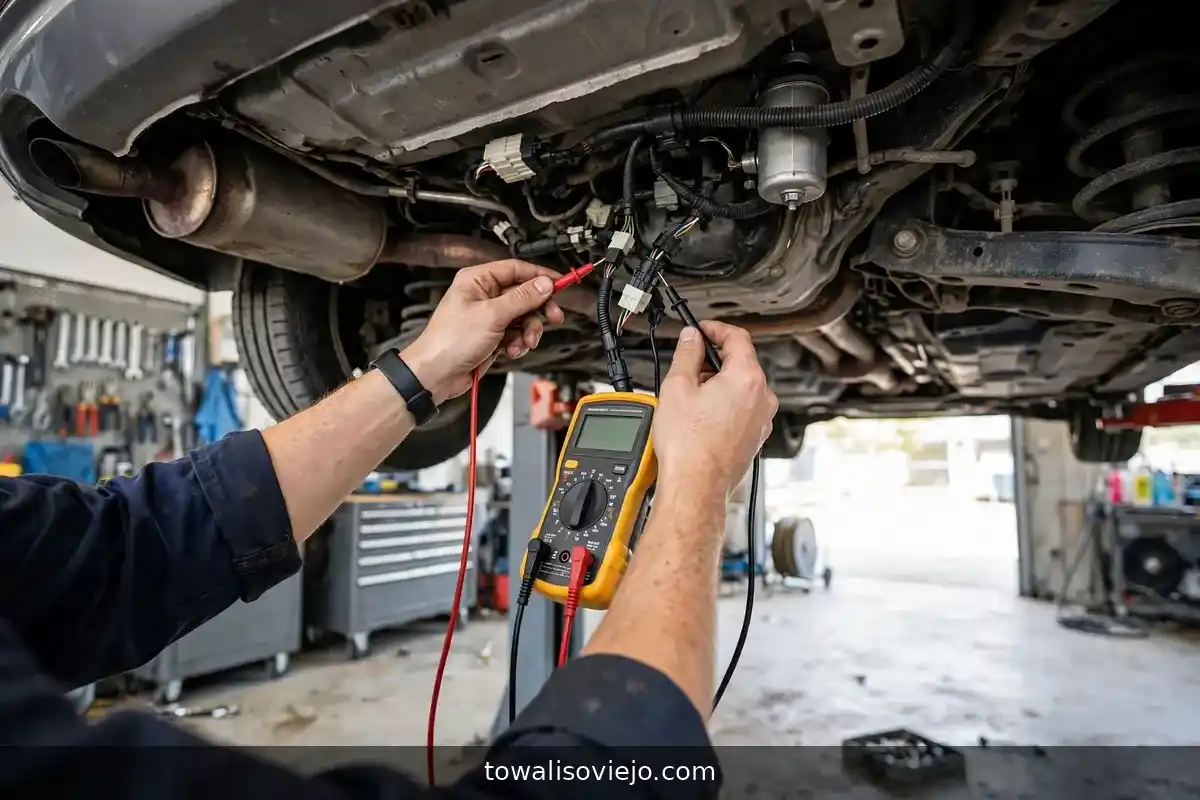
- Test the sender with ohms. Set the meter to ohms. Touch one probe to the sender terminal and one to the metal flange. Move the float by hand. The reading must change smoothly. No change means a failed sender.
- Check the float. Shake it near your ear. Fuel inside means the float has failed.
Safety matters on every step. Gasoline vapor ignites easily. Work in open air with no flames, no smoking, and no sparks. Disconnect the battery before you touch the sender. Drop the tank only when it is nearly empty.
If you only own a basic toolbox, stop after step four. Take the car to a shop with the results in hand. A tech will test the sender faster and safer than most home mechanics.
Can You Drive With a Broken Fuel Gauge?
Yes, for a short time, if you track your fuel by miles. You need two numbers from your manual: tank size and average miles per gallon. Multiply them. That gives your full tank range.
Here is an example. A 15 gallon tank times 25 miles per gallon gives 375 miles. Refuel after about 75 percent of that range, or roughly 280 miles.
Follow this routine:
- Fill the tank completely.
- Reset the trip odometer to zero.
- Write down the refuel mileage on a sticky note.
- Refuel when the trip meter reaches that number.
- Add a margin for hills, towing, and heavy traffic.
Plan stops carefully on empty highways. Gas stations can sit 60 miles apart on Interstate 10 across west Texas. Refuel earlier there than you would in a city like Atlanta or Chicago.
AAA testing found that the fuel gauge is the most reliable way to check your fuel. The miles to empty display and the low fuel light are weaker choices. Do not lean on the display while your gauge is broken. This is a stopgap, not a cure.
Do not run the tank low to stretch miles. Your fuel pump uses fuel for cooling and lubrication. Low fuel overheats the pump. Sediment from the bottom of the tank can also clog the strainer and lines. A dead pump costs far more than a gauge repair.
How Much Does It Cost To Fix a Gas Gauge?
The price depends on the failed part. Typical repair costs run like this:
- Blown fuse. About 10 dollars. Most drivers fix it in minutes.
- Gauge replacement. About 50 to 200 dollars for the part. Labor adds 100 to 200 dollars.
- Sending unit. About 200 to 800 dollars total. A shop often has to drop the tank.
- Instrument cluster. The most costly case. Modern clusters use integrated circuits, so the whole unit usually needs replacing.
A good shop starts with a cluster scan and a sender signal test. They compare the ohm reading at the tank with the needle position. That test costs less than guessing. Ask the shop to show you the readings. Clear results protect you from paying for parts you do not need.
Older trucks with a separate sender can cost much less. A basic unit may run under 50 dollars. Newer cars bundle the sender with the fuel pump module. That assembly costs more. Price it before you agree to the work.
Do not rush into a cluster swap. The fault often sits in the fuel system. Rule out the fuse, ground, and sender first. Then test the gauge.
When the Instrument Cluster Is the Cause
A failed cluster is the least common cause. On newer cars the gauge lives inside the instrument cluster. A failed chip or a cracked solder joint can kill one gauge while the rest work fine.
Run the cluster self test. If the fuel needle fails while the speedometer passes, suspect the cluster. Some shops repair clusters. Others replace the whole unit. Both options cost real money. Rule out the sender, fuse, and ground before you spend it.
Habits That Protect the Fuel Level System
A few habits protect the gauge and the pump.
- Refuel when the tank hits a quarter full.
- Clean grounds and connectors once a year, especially in the rust belt.
- Add a thin layer of dielectric grease to exposed connectors.
- Replace the fuel filter on schedule.
- Fix a blown fuse promptly and find out why it blew.
- Keep spare fuses in the glove box.
Hot climates also stress electronics. Heat cooks wiring insulation in Phoenix and Las Vegas. Inspect visible wire bundles for cracks. Replace any wire with brittle insulation.
Final Word on a Broken Fuel Gauge
A gas gauge not working is annoying, but the fix is often cheap. Check the fuse, the ground, and the voltage first. Then test the sender. Track your miles until the repair is done, and never let the tank run low. A quick test beats a long walk on the shoulder.
Why is my gas gauge stuck on full?
Usually a worn resistor strip in the sending unit, a short or bad ground holding the signal high, or less commonly a faulty gauge. Unplug the gauge feed wire at the back of the dash: a healthy gauge drops to zero, while a needle that stays on full points to a gauge fault.
Why does my gas gauge read empty after I fill up?
The signal is not reaching the dash. Common causes are a float that separated from the arm or filled with fuel, a blown instrument fuse, corroded wiring, or a failed resistor in the sending unit.
Can you drive with a broken fuel gauge?
Yes, for a short time, if you track fuel by miles. Multiply tank size by average miles per gallon for your full-tank range, fill the tank completely, reset the trip odometer, and refuel at about 75 percent of that range. Never let the tank run low, since the fuel pump needs fuel for cooling.
How much does it cost to fix a gas gauge?
A blown fuse costs about 10 dollars. A gauge replacement runs about 50 to 200 dollars for the part plus 100 to 200 dollars labor. A sending unit costs about 200 to 800 dollars total, and an instrument cluster is the most costly repair.
Why does the gas gauge needle bounce between empty and full?
Usually a sticking float arm that frees on bumps or turns, or a loose ground or corroded pump module connector that flickers with vibration. If the needle moves with the turn signal or wipers, suspect a weak ground or a failing cluster.