
Bulge in Tire Sidewall: What It Means and What To Do Now
You walk to your car and spot a bulge in tire sidewall rubber. It looks small, like a knuckle under the skin. Do not shrug it off. That bump means the tire has an internal injury, and it can fail at any speed. This guide explains what causes it, why you must stop driving, and what to do next. It also covers repair myths, warranty questions, and blowout steps. Read it before you touch the key.
What Is a Sidewall Bulge?
A sidewall bulge is a bump where internal cords have broken. Air pressure pushes the rubber outward. A pothole or curb strike causes most bulges. The tire can fail without warning at speed. Stop driving on it. Install the spare or call a tow, then replace the tire.
A tire is a pressure vessel. Layers of cord, called plies, run through the sidewall. They carry the load of your vehicle and hold the shape of the tire. A thin inner liner keeps the air inside. Soft rubber on the outside protects the cords from the road.
When a cord snaps, the damaged spot loses strength. Air slips between the inner liner and the outer rubber. The outer rubber then balloons outward. It was never built to carry the load alone. That is why a bulge is a warning, not a cosmetic flaw.
What Causes a Bubble on the Side of a Tire?
Impact is the top cause. A hard hit pinches the tire between the road and the wheel rim. The cords snap like a fishing line under a sudden jerk. The rubber may hold air for hours or days. The bulge then appears later, often after highway heat raises the pressure.
Common triggers include:
- Potholes, especially after winter freeze and thaw cycles in Chicago or Minnesota
- Curb strikes while parking in tight Manhattan or Atlanta garages
- Fast crossings over speed bumps and railroad tracks
- Driving on a flat tire, even for a short distance
- Low air pressure that makes the sidewall flex too much
- Heavy overloading of the vehicle
- Rare factory defects in the tire body
Low pressure deserves special attention. An underinflated tire flexes more with every turn of the wheel. That extra flexing heats the tire and weakens the cords. Long summer runs on Interstate 10 near Phoenix make the problem worse. Hot pavement adds heat on top of heat.
Is It Safe to Drive on a Tire With a Bubble?
No. Mechanics agree on this point. A bulged tire can blow out without warning. The outer rubber still holds air, so the tire may look fine and feel fine. Then a bump, a hot afternoon, or a lane change finishes the job.
Heat adds to the risk. Tires warm up as you drive. Pressure can climb several psi on a long highway run. That extra pressure pushes harder on the weak spot. Short, slow trips are not safer. The cords stay broken either way.
A sidewall bubble also gives few symptoms. You may feel no vibration at all. Most drivers find one during a quick walk around the car. A bulge in the tread is different. It usually means a broken steel belt. It often shows up as a rhythmic thump that speeds up with the car.
Do not drive to the shop. Do not drive “just a mile.” Install the spare where you stand. If you have no usable spare, call for a tow. The cost of a tow is small next to the cost of a crash. Move the car only to the nearest safe spot, and drive at walking speed.
How Do You Tell a Bulge From a Normal Dip?
Not every sidewall lump is a defect. Many radial tires carry small inward dips. These dips come from the overlap of cord layers during manufacturing. The extra cord resists outward pressure, so these spots rarely fail.
Use this quick test:
- Look at the tire in bright light from the side, not straight on.
- Run your palm gently across the sidewall.
- Note the direction. A bulge sticks out. A depression dips in.
- Compare it with the matching spot on the other tires.
- Take a photo and show it to a tire technician.
An outward bump is damage until a pro proves otherwise. An inward dip is usually normal, but have a trained technician confirm it. A good shop dismounts the tire and checks the inside. That inspection shows impact damage or a factory splice.
What To Do When You Find a Bulge in Tire Sidewall Rubber
Follow these steps in order.
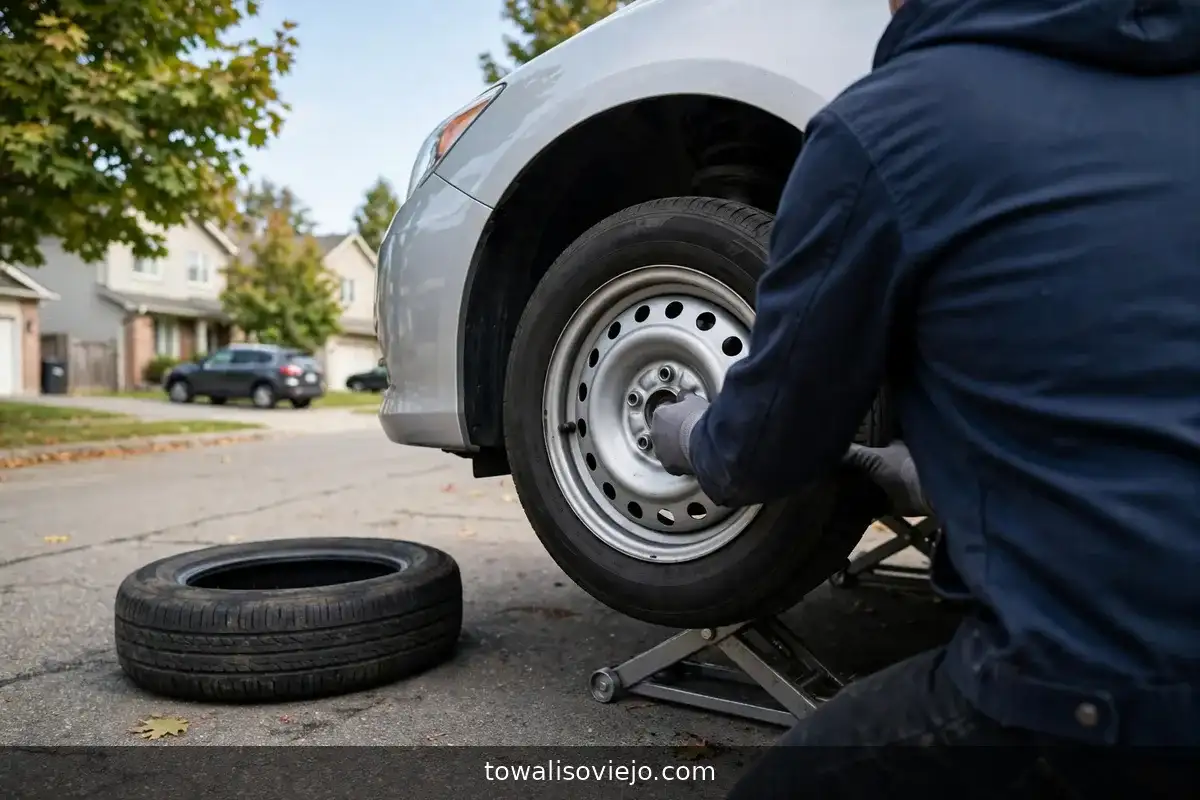
- Park on level, solid ground away from traffic.
- Turn on the hazard lights and set the parking brake.
- Place wheel chocks or heavy rocks behind a tire on the opposite corner.
- Take photos of the bulge for warranty or insurance claims.
- Loosen the lug nuts a half turn while the tire still touches the ground.
- Raise the car with the jack at the lift point your owner manual shows.
- Remove the nuts and the damaged wheel.
- Mount the spare and tighten the nuts by hand in a star pattern.
- Lower the car and tighten the nuts to the factory torque, often 80 to 100 foot pounds.
- Check the spare pressure with a gauge before you drive.
Most compact spares need about 60 psi and limit you to roughly 50 mph. Read the label on the spare. Drive straight to a tire shop and replace the damaged tire at once. Retighten the lug nuts after about 50 miles.
No spare, no jack, or a busy highway shoulder? Call a tow. Do not change a tire next to fast traffic on Interstate 95.
Can You Repair a Bulge in the Sidewall?
No. A tire with a sidewall bulge needs replacement. The sidewall flexes with every rotation. That constant flexing breaks down any patch or plug. The broken cords inside also cannot be fixed from the outside. Tire sealant cannot rebuild a broken cord either.
Some shops may offer a “repair.” Walk away. A sidewall cut, puncture, or bulge is never a safe repair. Only a very shallow scrape with no exposed cord is safe to leave alone. A shop should confirm that in person.
Buy tires in pairs when you can. A new tire next to an old one changes grip and handling. Put the best tires on the rear axle. This helps the car stay stable in a sudden swerve. If the tread depth on the other tires runs close, replacing one tire is acceptable. Ask your shop to match the size, load rating, and speed rating.
Does a Warranty or Insurance Cover a Sidewall Bubble?
It depends on the cause. A true factory defect is often covered by the tire warranty. Damage from a pothole or curb usually is not. Road hazard coverage, if you bought it with the tires, may pay for the replacement. Check your receipt.
Ask the shop to dismount the tire and write down what they find. A written note helps if you file a claim. Keep your photos and your receipt together. Some auto insurance policies also cover tire damage after a collision. Ask your agent before you pay out of pocket.
What Other Sidewall Damage Needs a New Tire?
Bulges are not the only sidewall problem. Check for these signs too.
- Cuts that show cord or run deeper than about a quarter inch need a new tire.
- Any puncture in the sidewall means replacement.
- Missing chunks of rubber, especially deep ones, need a shop inspection.
- Deep or wide cracks across the sidewall point to dry rot.
- Light curb rash with intact rubber is usually cosmetic.
Low profile tires have less rubber between the surface and the cords. They need extra caution. Heat and sun dry out rubber over time. Tires in Phoenix and Las Vegas often crack sooner than tires in cooler states. Treat a tire over ten years old as past its safe life, even if it looks fine.
What To Do If the Tire Blows Out While You Drive
A bulged tire can still burst before you reach a safe spot. Know the steps ahead of time.
- Hold the wheel firmly with both hands.
- Keep the car pointed straight.
- Do not slam the brakes.
- Do not jerk the wheel.
- Ease off the gas gradually, never all at once.
- Turn on the hazard lights.
- Let the car slow on its own drag.
- Brake gently once you drop below about 30 mph.
- Steer slowly toward the shoulder and stop.
The car will pull and wobble. That is normal. Resist the urge to correct hard. Small, smooth inputs keep the car stable.
How Do You Prevent Tire Bulges?
Prevention costs little and takes minutes.
- Check tire pressure monthly with a gauge, and check it cold. NHTSA backs this habit.
- Use the number on the driver door jamb sticker, not the number on the tire.
- Most passenger cars need about 32 to 35 psi. Your sticker has the exact figure.
- Slow down for potholes, speed bumps, and railroad tracks.
- Never overload the car beyond its rated limit.
- Walk around the car once a week and look at every sidewall.
- Rotate the tires on schedule, often every 5,000 to 7,500 miles.
- Read the date code on the sidewall. Four digits show the week and year of manufacture.
- Plan to replace tires at six years from that date, even with good tread.
A weekly walk around takes one minute. Use your phone flashlight in dim garages. Look for bumps, cracks, cuts, and missing rubber. Catch trouble before the highway does.
Final Word on a Bulging Tire
A bulge in tire sidewall rubber is a stop sign, not a to do item for next week. The outer rubber cannot carry the load alone. Swap in the spare, tow the car if you must, and replace the tire. Check your pressure monthly and respect the potholes. That small habit protects your wallet and everyone in your car.
What causes a bulge in the sidewall of a tire?
A hard impact, usually a pothole or curb strike, pinches the tire between the road and the rim and snaps the internal cords. Air then slips between the inner liner and the outer rubber, which balloons outward. Low pressure, overloading, and rare factory defects can also cause one.
Is it safe to drive on a tire with a bubble?
No. A bulged tire can blow out without warning at any speed, because the outer rubber alone cannot carry the load. Do not drive to the shop, not even a mile. Install the spare where you stand, or call for a tow.
Can a sidewall bulge be repaired?
No. The sidewall flexes with every rotation, so no patch, plug, or sealant can rebuild the broken cords inside. A tire with a sidewall bulge must be replaced.
How do you tell a bulge from a normal dip in the sidewall?
A bulge sticks outward and a dip sinks inward. Look at the tire in bright light from the side, run your palm gently across it, compare the spot with the other tires, and have a technician confirm it. An outward bump is damage until a pro proves otherwise.
What should I do if my tire blows out while driving?
Hold the wheel firmly with both hands, keep the car pointed straight, do not slam the brakes or jerk the wheel, ease off the gas gradually, turn on the hazard lights, let the car slow on its own, brake gently below about 30 mph, and steer slowly toward the shoulder.