
How to Drive in Snow: Safe Habits, Skid Control, and Winter Prep
The first heavy snowfall catches many drivers off guard. Roads turn slick fast, and traffic slows to a crawl. Learning how to drive in snow protects you, your passengers, and everyone around you. The skills are simple, but they take practice. This guide covers car prep, smooth driving habits, and skid recovery. It also explains what to do when your car gets stuck.
How to Drive in Snow: The Short Answer
Slow down and keep every move smooth. Accelerate gently, brake early, and steer with small inputs. Stay 8 to 10 seconds behind the car ahead. Turn on your headlights, skip cruise control, and leave early. If the trip can wait, stay home until plows finish their work.
Snow changes how a car responds to everything you do. Tires grip less, so every move takes longer. AAA reports that stopping on ice at 0 degrees Fahrenheit takes twice the distance of stopping at 32 degrees. That gap surprises most drivers.
Think of traction as a limited budget. You can spend it on braking, turning, or accelerating. Spend it on two jobs at once, and the tires lose grip. Smooth inputs keep that budget from running out.
Winter weather varies across the country, so your plan should too. Lake effect storms near Buffalo and Syracuse dump snow in narrow bands. Interstate 80 through the Sierra Nevada and Wyoming can close within hours. Atlanta drivers face ice on hills with few plows. Know your local risks before you leave.
Prepare Your Car Before the Snow Falls
Good prep prevents most winter trouble. Start with your tires, because they are your only contact with the road. Use a tread depth gauge. AAA suggests at least 6/32 of an inch for snow. NHTSA tells shoppers to look for the snowflake symbol on winter tires. Their rubber stays flexible below about 45 degrees. All season tires harden in the cold and lose grip.
Check tire pressure when the tires are cold. NHTSA defines cold as parked for at least three hours. Pressure drops about 1 psi for every 10 degree drop in temperature. Use the number on the driver door sticker, not the tire sidewall.
Test your battery next. A multimeter should read 12.4 to 12.6 volts with the engine off. Cold weather cuts battery power, so weak batteries often fail on the first freezing morning in Chicago or Minnesota. Fill the washer reservoir with winter fluid rated for freezing temperatures. Replace worn wiper blades.
Keep at least half a tank of fuel. AAA gives this advice, and the extra fuel helps if you get stranded. Pack an ice scraper, a small shovel, and sand or kitty litter. Add jumper cables, a flashlight, blankets, and a phone charger. Include water and snacks.
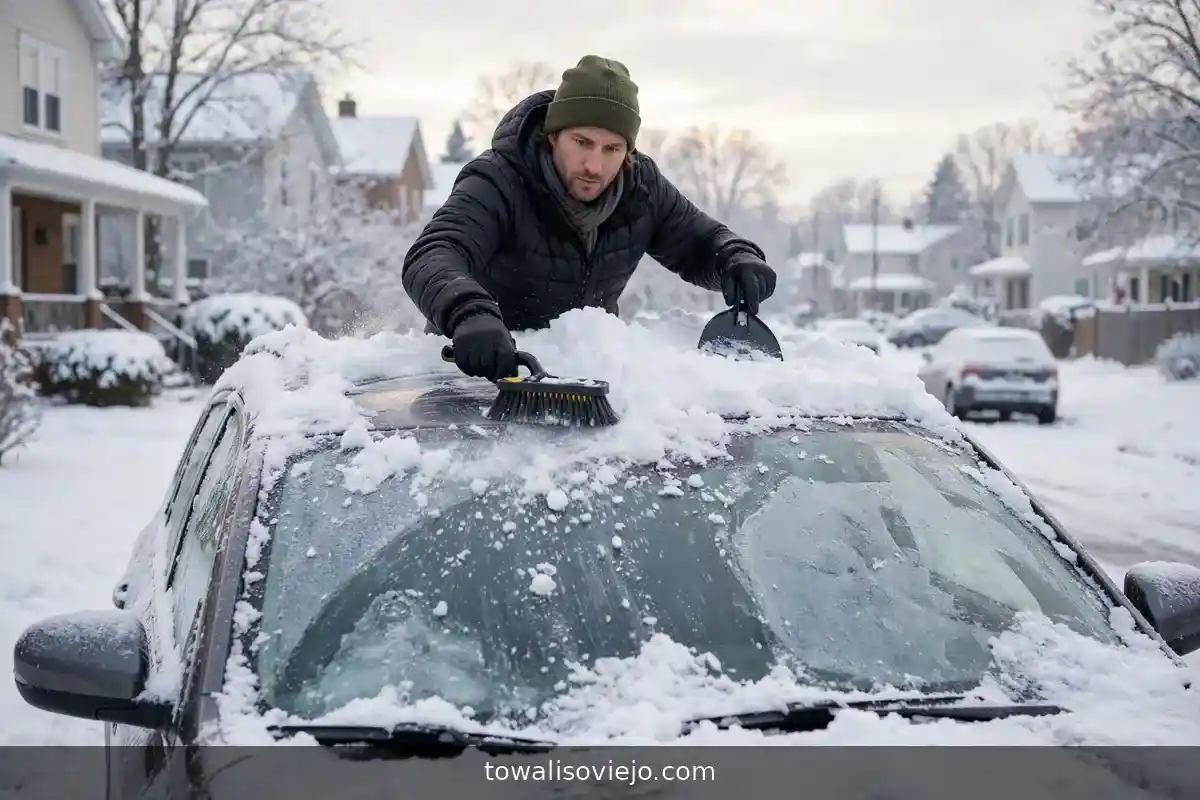
Clear every inch of snow from your car. Clean the roof, hood, lights, and windows. Snow on the roof slides onto your windshield when you brake. Snow on the hood blows up while you drive. Never warm up the engine inside a garage. Carbon monoxide builds up fast.
Plan Your Trip Before You Leave
Check the forecast and road reports before you go. Most states offer a 511 service with live road conditions. Look for closures, chain rules, and crash delays on your route.
Leave early. Everything takes longer on snow, and rushing leads to mistakes. Tell someone your route and your arrival time. Charge your phone before you start.
Choose main roads when you can. Crews plow and treat highways first. Side streets and neighborhood hills may stay icy for days.
Electric vehicle drivers should plan for shorter range. Cold weather reduces battery performance, as NHTSA reminds drivers. Charge more often, and warm the cabin while the car is plugged in.
Is All Wheel Drive Enough on Snowy Roads?
No. All wheel drive helps you get moving, but it does not help you stop. Your brakes and tires do that work. Four wheel drive works the same way. AAA Colorado warns that extra traction can tempt drivers to go too fast.
Good tires matter more than the drivetrain. A front wheel drive car on winter tires often beats an all wheel drive car on worn tires. Front wheel drive puts the engine weight over the driven wheels. That weight improves traction when you pull away.
Rear wheel drive needs more care. Less weight sits over the rear wheels, so they spin easily. Use gentle throttle. A little extra weight over the rear axle, such as a bag of sand, can help. Modern traction control and stability control reduce the risk. They cannot change the laws of physics.
How Far Should You Stay Behind the Car Ahead on Snow?
Leave 8 to 10 seconds. That doubles the usual 3 to 4 seconds on dry pavement. AAA and many state agencies give this same number.
Use a fixed landmark to count. Pick a sign or an overpass. When the car ahead passes it, start counting. You should reach 8 before you pass the same spot. Add more seconds if your tires are worn, your car is heavy, or visibility drops.
Heavy traffic on Interstate 95 near Boston or New York tempts drivers to close the gap. Resist that urge. Tailgating on snow leaves no room for error. Give snowplows even more room. Plows throw slush and often stop without warning. Never pass a plow inside a cloud of blowing snow.
Turn on your low beam headlights. They help other drivers see you through falling snow. Skip the high beams. They reflect off flakes and blind you.
Use Smooth Steering, Braking, and Acceleration
Smoothness is the core skill. Imagine a full cup of coffee on your dashboard. Your goal is to avoid spilling it. Keep both hands on the wheel. Look far down the road, about 12 seconds ahead. Early warning gives you time to slow down gently.
Accelerate slowly from every stop. Squeeze the gas pedal gently. Wheel spin means you pressed too hard. Ease off until the tires grip again. Spot red lights early, and let the car coast down.
Brake early and gently. If your car has anti lock brakes, press the pedal firmly and hold it. The system pulses on its own, and you may feel vibration. That is normal. Do not pump the pedal. On older cars without anti lock brakes, press gently and release if the wheels lock.
Brake first, then turn. Slow down before the curve, and steer through it with light hands. Braking in a turn asks the tires to do two jobs. Accelerate gently as you exit.
Never use cruise control on snow or ice. It can spin the wheels when the road surface changes. Watch for black ice on bridges and overpasses. These freeze first because cold air flows above and below them. Shaded curves hide ice too.
What Should You Do If Your Car Starts to Skid?
Stay calm. Panic causes most bad skid reactions. Look where you want the car to go, and steer there. Your hands follow your eyes.
In a rear wheel skid, the back end slides sideways. Take your foot off the gas. Do not slam the brake. Steer in the direction the rear is sliding. Then straighten the wheel as the car straightens. Expect a second small slide, and correct again.
In a front wheel skid, the car plows straight ahead despite your steering. Ease off the gas. Wait for the front tires to grip again. Then steer gently where you want to go. Adding more steering only deepens the slide.
If you must brake during a skid, use firm, steady pressure with anti lock brakes. Keep steering the whole time.
Practice makes the response automatic. After the first snow, find an empty parking lot. Drive slowly and feel how the car reacts. Try a gentle brake and a light turn. Choose a lot with no poles, curbs, or other cars.
How Do You Get Up a Snowy Hill Without Stopping?
Build gentle momentum before the hill, then hold a steady speed. AAA warns against stopping on the way up. Starting again on a slope is hard. Do not power up the hill either. Extra gas only spins the wheels.
Wait at the bottom until the car ahead clears the hill. A car that stalls halfway can block everyone. Atlanta and other southern cities see this often during rare ice storms. Mountain drivers on Interstate 70 in Colorado know the same lesson. Colorado often enforces a traction law there during storms. California can require chains on mountain routes. Check the rules before you go.
Going downhill, slow down before the crest. Shift to a lower gear and let the engine help. Brake lightly and early. Never coast in neutral.
What Should You Do If You Get Stuck in Snow?
Stop and think. Spinning the wheels digs you deeper. Straighten the front wheels to reduce rolling resistance. Shift to drive, or second gear in a manual, and apply gentle gas. If the wheels spin, stop.
Clear snow from around the tires and under the car. Use your shovel. Spread sand or kitty litter in front of the drive wheels. Try again with light gas. You can rock the car gently between drive and reverse. Check your owner’s manual first, because rocking can damage some transmissions.
If you stay stranded, stay with your car. It gives you shelter and helps rescuers find you. Turn on your hazard lights. Clear the tailpipe of snow, and crack a window open a little. This prevents carbon monoxide buildup. Run the engine in short bursts for heat. Call 911 if you are in danger.
Final Checklist Before You Drive
Remember the simple rule behind how to drive in snow: slow, smooth, and spaced out. Use this checklist before every winter trip:
- Check your tires for tread, pressure, and type.
- Clear snow from the roof, hood, lights, and windows.
- Fill the tank to at least half.
- Pack your emergency kit and a charged phone.
- Leave early, and plan a slower route.
- Keep 8 to 10 seconds behind the car ahead.
Snow driving gets easier with each storm. Trust your tires, respect the road, and never rush. The best winter drivers arrive late, but they arrive safe.
How far should you stay behind the car ahead on snow?
8 to 10 seconds, double the dry-road 3 to 4 seconds, with more space for worn tires, heavy cars, poor visibility, and snowplows.
Is all wheel drive enough on snowy roads?
No, it helps you get moving but not stop; tires matter more, and a front wheel drive car on winter tires can beat an all wheel drive car on worn tires.
What should you do if your car starts to skid?
Stay calm, look where you want to go, ease off the gas; for a rear skid steer in the direction the rear is sliding, for a front skid wait for grip before steering gently.
What should you do if you get stuck in snow?
Stop spinning the wheels, straighten them, clear snow around the tires, spread sand or kitty litter, rock gently between drive and reverse, and if stranded stay with the car with hazards on and the tailpipe clear.
How do you get up a snowy hill without stopping?
Build gentle momentum before the hill, hold a steady speed, do not stop halfway up or power up, and go downhill in a lower gear braking lightly and early.