Towing With a Tow Strap: A Mechanic’s Step by Step Guide
A dead car does not always mean a tow truck bill. Sometimes a short pull to safety is all you need. Towing with a tow strap works well in the right setting. It also hurts people when drivers rush it. I have pulled cars out of Atlanta parking decks and off icy Minnesota shoulders. This guide shows you the right gear, the right steps, and the limits you must respect.
What Is the Safe Way of Towing With a Tow Strap?
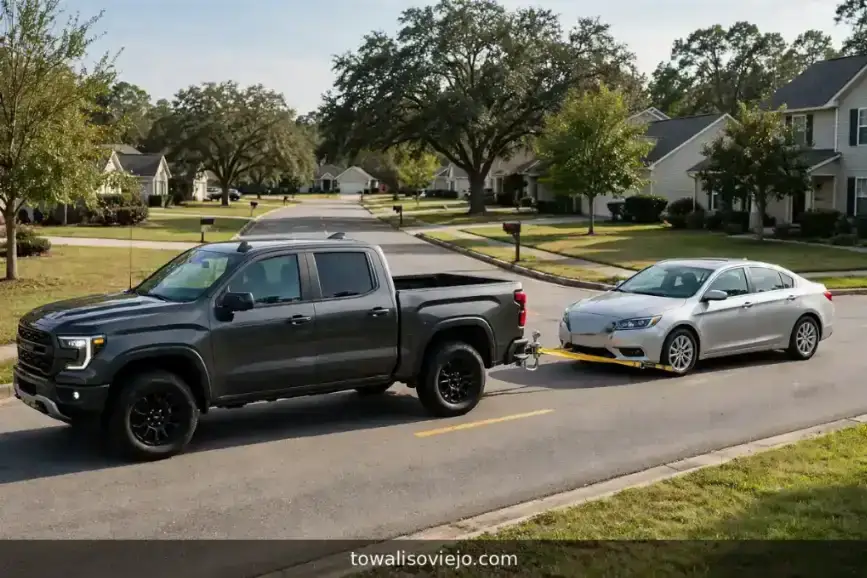
Inspect the strap and both hooks first. Attach it only to rated tow points. Keep the towed car in neutral with the steering unlocked and a driver at the wheel. Pull away slowly and take up slack gently. Stay under 15 miles per hour. Use flashers and travel a short distance only.
A tow strap is flat webbing made of nylon or polyester. It has a loop or a hook on each end. It works best on pavement for a short move, such as getting a car off a busy lane. It does not replace a tow truck or a tow bar for long trips.
Pick the right strap before you start. Look for these features.
- Width of 2 to 3 inches.
- Length of 15 to 20 feet.
- Breaking strength of at least two to three times the weight of the towed car.
- Sewn loop ends, not metal hooks stitched into the strap.
- No cuts, burns, or frayed stitching.
Breaking strength is the point where the strap fails. Working load is much lower. Never plan a pull near the breaking number. A strap with a 10,000 pound rating suits a 3,500 pound sedan with room to spare.
Can I Use a Rope or Chain Instead of a Tow Strap?
You can, but you should not. Mechanics prefer a purpose made strap. Chains carry no stretch, so they jerk both vehicles and can shatter a hook point. Steel cable frays and cuts hands. Cheap rope often has no clear rating.
A recovery strap is different from a tow strap. It stretches to pull a stuck truck from mud. That stretch stores energy. A stretch strap on a road tow can snap the towed car back into the tow vehicle. Use a low stretch tow strap for road moves.
Watch for these weak points.
- A knot can cut strap strength by about half.
- A wet strap can lose around 30 percent of its strength.
- Sun damage weakens nylon over time.
- Old stitching fails without warning.
Store the strap in a dry bag out of sunlight. Coil it loosely. Wash it with a hose, not a pressure washer. Replace it if you see fuzz, cuts, or faded patches.
Where Do I Attach a Tow Strap?
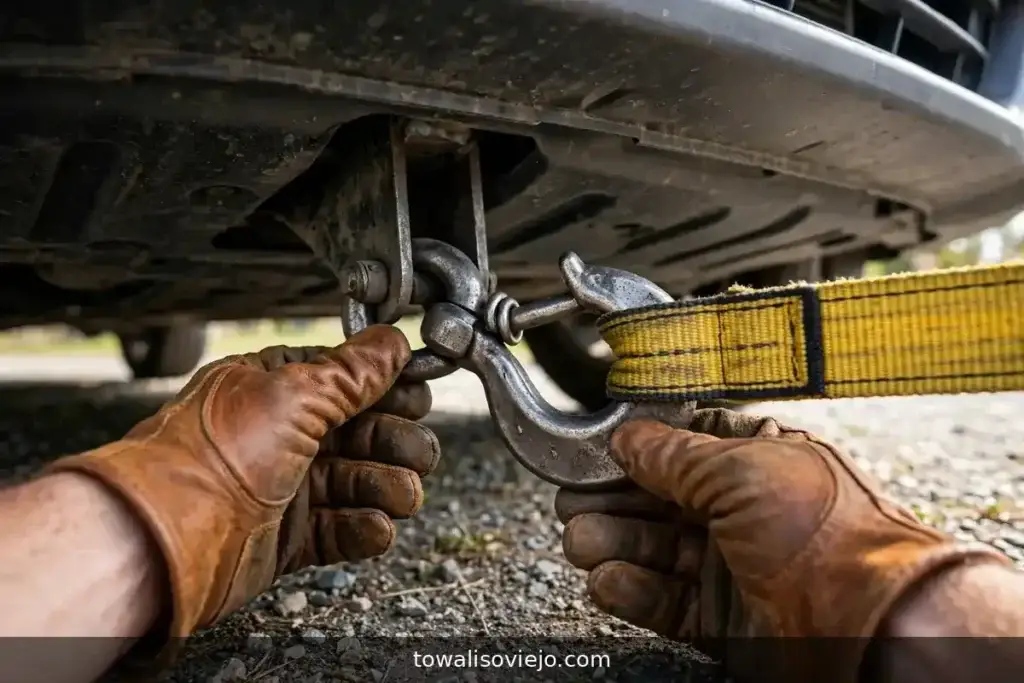
Use only the factory tow points. Most cars hide a threaded tow eye behind a small cover in the bumper. The tool to screw it in often sits in the trunk. Many trucks have frame mounted hooks or loops. Your owner’s manual shows the exact location and the allowed use.
Never tie to these parts.
- The bumper cover or bumper bracket.
- The suspension arms or control arms.
- Tie down loops made for a transport truck.
- A trailer hitch ball.
- The exhaust or the axle housing.
Those parts bend or tear off under load. A torn part can fly through a window. Use a shackle only if it has a rated working load above the strap rating. Skip homemade or cheap shackles. They can turn into a missile if they fail.
Test each connection by hand. Tug the strap at both ends. Check that the hook or loop seats fully. Then clear everyone from the strap path.
How to Tow a Car Step by Step
Follow this routine each time.
- Park both cars in a straight line on level ground.
- Check tire pressure on the towed car. Most cars need 32 to 36 psi, so use a gauge.
- Attach the strap to both tow points and tug each end.
- Turn the ignition of the towed car to accessory. This unlocks the steering wheel.
- Shift the towed car to neutral and release the parking brake.
- Turn on hazard lights on both cars.
- Move the tow vehicle forward until the strap just goes tight. Do not yank.
- Pull away slowly and brake early. The towed driver steers and brakes to keep the strap loose.
- Agree on signals before you move. A phone call on speaker works well. Hand signals work if the cars stay close. Use a short list: go, slow, stop.
Know what changes in a towed car with the engine off. The power brakes lose their boost after a few presses. The pedal feels hard, so press firmly and early. The power steering also stops. The wheel feels heavy, especially in a tight turn.
If the battery is dead, check the hazard lights. A healthy battery rests near 12.6 volts. Below about 11.8 volts, lights may dim or fail. Use a jump pack to power the lights and brake lamps. The towed car needs working brake lights on any public road.
How Fast and How Far Can You Tow a Car?
Keep speed under 15 miles per hour. Keep the trip short, usually a mile or two. A strap suits a move from a driveway to a shop or from a lane to a safe spot. It does not suit a long haul.
Never tow with a strap on an interstate. Interstate 95, Interstate 10, and Interstate 80 move too fast and give no room to stop. Call roadside help instead. AAA and other clubs handle these jobs every day. A rigid tow bar or a flatbed is the right tool for distance.
Slack is the enemy. A loose strap pulls tight with a jerk. That jerk can pop a tow eye. The towed driver should brake gently to keep tension steady. The tow driver should accelerate in small steps and turn wide.
Allow extra distance in bad weather. Ice in Chicago or Minnesota makes stopping slow. A towed car on a slick road can slide into the tow vehicle. Use a longer gap and a lower speed. Desert sun in Phoenix or Las Vegas ages nylon fast. Store the strap in the shade.
Is It Illegal to Tow a Car With a Strap?
It depends on the state. Many states allow a short tow on a local road with a driver in the towed car. Some states ban towing with a flexible line on highways. Some require a flag on the line, working lights, or a minimum strap length. Rules differ, so check your state motor vehicle code before you pull onto public roads.
Never let a passenger ride in the towed car. Only the driver may sit inside. Never let anyone ride on a bumper or hold the strap. Passengers make a tow illegal in many places and far more dangerous.
Hazard lights help every driver see the tow. Use both cars’ flashers. Pick quiet streets over main roads. A tight parking garage in Manhattan or Atlanta needs a slow pace and a spotter.
Can You Tow an Automatic or All Wheel Drive Car With a Strap?
Not always. Check the owner’s manual first. The manual states if the car can roll on its wheels and how far.
Automatic transmissions rely on engine power to pump fluid. A dead engine stops that pump. Wheels that turn without lubrication can wear parts fast. Many makers allow only a short, slow tow in neutral. Some ban it.
All wheel drive and four wheel drive cars need extra care. All four wheels connect to each other. Rolling two wheels while two stay still can strain the center differential. A flatbed is the safe choice for these cars.
Hybrid and electric cars rarely allow wheels down towing. The motors can generate current when the wheels spin. That can damage parts. A flatbed is the safe choice for these cars as well.
Cars with a locked or electric parking brake may not roll at all. A seized brake or a broken axle also rules out a strap. If the car will not roll freely, stop and call a pro.
What Mistakes Cause Strap Failures?
Most failures come from simple errors. Here is what I see most.
- Starting with the strap slack, then yanking it tight.
- Hooking to a bumper or a suspension part.
- Using a strap that is too short or too weak.
- Letting people stand in line with the strap.
- Skipping the inspection of stitching and hooks.
Keep everyone away from the strap line. Stand clear by at least the strap length. A stretch strap can recoil with force. If you doubt the strap, drape a jacket or a floor mat over the middle. It helps the strap drop instead of whip.
Do not mix parts. Never tie a rope to a chain. Never join two straps with a steel link. Never use a ratchet tie down strap for towing. Those straps do not stretch and are not rated for pulls.
When Should I Call a Professional Tow Truck?
Call for help when any of these apply.
- The car has a broken axle, seized brake, or bad steering.
- The trip is longer than a mile or two.
- The route includes a highway, a hill, or heavy traffic.
- The car is electric, hybrid, or all wheel drive.
- The weather is icy, wet, or extremely hot.
- You do not have a safe, rated tow point.
A professional flatbed moves the car with no wear on the drivetrain. It costs less than a repair from a bad pull. A roadside club plan often covers a short tow at no extra charge.
Tow Smart and Stay Safe
Towing with a tow strap is a short range tool. Use a rated strap, attach it to the factory tow points, and keep speed low. Check your manual before you pull any automatic, all wheel drive, hybrid, or electric car.
Keep a good strap, a jump pack, and a tire gauge in your trunk. Practice the steps in a driveway before you need them. If anything feels wrong, stop and call a certified technician or a roadside service.
What is the safe way of towing with a tow strap?
Inspect the strap and both hooks first, attach it only to rated tow points, keep the towed car in neutral with the steering unlocked and a driver at the wheel, pull away slowly, stay under 15 miles per hour, use flashers, and travel a short distance only.
Where do I attach a tow strap?
Only the factory tow points: the threaded tow eye behind a small bumper cover, or frame-mounted hooks or loops on trucks. Never tie to the bumper cover or bracket, suspension arms, transport tie-down loops, a trailer hitch ball, or the exhaust or axle housing.
Can I use a rope or chain instead of a tow strap?
You can, but you should not. Chains carry no stretch and jerk both vehicles, steel cable frays and cuts hands, and cheap rope often has no clear rating. Use a low-stretch tow strap for road moves, not a stretchy recovery strap.
Is it illegal to tow a car with a strap?
It depends on the state. Many states allow a short tow on a local road with a driver in the towed car, some ban flexible lines on highways, and some require a flag on the line, working lights, or a minimum strap length. Check your state motor vehicle code before pulling onto public roads.
Can you tow an automatic or all wheel drive car with a strap?
Not always. Check the owner’s manual first. Automatics rely on engine power to pump transmission fluid, all wheel drive can strain the center differential, and hybrids and electrics can generate current when the wheels spin. A flatbed is the safe choice for these cars.