Flatbed vs Wheel Lift: Which Tow Does Your Car Need?
When you call for a tow in Aliso Viejo, the dispatcher may ask what you drive — and the answer decides which truck rolls. The two common options are wheel-lift and flatbed towing, and picking wrong can cost you a damaged bumper or a second trip. Here is how to know which one your car needs.
How wheel-lift towing works
A wheel-lift truck slides a metal yoke under two of your tires (usually the front pair) and lifts them off the ground. The other two wheels stay on the road and roll behind the truck. It is fast, it fits tight spots like parking garages, and for a simple front-wheel-drive sedan with a dead battery it is usually plenty.

How flatbed towing works
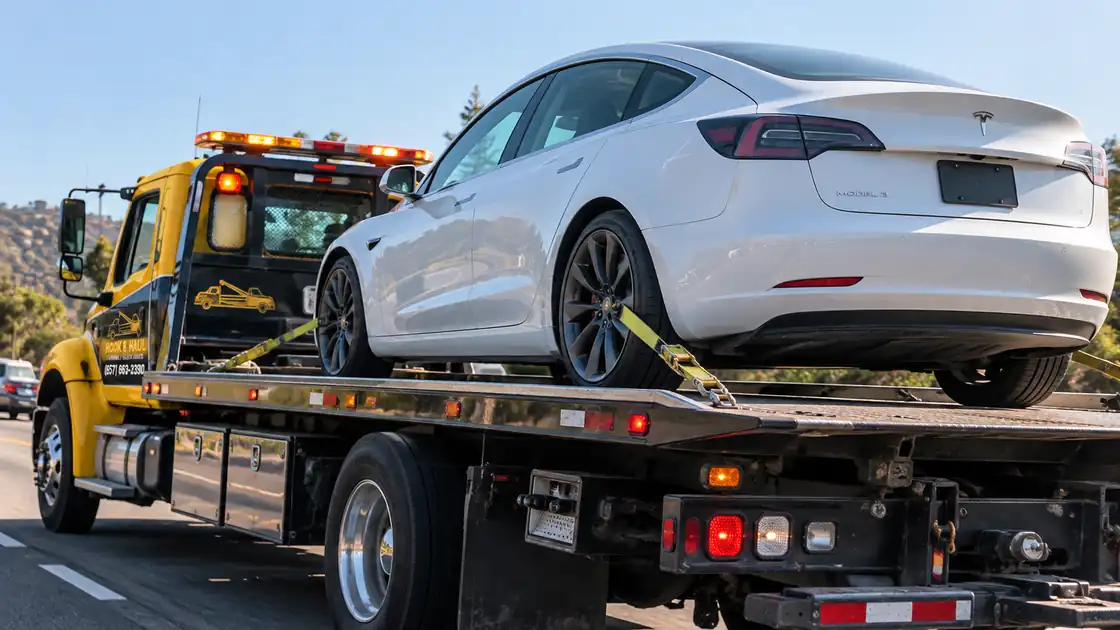
A flatbed carries your whole car on its back. The bed tilts down, your car is winched up, and all four wheels ride off the ground. Nothing touches the road. It takes a few minutes longer to load, but it is the safest way to move a car.

AWD and 4WD: flatbed wins
If your car is all-wheel-drive or four-wheel-drive, towing it with two wheels on the ground can damage the drivetrain — the owner’s manual of most AWD cars says so outright. Around Aliso Viejo that covers a lot of daily drivers: Subarus, RAV4s, CR-Vs, Teslas with dual motors. For any AWD/4WD vehicle, ask for a flatbed. A good dispatcher will ask about your drivetrain before sending the truck.
EVs and low cars
Electric cars add another wrinkle: many EVs should not be towed with wheels rolling because the motors can generate current. And low-clearance cars — sports cars, anything lowered — can scrape on a wheel-lift’s yoke. Flatbed avoids both problems. If you drive a Tesla, Mach-E, or anything sitting close to the ground, say so on the call.
When wheel-lift is fine
Wheel-lift is perfectly fine for a standard front-wheel-drive car with a simple problem — dead battery, flat tire with no spare, minor fender-bender where the car still rolls straight. It is quicker to hook up and easier to maneuver in places like the Aliso Viejo Town Center garage.
What to tell the dispatcher
You do not need to diagnose the truck type yourself. Just give three facts: year/make/model, whether it is AWD/4WD or electric, and where the car is (street, garage, driveway). Mention ground clearance if it is low. The roadside assistance dispatcher matches the truck to the car — that is the job. If a company will not ask what you drive, that tells you something.
Stuck and not sure which truck you need? Call Hook & Haul Towing at (657) 663-2390 — tell us what you drive and where you are, and we will send the right truck the first time. Price quoted before dispatch.