
How to Check Brake Fluid at Home in 10 Minutes
Knowing how to check brake fluid takes about ten minutes and saves you real money. Your brakes depend on this fluid every time you press the pedal. Low or old fluid can turn a normal stop into a scary one. This guide shows you what to look for, what the colors mean, and when to call a shop.
How to Check Brake Fluid Step by Step
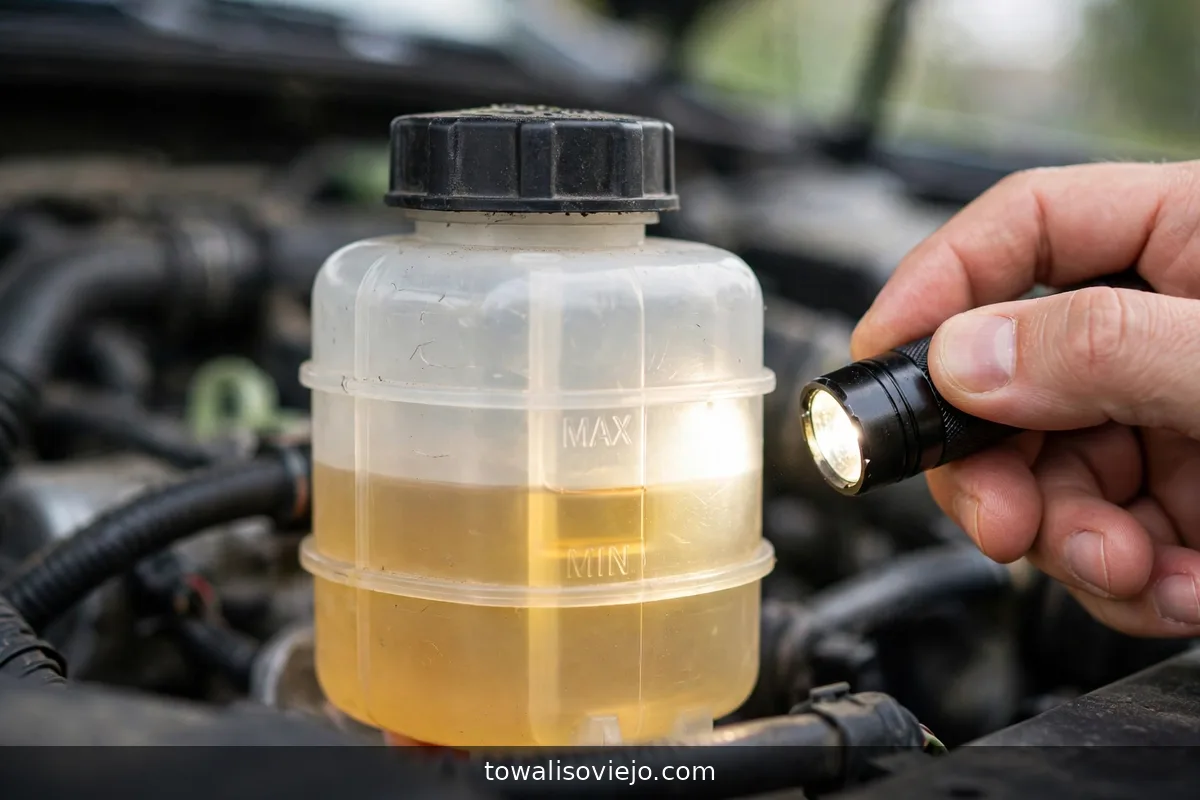
Park on level ground with the engine off. Open the hood and find the clear reservoir on the master cylinder. Wipe the cap clean. Read the level against the MIN and MAX lines. The fluid should sit between them and look clear to light amber. Dark or low fluid needs attention.
Here is the full routine, with the details a mechanic watches for.
- Park on flat ground and set the parking brake. A slope tilts the fluid and gives a false reading.
- Let the engine cool for at least 30 minutes. Hot fluid expands and can hide a low level.
- Pop the hood and look near the driver side of the firewall. The reservoir sits on top of the master cylinder, which bolts to the brake booster.
- Read the level from outside the tank first. Use a flashlight if the engine bay is dark. Some older trucks use a metal reservoir with a clip on lid. You must open that lid to see the level.
- Wipe the cap with a clean rag before you open it. Dirt in the reservoir can scratch the master cylinder bore and wear the seals.
- Look straight down into the fluid with a flashlight. Check for floating debris, cloudy swirls, or a dark tint.
- Read the cap. Most caps print the fluid type, such as DOT 3 or DOT 4. Match it exactly when you buy fluid.
- Close the cap right away. Moisture enters the system every second the reservoir stays open.
- Many modern reservoirs have two chambers. Each chamber feeds a separate brake circuit. Both chambers should show a level between the lines. Write down the date and the level. Next month, you can spot a change fast.
Tools and Safety Gear You Need
You need very little for this job. Grab a clean lint free rag and a bright flashlight. Add nitrile gloves and safety glasses. Brake fluid irritates skin and eyes. It also strips paint fast. Wipe any spill right away, then rinse the spot with water.
Keep a pack of brake fluid test strips in the glove box if you want a deeper check. A handheld boiling point tester is a shop grade option. Cheap pen style testers can mislead you, because DOT 3 and DOT 4 conduct differently.
What Color Should Brake Fluid Be?
Fresh brake fluid looks clear to light yellow. Over time it turns amber, then brown. Dark brown or black fluid means heat, moisture, and metal particles have built up.
Color gives you a quick screening, not a final verdict. Light amber still works. Brown means you should plan a flush soon. Black means book the flush this week.
Some fluids carry a dye. DOT 5 silicone fluid often looks purple. Check your manual before you judge by color alone.
A shop pulls a small sample with a clean syringe. You can do the same and compare it to a fresh bottle. Hold both up to daylight. A big color gap tells the story.
Cloudy fluid points to water or a mixed fluid. Black specks mean the rubber hoses or seals are breaking down. Either finding calls for a professional inspection.
Should You Top Off Low Brake Fluid?
Not right away. Low brake fluid has two common causes. Worn brake pads are the first. A leak is the second.
As pads wear, the caliper pistons move farther out. They draw fluid down from the reservoir. That drop is normal. It works like a free pad wear gauge.
Check the front pads first. Shine a flashlight through the wheel spokes. If the pad material looks thinner than about one eighth inch, plan a brake job.
New pads reset the level. The pistons push back in, and fluid returns to the reservoir. If you topped off earlier, the reservoir can overflow and spill fluid on your paint.
A leak behaves differently. The level drops fast, and the pedal feels soft. Look for wet spots at each wheel, along the brake lines, and under the master cylinder. Road salt in Minnesota and Chicago speeds rust on lines and calipers. Leaks show up there often.
Never drive a car with a leak or a sinking pedal. Call a tow truck.
Suppose the level sits just under MIN and the pads look fine. A small top off can bridge you to a shop visit. Use fluid from a fresh sealed bottle. Then book a brake inspection.
Why Brake Fluid Absorbs Water
DOT 3 and DOT 4 fluids are hygroscopic. That means they pull moisture from the air. The reservoir vents to the atmosphere, so humid air always finds a way in. Moisture also seeps through aging rubber brake hoses.
Most fluid absorbs about two percent water each year, even in a car that sits. Humid Gulf Coast cities like Houston and Tampa push that number higher.
Water lowers the boiling point. Federal Motor Vehicle Safety Standard 116 sets the minimums. NHTSA enforces it, and SAE International publishes matching fluid specifications. New DOT 3 must boil at 401 degrees Fahrenheit dry and 284 degrees wet. New DOT 4 must boil at 446 degrees dry and 311 degrees wet. The wet rating measures fluid after it absorbs a set amount of water.
Hot brakes can boil wet fluid. Boiling creates vapor bubbles. Vapor compresses, so the pedal sinks toward the floor. Picture a loaded SUV rolling down Interstate 70 through the Colorado Rockies. Picture summer stop and go traffic on Interstate 95 near Washington. Picture Phoenix heat on Interstate 10. Each case punishes old fluid.
Know Your Brake Fluid Type
Most cars use DOT 3, DOT 4, or DOT 5.1. All three are glycol based. DOT 5 is different. It is silicone based, and it does not mix with the others. Never add silicone fluid to a glycol system. The mix can leave a spongy pedal.
DOT 4 boils hotter than DOT 3, so it looks like a free upgrade. Do not assume that. Some makers specify DOT 3 only. Check the manual before you swap grades.
Buy small bottles. An opened bottle absorbs moisture while it sits on the shelf. Toss any bottle that has been open for a year.
Do Brake Fluid Test Strips Work?
Yes, within limits. A strip costs little and gives an answer in under a minute. Most strips react to copper in the fluid. Copper washes off brake lines and ABS parts as corrosion builds. High copper means the corrosion inhibitors are spent.
Some strips measure moisture instead. Humid air can fool them, so read them quickly. Keep unused strips sealed, because humid air ruins them.
Dip a clean strip into the reservoir. Wait for the time printed on the pack. Match the pad color to the chart.
Treat a strip as a screening tool. It does not give you a boiling point. A handheld boiling point tester does. Sometimes a tester passes while copper still flags trouble. Use both when you can.
Many shops replace fluid at two to three percent water. Any strong copper reading also means replace. When in doubt, replace.
How Often Should You Check Brake Fluid?
Check the level once a month if you tow, drive hard, or live in mountains or desert heat. Everyone else should check at every oil change. Check again before a long road trip, after any brake work, and any time the pedal feels different.
Replacement runs on a different clock. Intervals range from two years to five years, depending on the maker. Many call for new fluid every two to three years. Heat and humidity shorten fluid life. A truck in Houston or a commuter in Phoenix may need new fluid near the two year mark. AAA tells drivers to start with the owner’s manual. I agree.
Fresh fluid every two or three years costs far less than ABS repairs. Write the service date on a sticker under the hood or in your phone.
Common Mistakes to Avoid
- Checking right after a drive, when hot fluid reads high.
- Leaving the cap off while you hunt for a funnel.
- Topping off with the wrong grade or with silicone fluid.
- Using fluid from an old open bottle.
- Ignoring dark fluid because the brakes still stop fine.
- Letting a spill sit on the paint.
- Reusing a funnel or syringe that still holds old fluid or oil.
Pedal feel stays normal until the fluid boils. That is why color and age matter more than feel.
Warning Signs Your Brake System Needs Help
Fluid problems show up in the pedal and the dash long before the brakes fail. Watch for these signs:
- A soft or spongy pedal that sinks slowly under steady pressure.
- A brake warning lamp that stays lit after you release the parking brake.
- Wet spots near a wheel, or an oily film on the inside of a tire.
- A burnt smell after a long downhill run.
- Squealing or grinding that tells you the pads are gone.
The red lamp comes from a float switch in the reservoir. When the level drops, the switch closes a 12 volt circuit and lights the lamp. Check the parking brake first, then check the level.
If the pedal sinks to the floor, stop driving. Pull over safely and call a tow truck. Pumping the pedal and hoping is a bad plan. A parking garage ramp in Manhattan or Atlanta is no place to find out.
After any fluid work, take a slow test drive in an empty lot. Press the pedal firmly at a stop. It should feel firm and hold steady.
Keep a Simple Brake Check Habit
Now you know how to check brake fluid and read what you see. Check the level, the color, and the date of the last change. Top off only after you learn why the level dropped. Use the exact fluid type printed on the cap. Replace old fluid on schedule, even when the pedal feels fine. Brake fluid costs little. Your stopping power depends on it every day.
How do I check my brake fluid level?
Park on level ground with the engine off, open the hood, and read the level on the clear reservoir against the MIN and MAX lines. It should sit between the lines and look clear to light amber.
What color should brake fluid be?
Fresh fluid is clear to light yellow. Light amber still works, brown means plan a flush soon, and black means book a flush this week.
Should I top off low brake fluid?
Not right away. Worn brake pads lower the level normally, while a fast drop with a soft pedal points to a leak. Only top off a small amount from a fresh sealed bottle after checking the pads, then book an inspection.
How often should I check brake fluid?
Check the level every month if you tow or drive hard, otherwise at every oil change, and replace the fluid every two to three years depending on the maker.
What does dark or black brake fluid mean?
It means heat, moisture, and metal particles have built up. Cloudy fluid or black specks point to water or failing seals, and either finding calls for a professional inspection.